
Last Updated on November 28, 2025
Winter is coming, and it’s a great time to take a break in the UK.

Head north from London on the train from Kings Cross and within three hours you’ll arrive in Durham. Here you’ll find an awe-inspiring Cathedral and an impressive castle; quaint cobbled streets; cosy independent bars and restaurants offering excellent local food and, beyond the city, an area with a fascinating story to tell and countryside stretching as far as the eye can see.

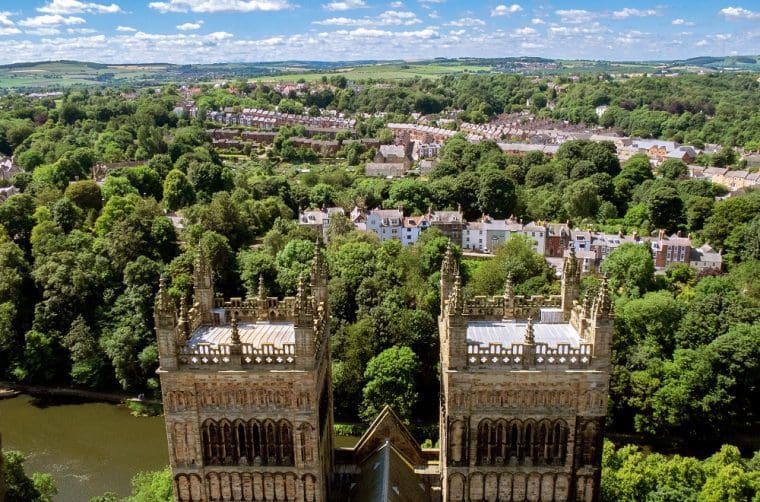
Table of Contents
Durham Cathedral, City of Light
There have been pilgrims coming to Durham since the body of St Cuthbert was brought here to rest back in 995 and the cathedral, built on the order of William the Conqueror, was completed in cathedral-building-record-time. A thousand years later it continues to inspire awe with its beauty and dignity, and affection from those of us who once called the region home.

A temple to the magnificence of God, standing in the Cathedral’s nave, it’s impossible not to pay homage also to the abilities of the craftsmen who created it. Surprisingly little has changed since the last stonemason left. It’s easy to imagine that should one return today, with its wonderful Romanesque architecture, our mason would have no problem picking up his tools and continuing where he left off. If the beautiful cloisters and Chapter House look familiar, that’s because you’ve seen them as the scholastic backdrop in two of the early Harry Potter films, and more recently the Cathedral film-doubled for Asgard, home of the Norse gods, in Marvel’s Infinity War: Endgame.

The Cathedral and nearby Castle sit at the heart of an area that offers lovers of heritage, art, culture and countryside a destination to explore and savour. Within an area stretching west, from the east coast’s North Sea to the UNESCO designated Global Geopark of the North Pennines, visitors can enjoy immersive attractions, and a year-round programme of events, providing many reasons to return.
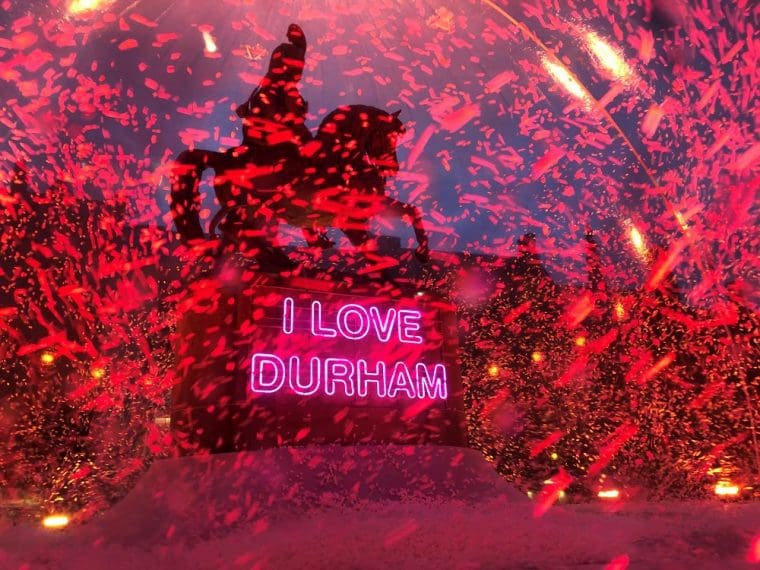
Perhaps the most ambitious of these is Lumiere: four nights in November when the city of Durham becomes an outdoor art gallery featuring wonderful light creations from artists across the globe. Starting back in 2009 as a one-off event and returning on alternative years ever since the biennial has become the UK’s biggest light festival.
It brings together work from artists across the globe and the fantastic exhibits delight and provoke thought in equal measure. Of the installations featured in the 10th anniversary in 2019, a trompe l’oeil whale swimming down the River Wear and the transformation of a statue of 3rd Marquess of Londonderry, astride his horse, into a playful snowdome, were but two of the 37 stunning creations on view. Entry into the city centre is ticketed and by staying in the well-positioned Radisson Blu or Hotel Indigo you’re within easy walking distance of all the sights.

The Auckland Project
For 600 years this was the land of the Prince-Bishops, a geographical buffer zone created during the time of the Norman Conquest to protect the south of England from the dangers lurking in the north. Responsibility for the area, including the spiritual and economic well-being of its people, was held by the Bishops of Durham, who enjoyed a hunting “lodge” at Auckland, 12 miles from Durham City.
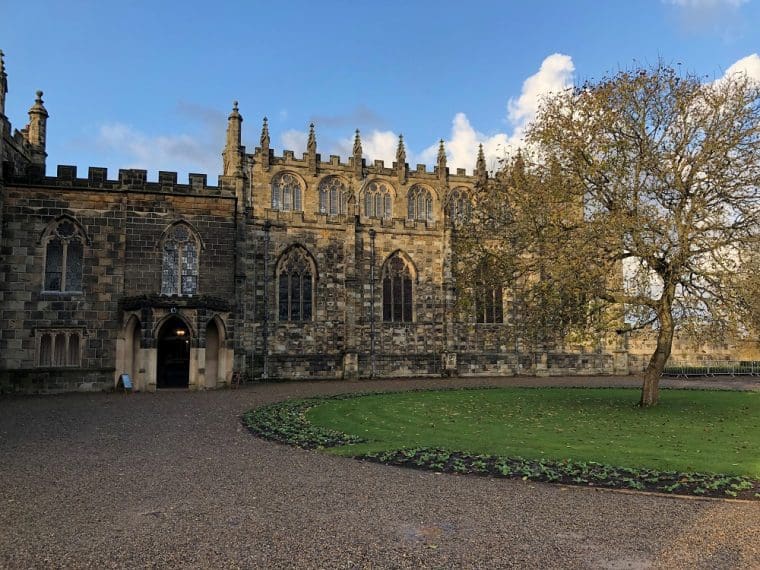
Dating back to Roman times, the Bishops’ 900-year-old country retreat, Auckland Castle, was purchased with all of its contents in 2012 by philanthropist Jonathan Ruffer. This purchase kick-started the most remarkable visitor destination development. Following a multi-million-pound restoration project, the castle reopened in November 2019 and visitors are now able to experience the Castle’s State Rooms in their original Gothic splendour.

The rooms are dressed to explain the role of the Prince-Bishops through changing times from the beautiful chapel, (a vanity project, one of the largest in Europe and oversized for a house of this size), through six centuries to the current day. In the dining room hang artworks by the “Spanish Caravaggio,” Francisco de Zurbarán. His awesome, Jacob and His Twelve Sons, hang as they have done for 250 years, whilst diners through the centuries have gossiped and discussed the issues of the day.

Jonathan Ruffer describes Auckland as a 25-year project. With the Castle development complete, work is ongoing, restoring its 150-acre parkland which retains many of the medieval elements: fish ponds and woodland paths, providing an important record of how the medieval bishops lived, entertained and hunted. The 17th-century Walled Garden, one of the first of its kind in North East England, is undergoing re-development. It once featured heated walls and glass hothouses to grow vegetables, flowers, fruit and even pineapples for the bishop’s guests.

Arriving in this pretty market town of Bishop Auckland, visitors are met by the impressive Auckland Tower, a 29-metre structure with a 15m viewing platform offering views across Auckland Park, Bishop Auckland town and the rural landscape beyond. Here you can discover more of the background to this remarkable project.
Yet to come are a Spanish Gallery, the first museum in the UK dedicated to the Spanish Golden Age of art, which will put into context the Zurbarán paintings displayed in the Castle and the Faith Museum, the first museum to contemplate the role of faith in shaping Britain and Ireland and what it means in the present day. Open now is The Mining Art Gallery, which explores working life in the coal mines through original artefacts and artworks by prominent mining artists such as Tom McGuinness and Norman Cornish.
Beamish – The Living Museum of the North
Bishop Auckland was at the heart of the Durham mining community, whose story can be actively explored and experienced at nearby Beamish. This wonderful celebration of life in the north of England spreads out across a 300-acre rural site, twenty-minutes drive from Durham.

Buildings from across the region, often set for demolition, have been taken down brick by brick and rebuilt here to provide a unique opportunity to revisit the past. This is an award-winning museum, and it’s easy to see why. Some 500 staff work here and many are on hand, in period costume, to interpret the site and encourage you to actively experience the period they are showcasing. Their enthusiasm is infectious as they share their knowledge of the history of the buildings and the people who lived there. The site is easy to explore on foot, but with the opportunity to engage with the interpreters, you’ll enjoy riding on one of the lovingly restored period buses, colourful trolleybuses, the steam train or the horse and carriage on offer.
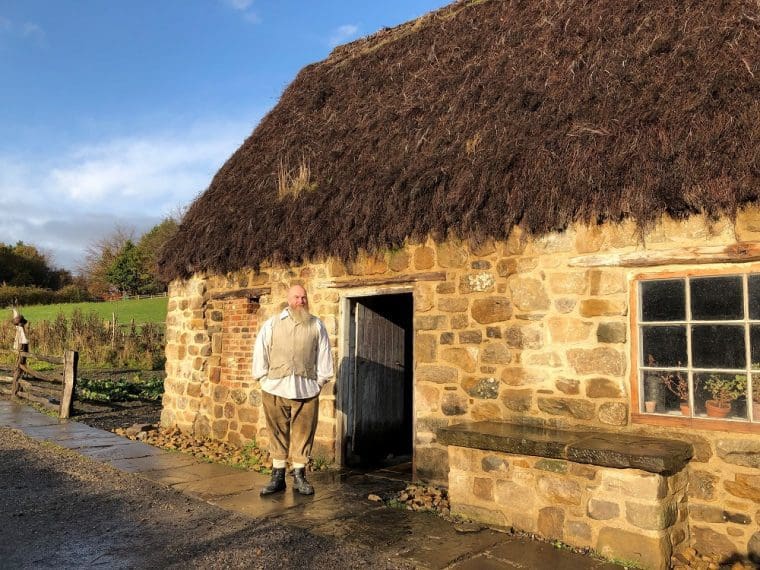
A guided tour of the Mahogany Drift Mine allows you to experience the reality of life underground for yourself and a walk through the Pit Village with its six original miners’ cottages shows you how they spent their hard-earned rest. The lovely 1900s Town, with its stationers, bakers, chemists, sweetshop, stables and even The Sun pub (which previously sat in Bishop Auckland) recently provided a backdrop for scenes in the Downton Abbey film.

Time does not stand still at Beamish and “Remaking Beamish” is now in progress! The recipient of the largest single grant from the Heritage Lottery, Beamish plans to create new ways for people to experience England’s North East heritage. As its centrepiece is the reconstructed 1950s Town which will include houses, shops, café, cinema, recreation areas and will even have a hair-dresser offering the best of ‘50s styling!
2020 Year of Pilgrimage.
Durham is a region loud and proud of its heritage. 2020 has been designated Durham’s Year of Pilgrimage, launching a range of new walking trails, the Northern Saints Trails, to position the North East of England as the “Christian Crossroads of the British Isles”. Designed to promote the region’s Christian heritage they will also support visitors simply looking to find peace and tranquillity. With more nationally recognised Dark Sky Discovery Sites than any other part of the UK, Durham makes the perfect winter retreat.

Jenny was a guest of This is Durham and stayed at the Radisson Blu in Durham City.
If you’d like to read more about things to do and see in Durham City read Durham – Harry Potter, Prince Bishops, Spooks and Saints or how about taking in the coast and a stay at a luxurious spa hotel: Seaham Sea Glass and a Heritage Spa Hotel – Seaham Hall
Fact box
More information on experiencing Durham can be found at www.thisisdurham.com
Contact the Visitor Information Centre on 03000 26 26 26; or by email visitor@thisisdurham.com.
Keep abreast of all things Durham through @thisisDurham on Facebook, Twitter and Instagram.
The Radisson Blu is located within walking distance of the rail station at Frankland Lane, DH1 5TA
The Auckland Project attractions of Auckland Castle, The Mining Art Gallery and Auckland Tower are open for visiting Wednesday – Sunday 1000-1600
Beamish – The Living Museum of the North is open daily 1000-1600 (November 2019 – March 2020) and 1000-1700 (April-November 2020)


I loved visiting Beamish, so much to see and do. I would love to explore more of the Durham area this year
Durham is one place I have never visited. The photo’s are lovely, my boys would love Beamish museum, think I need to book a weekend away thanks x
Looks lovely – love for those lights; makes for a great photo! I’ve never been to Durham before but this does make me want to go and explore.
Thank you for this wonderful article. Durham is such a beautiful city with a wonderful riverside, and great architecture of the the Cathedral and the University buildings.I also love Crook Hall, which has the most beautiful gardens I have ever visited.
The architecture of the cathedral looks stunning as seems like a lovely place to visit x
I love the austere grandeur of Durham – it is quite genuinely Northern in feel!
Looks a great place to visit
I have not visited Durham in many years, it is such a beautiful city! Fabulous for weekend breaks and I may need to organise a trip there next year! Sim x