
Last Updated on March 4, 2025
Whistle-Stop Chennai:
India, the second most populous Country in the world, culturally and linguistically diverse with over 1,000 languages is both incredible and intriguing on paper. My first brush came not through visiting but through learning Indian Classical Dance in Malaysia when I was just six years old. My fellow students, all Indian seemed lithe, flexible and elegant to me as a rather stocky, cropped haired urchin of a child. Magazines left lying around the classroom depicted stunning sari-clad ladies with hopelessly long nails and hair. Despite my early fascination though I never visited, my parents went on to travel elsewhere and for the most part my holidays were either closer to home or taken up with joining them wherever my Father happened to have decided to base himself.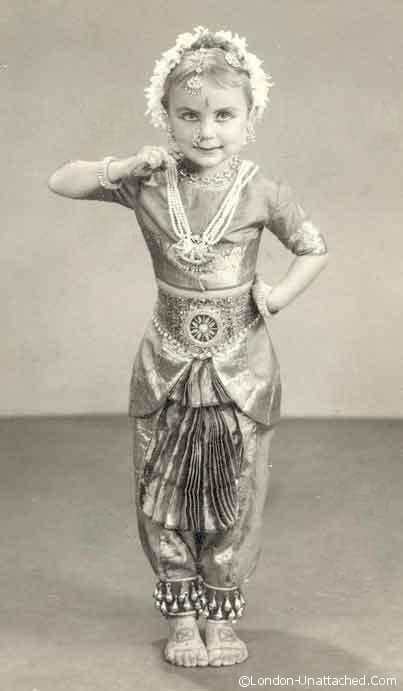
When I was invited to visit Sri Lanka a quick look at the map suggested that a stopover in Chennai, India would be entirely feasible and, hesitant to commit to a longer stay in a Country with such a varied reputation, I booked a three night stopover. There were plenty of hiccups in the planning. I started organising my visa early but didn’t realise that the visa processing office would actually take my passport away. For a regular traveller being without your passport is the metaphorical equivalent to finding all your clothes have gone missing from the changing room, though happily mine turned up as promised a few days later.




I talked to friends, some from India, some who had travelled there regularly. Advice varied from ‘you really shouldn’t travel there unaccompanied’ through to ‘no one speaks English in Chennai’. Everyone seemed mystified as to why I might want to visit the fourth largest City in India – one that is alternately dubbed ‘the Detroit of India’ or ‘India’s Silicon Valley.
Then, I tried to buy currency. My flight was arriving at 3am and the idea of being in a strange Country at that time of night with no cash was unnerving. But, India doesn’t allow currency exchange other than in the Country itself.
Finally, I decided that it might be wise to see if I could find a guide and contacted the local tourist board for help. After a series of protracted emails I learnt that Mrs Anandhi, ‘the top guide in the City’ would look after me. I would need to find my own transport for the tours but, the hotel apparently would be able to sort that out even at short notice.
Thankfully the hotel was indeed very helpful, providing both a car to meet me at the airport and assuring me that transport the next day would be easy to arrange. Everyone spoke English – even the street sellers. The currency exchange in the Airport was open at 3am. Mrs Anandhi turned out to be a charming and fascinating 75 year old Hindu lady who was clearly used to overcoming any small challenges and expert at introducing visitors to her diverse and somewhat chaotic City. And my room even had a kettle and teabags for those moments when only a cup of tea will do.
Arrive in the middle of the night and you may just wonder if you’ve got the time-zones wrong. It’s frenetic – the roads packed with motorbikes, cars, tuk tuks, buses and lorries. The pavements are lined with street food sellers. Roadworks (Chennai is currently building a Metro) seem to cover the entire City. And it’s stiflingly hot still. I was reassured to find my driver and reach the hotel, the Vivanta by Taj Connemara, full of old colonial comforts, a decent bathroom and air-conditioning that worked! I slept like a baby. At 8.50 a.m. prompt, Mrs Anandhi is in the hotel lobby for our 9 a.m. start. The hotel car appears as if by magic and we are off.

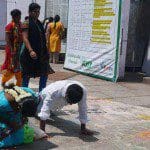
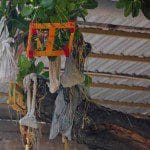

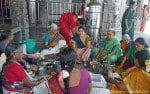
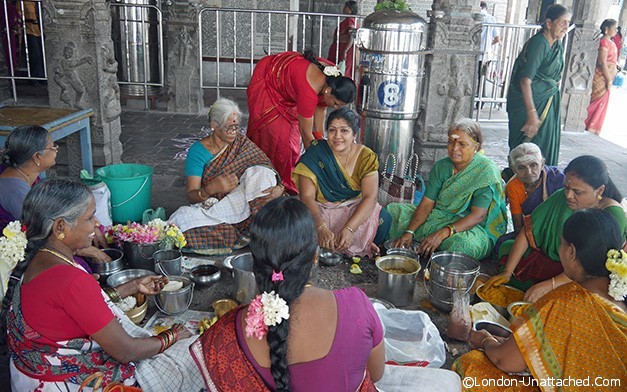
Our half-day trip takes us first to the Hindu temple of Kapaleeshwara in Mylapore. A temple of Shiva, the name Mylapore comes from the Tamil name for “peacock” mayil, one of the forms taken by Shiva. A practise run, so Mrs Anandhi tells me, for the next day when we were to visit a series of temples in Tamil Nadu. Shoes off, the stones are already burning hot at 10am and I tread gingerly on the painted path as we circumambulate clockwise. Mrs Anandhi points out the prostate man, absolving himself of all his worldly sins before entering the sanctum sanctorum. I am a lone westerner here in what is a working inner city Hindu temple. Groups of women squat on the floor preparing tributes for the gods – strange pastes of turmeric and other spices, braids of flowers and bowls of cooked rice. People stop in front of each of the Gods to ask for a blessing before reaching the queue to enter the Sanctum Sanctorum, somewhere I am not allowed to visit. And the trees within the temple are decked with small cloth pouches and wooden constructions, surrounded by little piles of stones – Mrs Anandhi tells me that these are offering to the Gods. A wooden basinet for couples looking to bear children. Tiny stone ‘houses’ for those needing homes. Cloth pouches of coins for those looking for wealth. It’s a strange contrast in this City where technology and manufacturing are as advanced as anywhere in the world.
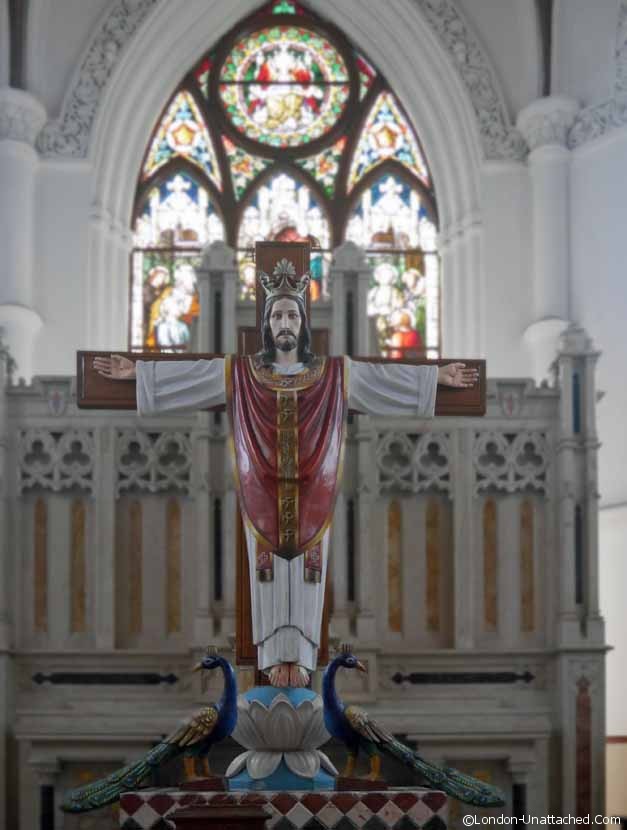
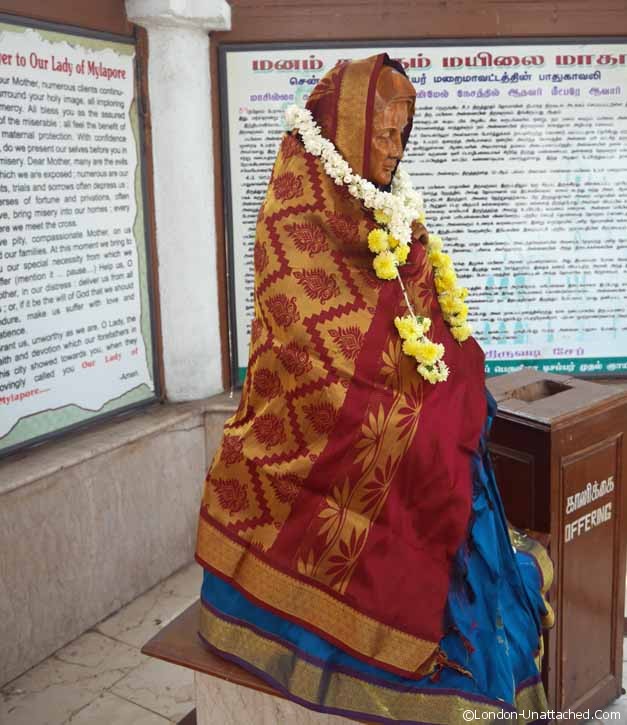
In stark contrast, we visit the nearby St Thomas Basilica which on first glance looks just like any English church. That is until Mrs Anandhi delights in showing me the statue of Christ standing on a lotus blossom surrounded by peacocks and the carved wooden statue of our Lady of Mylapore dressed in a sari and garlanded with blossom.
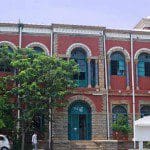
Some of the colonial buildings along the sea-front could be in any of the Cities of the old British Empire. There are others though which are unmistakably Indian, particularly the Indo-Saracenic buildings with their unique dark red and white painted facades.


Lunch in a local ‘Hotel’ (a word used for a whole variety of uses) cost around £2 – most of the bill simply the cost of the bottled water that Mrs Anandhi suggests I drink r rather than the jugs of water already on the table. I can’t bring myself to eat local style with my fingertips, though.
The next day takes us out of the City, through the industrial zones to Kanchipuram, one of the seven Indian cities to reach final attainment. Of course, the focus here is on temples and heritage. Mrs Anandhi has arrived with a checklist for me of the major Hindu Gods and Goddesses and a guide to help me recognise them. And warned me to wear socks because by midday the heat on my bare feet will be intolerable. Throughout the trip, she quizzes me and pumps me with new facts as we see new icons.
Brahma is the Creator – his vehicle is a swan and his Goddess is Sanasvati
Vishnu is the Protector – he travels on an eagle and his Goddess is Lakshmi
Shiva is the Destroyer – he travels on a bull and his Goddess is Parvati
Shiva’s sons are Ganesha, the elephant faced ‘remover of problems’ and Subnamanya the war lord. Parvati normally has just two arms. But at times she is called upon to kill demons. Then she gets 4, 8, 12 or 16 arms and weapons to help her. And in this form she is called Kali or Durg.


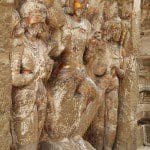

The three temples we visit each have their own story and history, from Ekambareswarar Temple with its 59-metre tower, to Kanchi Matha, where you can be blessed by an elephant and Kailasanathar, the oldest Hindu temple in existence built in the 7th Century AD. Perhaps most striking is that these ancient monuments are constantly in use. Nothing is cordoned off, the sacred areas are only prohibited to foreigners. This is very much a living religion, from the small boys in the silk weaver’s community with their Vishnu Bindis through to Mrs Anandhi’s husband, almost completely blind and in his mid-80s, who is concerned that she hasn’t left a tribute to her ancestors that morning because she left in a hurry. She tells me that he’s worried and has explained to her on the phone that he’s made his way into the kitchen to leave food because he can hear them calling.

The trip takes us through villages and countryside full of paddy fields. And, we stop briefly in the silk district of Little Kanchipuram. Three hundred families of weavers live in this village – a total of 20,000 in the area. The silk used here is grown in the neighbouring state of Karnataka, then spun and woven by the families. My host tells me that the new generation area all well educated and the family traditions will end with those who are currently working the looms. I ask who will take over and am told that the silk families will employ others to spin and weave for them on the ancient looms often over a hundred years old. And, I’m shown the ‘computerised loom’ for producing Jacquard – a baby at just 70 years old it operates using a system of cards much like the original punch card computers.

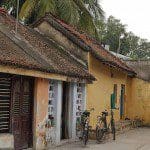


Then on to Mahabalipuram on the coast, an ancient historic town with a group of sanctuaries, carved out of rock along the Coromandel coast in the 7th and 8th centuries.
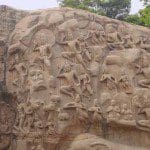


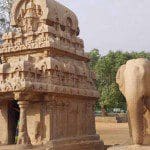

There is so much more to tell. So, this post is intended as a quick thank-you to the people who made what at one point seemed like a foolish and impossibly stressful whim of a trip into a magical insight into a Country I clearly need to explore further. Much of what I have seen deserves more explanation, some of what I experienced has only been touched on here. The three Taj Hotels I visited each has their own story and unique position. The temples are worthy of considerably more explanation and colonial Chennai is a fascinating legacy. In the meanwhile, I hope you enjoy this introduction. And a special thank you from me to the people who made this trip possible.
Many thanks to my erudite guide, Mrs K N Anandhi and to the Tourism Office of Chennai and Tamil Nadu
To Taj Hotels for their hospitality and exemplary service.
And finally to my driver from Praveen Travels who turned up without fail ten minutes early every day.


Thank you for sharing your experience it is really helpful. and thank you for the beautiful pichers.
what an amazing experience- how exciting and memories for a lifetime
I travel frequently to Chennai for work, it’s an amazing place and thanks for the article, I’m going to visit the 3 temples you mentioned next time I go
really lovely insight into an amazing country
What an amazing trip, I’ve really enjoy reading this, thanks for sharing your trip with us.
Fabulous blog post..I really would like to go there myself.
Very interesting read, I’ve always wanted to ‘do’ India and this has made me want it more! 🙂
Lovely pictures and interesting info. Though India has been on my list for a while I have never heard of most places you have mentioned. Keep it in mind for my travels 🙂
That was a really interesting article to read. I am fascinated by India as my mother was born there and my grandma had endless tales of life out there.
India what a myriad of experiences you can have in such a short time. Brilliant
Thanks for this charming introduction to the ‘Silicon of India.’ You definitely put Chennai on the map for me.
Wow this sounds so interesting! I’ve always wanted to go to India, but I haven’t found the time yet. It’s cool to hear about a place off the beaten path. I’m glad you had a great time
Wow, this is a great introduction! It looks like you had an incredible trip in a short period! Thanks for sharing!
it was, as one of my Indian friends had warned me, another world. Some aspects seem so ‘Western’ and yet there are things that simply belong to a different world.
Wow firstly you are brave secondly wow, I would one day love to visit too x
wow a lot has happened in such a short space of time! The pictures are fantastic! I’d love to visit some time as well 🙂 x
Lucky you!! what a phenomenal trip. I am with Pam.. you crammed a lot of tourism in a few days!! I am so impressed…….
Wow, you did pack a lot in to a very short time. Sounds like a magical experience. I would like to go someday, but not for 3 days!!
Hope you had a great time Ms. Fiona and I wish you could have a more elaborate trip soon. The best way to enjoy Chennai, (and India in general) is to find yourself a friend and live with his or her family over a period of several weeks, especially during the Dusshera period till Deepawali. I’m sure you will love the festivities and the colors, Chennai adorns during that time and find it incomparable. There isn’t a better time to be in Chennai than this, unless of course there is a cyclone warning in place, as it can get flooded pretty quickly in Chennai from Oct-Dec period. You are always welcome here.