Last Updated on April 10, 2023
The gift that keeps on giving.
Tired of waving off friends and relatives on their travels with yet another toiletry bag or pocket-sized hand cream? If they are travellers then how about gifting them an experience? I’ve just returned from Japan and was lucky enough to have two Adventuregift activities to try out while I was there. It’s a great concept – research has shown that experiences or trips are the most enjoyable gifts to receive and Activitygift has over 50,000 activities in over 680 cities across 160 countries to choose from. From hikes to food tours, cooking classes to museums, music, sports and adventure, simply enter the country and cities you or your friends are to visit and make your selection from a tempting list. The most difficult part of using Activitygift is trying to decide between the fascinating opportunities on offer. If you prefer, a gift card can be purchased, and the recipient can decide what activities to select. You can send your gift card via post, an eGift or a high-quality PDF printout to hand over personally. The gifts are valid for two years. To help offset the carbon footprint of travel, for every gift card purchased a tree is automatically donated on your behalf. Activitygift aims to donate 250,000 trees to Eden Reforestation Projects by the end of 2023. Read on to find out more about what I got up to in Japan with Activitygift.

I began my trip in Tokyo where one can feel a bit overwhelmed after a few days in the megatropolis. An excellent antidote is to do as local people do and take to the mountains. Less than an hour from Tokyo on the Shinkansen (bullet train) the area known as Hakone offers relief from the hectic pace of city life. The mountain air, lakes, magnificent scenery and proliferation of onsen (hot springs) make this a must-do for a few days. There are a number of ways of making the trip more economical and streamlining ticket buying for the activities in the area – the Hakone Kamakura Pass offered by Activitygift is one of these. This three-day pass covers all the major modes of transportation and up to 90 partnering facilities in the area covered by the pass. Over a three-day period, these reductions really do add up. And, the pass takes all the hassle out of organising your travel.
The Hakone area is a wonderful place for visitors to unwind. There are numerous small towns dotted around the area with a wide array of hotels – modern and traditional Japanese style accommodations (ryokans), luxury and hostel level prices – as well as world-class art museums, cultural attractions, restaurants and even hard-boiled eggs cooked in the sulphuric hot spring water at the top of a mountain. There are also gorgeous views of the iconic Mount Fuji for those fortunate to visit the area on a clear sky day. I was there on a cloudy day but as they say, always leave something undone when you travel so that you will return. Hakone is such a vast area to visit and there was so much I wanted to do. I will certainly be going back for more.

The Hakone area is very mountainous and has an intriguing set of modes of transportation that efficiently whisk visitors around a tourist loop full of extraordinary sights. These include the Hakone Tozan Line, a small train which uses three switchbacks to crawl up a steep mountainside. It is in fact the world’s second steepest gradient for train travel. The distance between the front and back of the three carriages at points is 3.6 metres. There is plenty of time to enjoy the splendidly unfolding view as the train takes 54 minutes to cover 10 miles. At the terminus in a town called Gora, I transferred to a funicular that took me up an even steeper slope to a station where I hopped into a ropeway gondola that rose up above the steaming volcanic valley, and later down to a pirate ship that glided across Lake Ashi. It was great fun. One can stop off at countless tiny stations along the way from where paths lead into the mountains on scenic hikes.

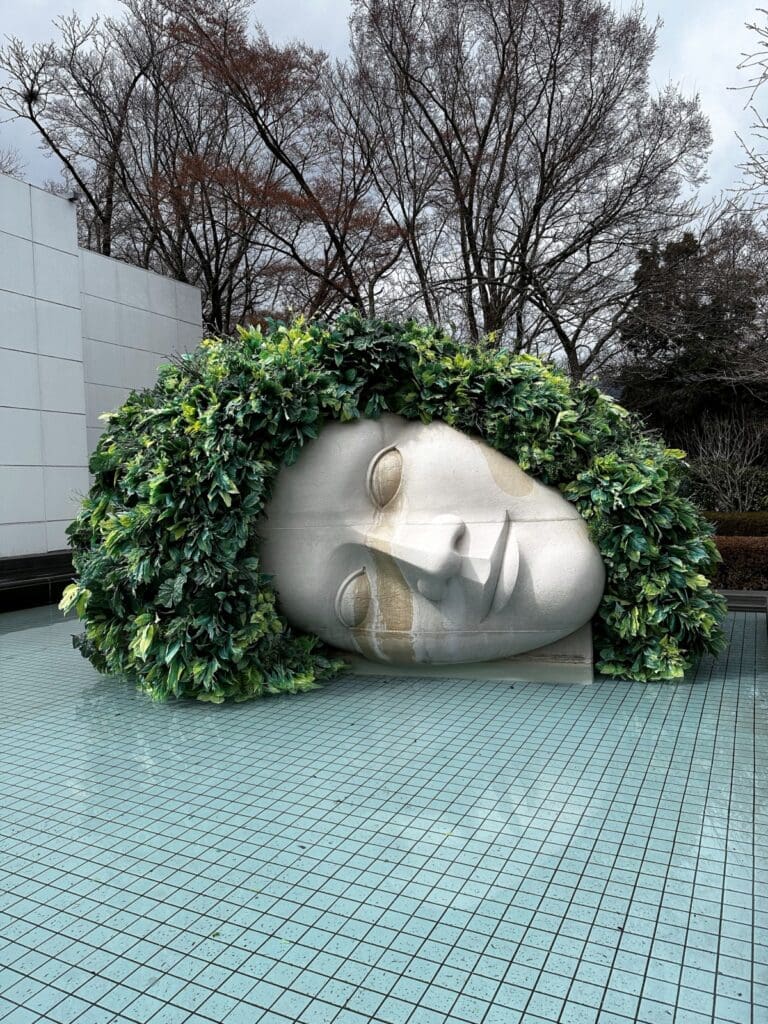
I visited a number of museums in the area with reductions to the entrance fee. These included the Hakone Open-Air Museum which is an outstanding sculpture park well set up for adults and children alike. With the Hakone Kamakura Pass in my hands, the trip was smooth sailing. I simply had to show the pass on every train, bus, funicular, ropeway gondola and ship I wanted to use and I was waved through. No queuing to buy tickets. At museum ticket offices, I showed the pass and any reductions were applied to the cost of the entrance fee.

Most people visit the Hakone area on day trips, but I really do recommend that you set aside two or three days. The Hakone Kamakura Pass covers three days of transportation, and reductions at museums, activities and gift shops. Sadly, I did not have enough time to visit the coastal towns that are also covered by the Hakone Kamakura Pass – Kamakura and Enoshima – and which can be visited on the way to the Hakone area. Kamakura is an attractive beachside city with many heritage sites, shrines and temples, while Enoshima is a small island accessed via a bridge and enthrals with lovely scenery,
The Hakone Kamakura Pass is valid for three days and costs £46.45 from Activitygift.
After spending time in Hakone, I took the Shinkansen (bullet train) to Kyoto. This magnificent city is renowned for its collection of temples and shrines – there are reported to be around 2000 of these so you need to be selective. The most famous of the shrines is the Shinto shrine called Fushimi Inari which is located in the South East of Kyoto. Shinto shrines are identifiable by their torii gates at the entrance and this area has over 3500 torii gates. Many visitors only visit the lower reaches of the complex, take their Instagram photos and leave. It results in a lot of crowding at the entrance and lower area from where the route usually starts. The climb to the top of the shrine takes 90 minutes so it is a lengthy round trip. Hoping to avoid the crowds, I was delighted to find that Activitygift offers a three-hour hiking tour of Fushimi Inari that approaches the shrine from an alternative direction.

We met with our guide before 9 am and our group of eight was soon on its way up the back of the mountain on which the shrine complex is located. For most of the climb, we were in a cool, shaded forest and hardly saw another person. It was so peaceful and calming. The guide was very knowledgeable about the area and shared a lot of information not only about the shrine and Shinto and Buddhist religious practice in Japan but also about the natural world we encountered. We heard nightingales singing in the forest, learned about why the Samurai did not like camellia flowers, and discovered that bamboo stops growing at 25m.
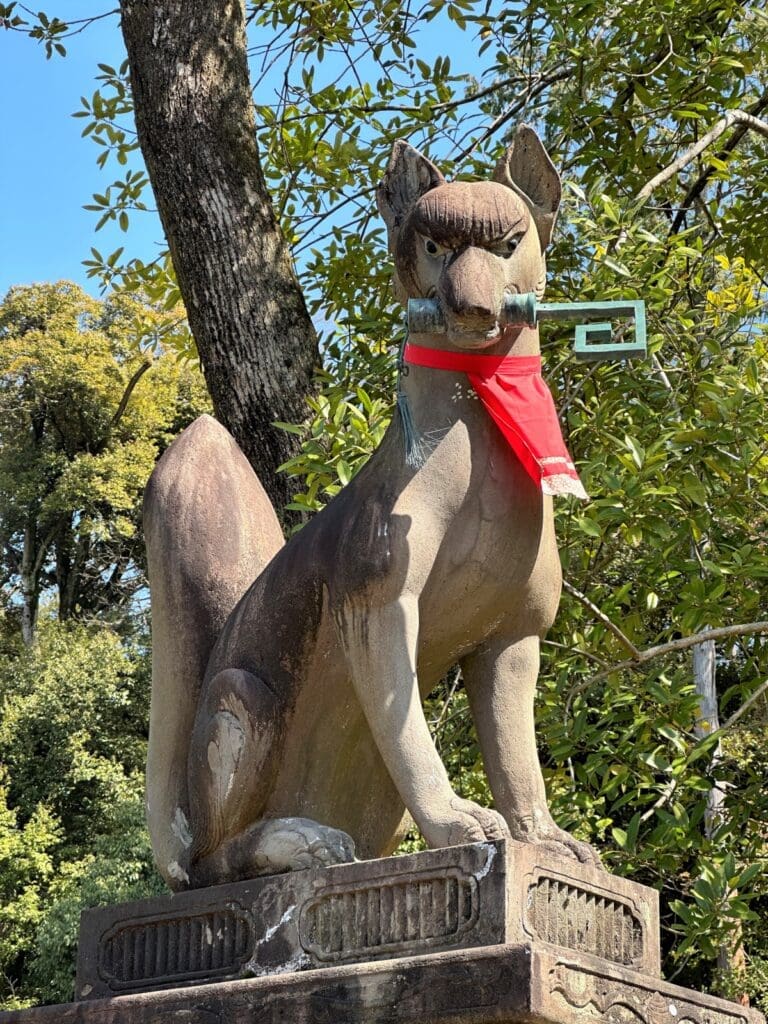
Shintoism, which began in Japan, worships the natural world. Fushimi Inari shrine, which began to be built in 711, is dedicated to the worship of the god of rice, Japan’s staple food. Before modern government began in Japan in 1868, over 80 per cent of the population were farmers and the rice crop affected everyone so Inari shrines were built to pray to the god of rice. While there are Inari shrines all over Japan, the Fushimi Inari shrine is the headquarters. Identifying Inari shrines is easy once you know how. They are guarded by foxes. Rats eat rice but the fox eats the rats so it is believed that the foxes help the god of rice and are considered to be the messenger of the god of Inari. Nowadays, the Inari shrines have become places to pray for success in business. The wooden torii gates are donated by people who have had success in business or had their prayers answered and there is a long waiting list for those who want to donate new torii gates. They are replaced every 20 – 30 years. The red colour is believed to help avoid evil.

The guide on the Fushimi Inari tour took photographs regularly of members of the group which she sent to us afterwards which was a welcome touch. The hike was one of the highlights of my three-week trip in Japan and I highly recommend it if you are fortunate to be visiting Kyoto. The three hours passed in a very relaxed atmosphere and although a bit taxing at points – I would say being moderately fit is fine – we stopped regularly for breaks and had plenty of opportunities to ask questions and chat with the others in the group. Best of all, we avoided the crowds and managed to get a personalised experience of this deeply spiritual place. Walking downhill through the 800 bright orange torii that form a tunnel, was one of those pinch-myself moments.
Fushimi Inari Hike costs about £56 per person from Activitygift.
Here’s where to find out more about Activitygift