Last Updated on April 10, 2026
A Guide to Visiting Uluwatu, Bali
I’ve recently returned from my first visit to Bali, the lush Indonesian island between Java and Lombok in the Lesser Sunda Islands. My trip began in Uluwatu, on the southwestern tip of the Bukit Peninsula, about 45 minutes from Denpasar International Airport. Here, towering limestone cliffs meet the Indian Ocean, creating one of Bali’s most dramatic coastal stretches.

Uluwatu is best known for its world-class surf breaks, but there’s much more than waves. Hidden coves and small beaches reveal themselves at the end of steep staircases carved into the rock or through caves in the cliffs, while the revered sea temple Pura Luhur Uluwatu sits majestically around 70 metres above the ocean at the peninsula’s southwestern edge. Despite its popularity, the area retains a relaxed, laid-back energy, a place of beach bars, surf cafés, yoga studios, gyms, boutiques and jewellery shops, perfect for browsing, relaxing and simply hanging out.

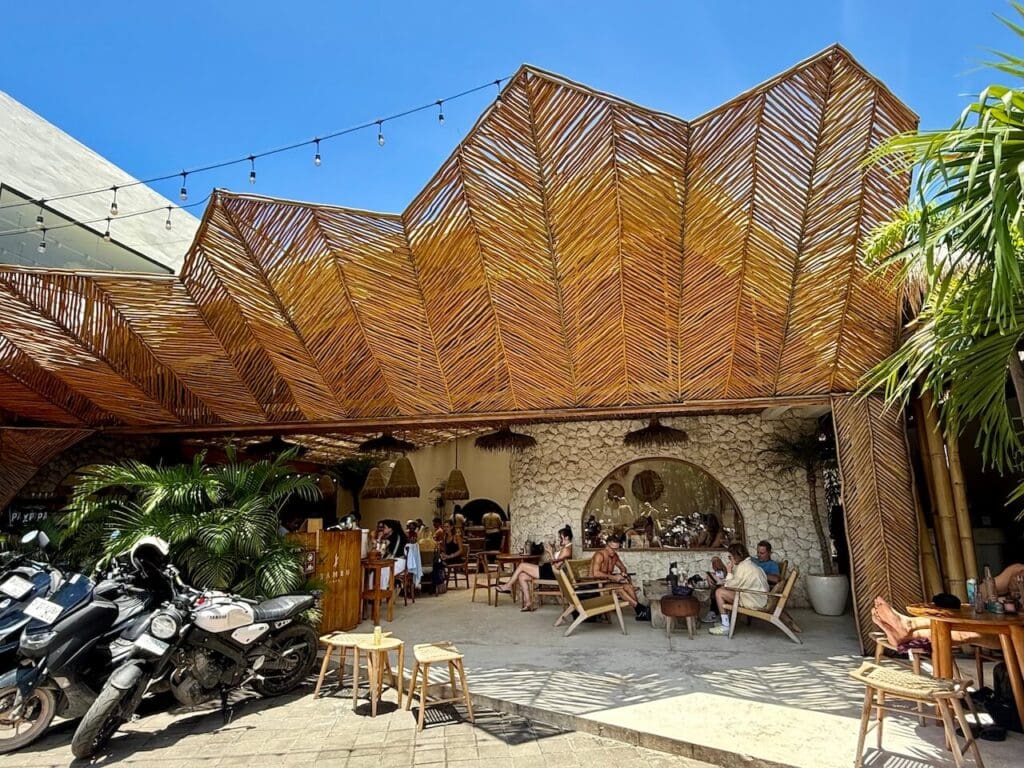
I stayed in Uluwatu at the start of my trip and ended up returning before flying home, a sure sign I’d fallen for the place.
Table of Contents
Culture and Religion
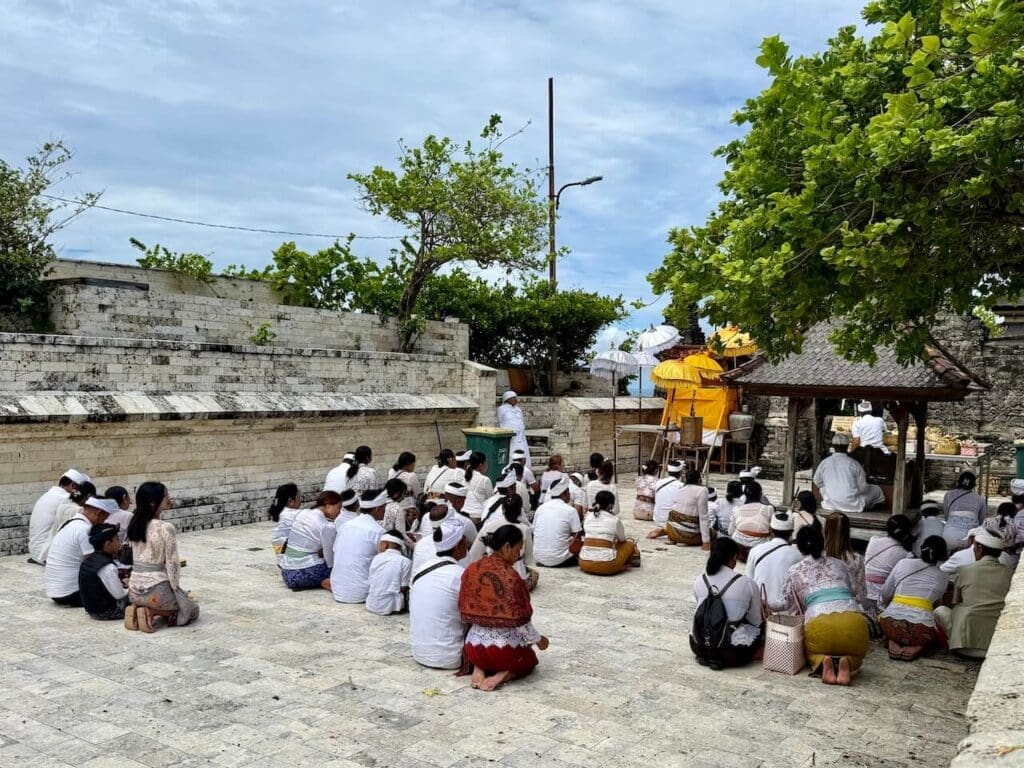
You can’t visit Bali without being struck by its culture and religion. As the only predominantly Hindu region in Indonesia, it is often called the “Island of the Gods.” Temples rise from the landscape everywhere you look, and the people follow a rich ritual calendar with pride and devotion. Balinese culture blends local traditions with Indian, Hindu and other Asian influences, brought to life through dance, music, sculpture and elaborate ceremonies. Even the houses echo temple architecture, and small offerings to the gods appear on almost every doorstep and street corner, a quiet reminder of the island’s spiritual heartbeat.

When in Uluwatu, a visit to Pura Luhur Uluwatu is a must. Perched dramatically on cliffs 70 metres above the sea, it is one of Bali’s six holiest sea temples, believed to spiritually protect the island. The setting is spectacular and makes an unforgettable spot to watch the sunset. Daily Kecak dance performances — a Balinese art form known for rhythmic chanting and dramatic storytelling, also take place here, though it’s wise to book ahead.
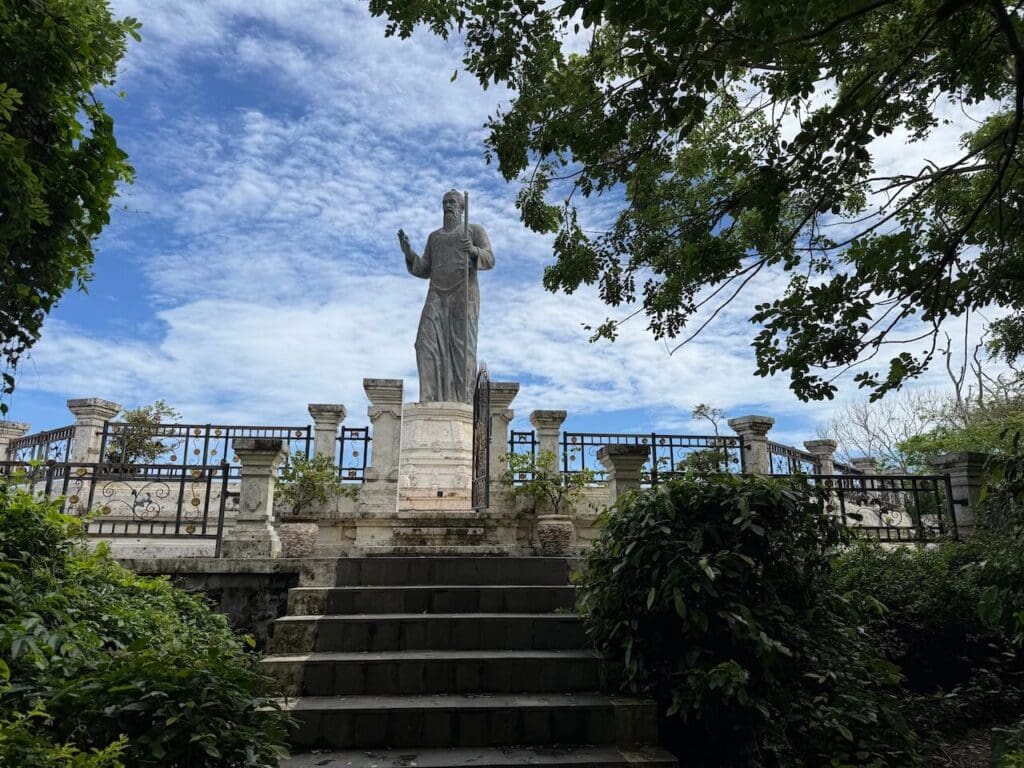
If you’re hoping to see the monkeys, they are everywhere, cheeky and bold. One even snatched my sunglasses straight off my face. It took three bags of lychees and a fair amount of negotiation to get them back, intact but slightly chewed. The warnings about the monkeys are real – consider this a double warning.

Shopping in Uluwatu
Uluwatu is a treasure trove of boutique shops, perfect for leisurely browsing, and dotted with jewellery stores where you can even try your hand at making your own pieces.

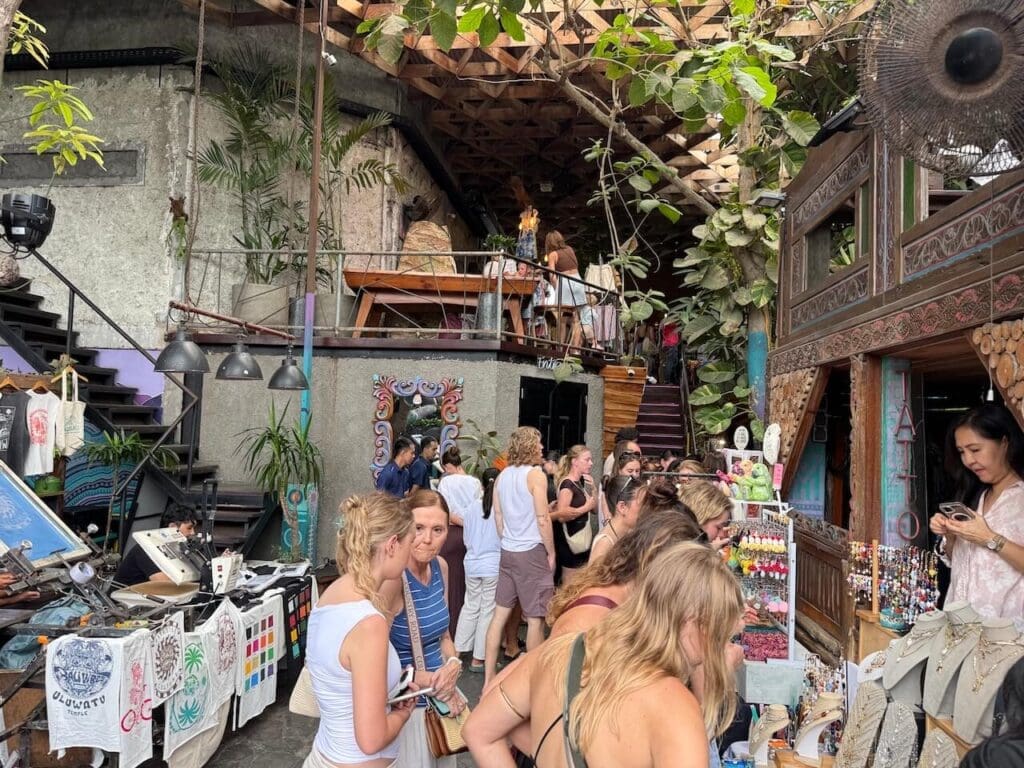
To really capture the buzz, head to Hatch Market, which runs every Sunday from 11:00 AM to 6:00 PM. This open-air market has a lively yet relaxed vibe and a true sense of community, with stalls showcasing local artisanal goods, fashion, and live music.
Transport around Uluwatu, Bali
Public transport in Bali is limited, and the roads can get busy, so it’s worth factoring in travel time. Most locals and long-term travellers get around by moped, weaving easily through traffic. Taxis are also available, but we found using the GRAB app the easiest option, allowing you to order either a car or a bike. It is quick, efficient and surprisingly affordable.

When to travel to Bali
I travelled to Bali in February, which falls within the rainy season, running from November through to March. The weather was mixed, with hot, humid temperatures, sunny spells and frequent downpours, but it didn’t stop us from enjoying the beaches and exploring the island.

The best time to visit is during the dry season, from May to October. Expect mostly sunny days, lower humidity and calmer seas, making it ideal for beach time, exploring the cliffs around Uluwatu, and snorkelling or diving. Peak months are July and August, along with the Christmas and New Year period, when the island is at its busiest and prices are highest, with many Australian and European holidaymakers visiting.
For a balance of good weather, fewer crowds and better value, May to June and September to October are often considered the best times to travel, with more availability and better deals on villas and flights.

Accommodation in Uluwatu
Uluwatu offers boutique hotels, high-end resorts and private villas, many set into the hillside with sweeping coastal views. They cater to a wide range of budgets and travel styles. Even after travelling halfway across the world, I found the cost of food and accommodation remarkably reasonable compared with many other destinations.

For the first part of my stay, I checked into Lyvin Melasti Villas, part of a newly developed complex with 16 private villas and plans for studios, a restaurant, a pool and a spa. My two-bedroom villa was perched on the clifftop, stylishly designed with attention to detail. The decor is elegant and contemporary, with clean architectural lines and a palette of concrete, stone and warm wood. Floor-to-ceiling glass doors open onto a terrace with a private pool, blurring the line between indoors and out. Both bedrooms are generous in size, each with an en-suite bathroom, desk and plenty of wardrobe space.

These villas are designed for living rather than just passing through. The fully equipped kitchen had everything we could need, while the open-plan dining and lounge area, with white bouclé sofas, coffee-table books and a widescreen TV, made it tempting to spend a quiet evening in.

Outside on the terrace, the views stretch endlessly to the horizon, with nothing but treetops and sky between you and the ocean. And if you’re lucky, like we were, the local monkeys might pay a visit.
Service is seamless from the moment you arrive.

After passing through high-security gates, you are greeted at reception before being taken to your villa by buggy. Staff are warm and helpful, happy to offer local advice, and daily housekeeping keeps everything spotless. I could easily have moved in.
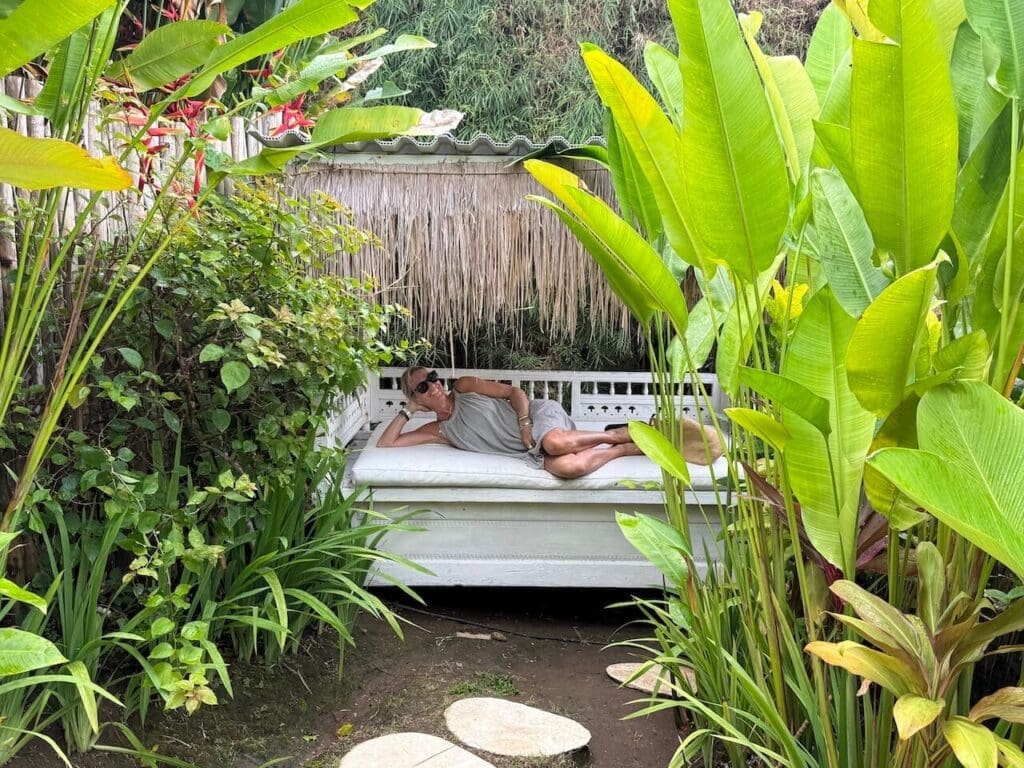
For a completely different, more bohemian feel, we spent a few nights at Gravity Evo Boutique Hotel. This charming, adults-only resort sits on the hillside, a collection of thatched-roof villas with whitewashed wood, roll-down shutters and small terraces facing the sea.

The rooms are simple but full of character, with beds draped in soft white mosquito nets, air conditioning and fans to stay comfortable in the tropical heat. The bathrooms feature a stone-carved shower space with partially open walls, giving a natural, slightly wild feel.

There are two pools on site, adequate for a proper swim, and guests can also use facilities at the nearby Gravity Villa complex, where there is a larger pool with spectacular views and a restaurant. The atmosphere is relaxed and the staff exceptionally welcoming. A small pool bar and a communal dining table facing the sea encourage lingering breakfasts and sociable dinners with fellow travellers.
Dining in Uluwatu
Bali’s dining scene is very international, with people from all over the world opening restaurants across the island. Whatever you’re in the mood for, from plant-based cafés to Italian trattorias and beachside grills, it’s easy to find.

That said, it would be a shame not to explore the local cuisine. Balinese food typically revolves around rice served with meats, vegetables, sambals and crunchy crackers. Pork and chicken feature heavily, and many dishes are everyday home-style or street-food favourites. Classics like nasi goreng (fried rice) and mie goreng (fried noodles) appear on almost every menu.

In Uluwatu, I visited two restaurants that stood out.
Masonry recently opened in Uluwatu after its success in Canggu. We arrived just before sunset and instantly relaxed. The space is open and airy, with stone floors, greenery, and a contemporary Mediterranean feel. An exposed kitchen sits at the centre, surrounded by hardwood tables, low raffia lamps and floor-to-ceiling glass doors opening onto a terrace. As evening settles, the music shifts slightly to a more clubby feel, maintaining its barefoot beach vibes.

Starting with Roja Margaritas, tequila with roasted pepper, agave and lime, light with a subtle chilli warmth, followed by a glass of Finca Las Moras Barrel Select Chardonnay from Argentina. The menu is designed by Group Executive Chef Ben Cross, but on the night Chef Alfa was in the kitchen and kindly chose our dishes. It’s exactly the sort of food made for sharing. I’m still thinking about the hummus with brown butter and chilli – salty, rich and completely moreish, scooped up with pillowy flatbread. The octopus carpaccio was beautifully tender, served with salmoriglio and rosemary aioli, while the house selection of cured meats – salt beef, mortadella and salami with chilli, disappeared very quickly.

For mains we shared a perfectly pink chermoula-crusted tuna — the sort of dish I could happily eat on repeat, alongside a flavour-packed pork loin and a fresh broccoli and mint salad I’m determined to recreate at home. Dessert was a deliciously light raspberry pavlova with mascarpone and vanilla ice cream. It was undoubtedly one of the best meals we had in Bali.

Artisan Bingin is an artisan bakery and brunch spot that transforms into a lively restaurant by night. The open-plan kitchen puts the chefs centre stage, with a long communal table and smaller tables alongside green banquettes. Concrete pillars and floors give an industrial edge, softened by tropical plants and a garden room at the rear.
The wood-fired menu offers small plates, pasta and pizza, along with mains such as chicken, fish, beef, and vegetarian options, all made with local ingredients. Cocktails included the refreshing Botánica Fizz with cucumber, basil and orange tonic, the Apple & Elderflower Milk Punch, and the spicy Thai El Diablo.
We started with freshly baked sourdough and wood-fired flatbread, crowned with creamy stracciatella, anchovies, and pistachios, perfectly echoing the restaurant’s artisanal feel. Small plates followed tender green beans with hazelnuts, Parmesan, and a drizzle of balsamic, and local yellowfin tuna crudo with a delicate fennel and orange vinaigrette. Seared scallops, served with sourdough, Parmesan cream, and a rich bacon jus, brought warmth and indulgence to the table.

The highlight was the freshly made pasta: fregola with prawns, mussels, garlic, chilli, white wine, and a parsley purée, accompanied by a crisp green salad. And for dessert, a pistachio tiramisu offered a sweet, nutty finish that perfectly rounded off the evening. Artisan Bingin is a lively, relaxed restaurant in the heart of Uluwatu.
Of course, I only scratched the surface of Uluwatu’s dining scene – there is plenty more to explore for anyone staying longer.

Beaches in Uluwatu
When in Uluwatu, you’ll want to explore the beaches. Many are accessed via narrow rock passageways or long staircases carved into the cliffs, so it’s worth checking access before you go. During our stay at Lyvin Melasti Villas, we were close to Melasti Beach, a beautiful stretch of golden sand framed by dramatic limestone cliffs and crystal-clear turquoise water.

We also enjoyed visiting Padang Padang Beach, which feels like a bit of a hidden gem. Reached through a narrow rock passage, it opens onto a small cove with soft white sand. It’s a great spot for swimming, beginner surfing and relaxing at the laid-back beach bars.

Other nearby beaches worth exploring include:
Suluban Beach (Uluwatu Beach) – accessed through cave-like passages in the cliffs, this is a legendary surf spot known for its powerful waves and dramatic scenery.
Bingin Beach – a relaxed beach popular with intermediate surfers, lined with small warungs and casual cafés. Parking is relatively easy, though you’ll still need to tackle a set of steps to reach the sand.
Dreamland Beach – a wide stretch of golden sand with reliable waves suitable for different levels. Access is easier than many of Uluwatu’s beaches, though it can get busy at times.
Green Bowl Beach – a secluded stretch of fine white sand, perfect for swimming between the tides and often far quieter than many of the better-known beaches.
With so many beaches tucked beneath the cliffs, each with its own character, exploring them becomes part of the adventure of staying in Uluwatu.
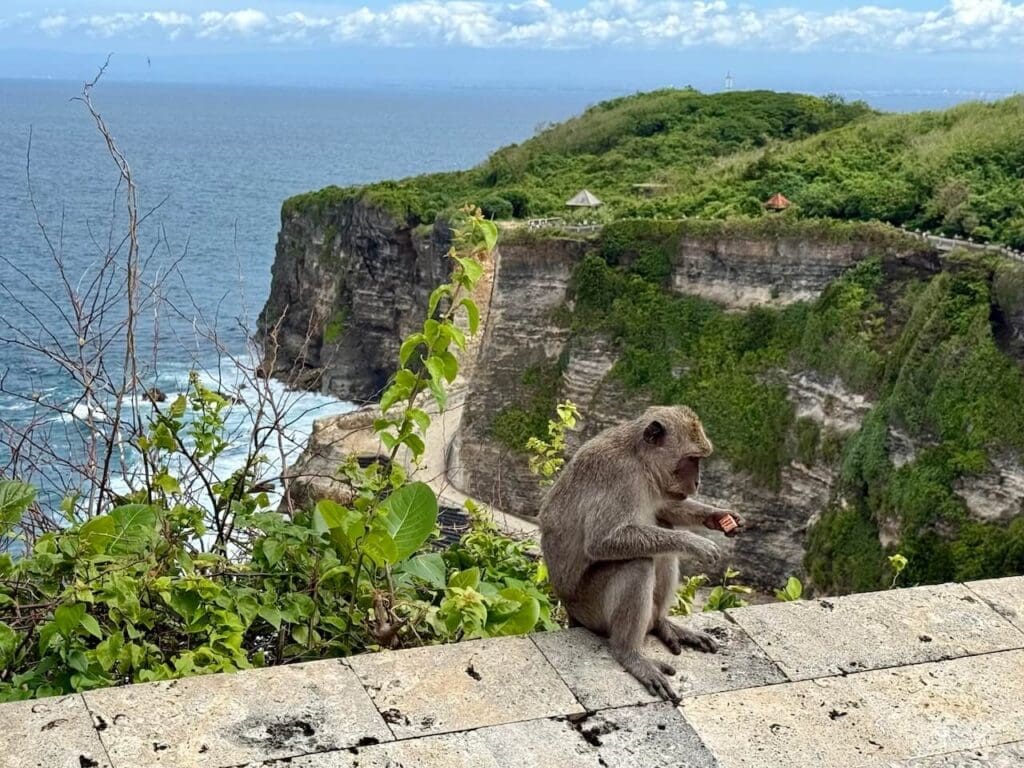
Uluwatu quickly became one of my favourite places on the island. With its laid-back, effortlessly cool atmosphere, thriving wellness culture, great shopping, excellent restaurants and beautiful beaches, it’s an easy place to fall for. Staying on the hillside brings peace and sweeping ocean views while still being close to the action. Add in the warmth of the people, and it’s the kind of place that quietly works its way under your skin and makes you want to return.
Fact Box
We stayed at Lyvin Melasti, Pecatu, Kuta Selatan, Kabupaten Badung, Bali 80362, Indonesia.
And at Gravity Eco Boutique Hotel, Jl. Labuan Sait 32, Padang Padang, Pecatu, Uluwatu, Bali 80361, Indonesia
I travelled to Bali from Heathrow Airport, and the journey was effortless thanks to Holiday Extras, with seamless Meet & Greet parking at Heathrow. From arrival to return, the process was smooth and stress-free. Before my flight, I relaxed in the Plaza Premium Lounge, a calm and comfortable space with food and drinks on offer—an easy, refined way to start the trip.
Holiday Extras is the market leader in UK airport parking, hotels, lounges, and transfers – and in 2025, its customers saved an average of £200 per trip by booking their airport parking in advance.
Booking airport parking means you can enjoy more of your holiday with less hassle. Plus with Flextras, if you need to cancel or amend you can without charge. Nineteen days’ Maple Parking Meet & Greet at Heathrow Terminal Five is available for £219.99 based on arrival on 11/06/2026.
Entry into the Plaza Premium Lounge at Heathrow Terminal Five is available for £45.00 based on arrival on 11/06/2026.
For more information and to book, HolidayExtras.com or call 0800 316 5678.
*All costs supplied are the cheapest available rates for the product specified, and therefore availability may be limited at this price. Prices are correct as of 05/03/2026.
Looking for something different? Check our guide for travelling to Japan