

Last Updated on October 29, 2017
Artisan Pecorino a Latte Crudo and Ricotta from Pistoia:
In addition to showing us around Pistoia, feeding us so that we really shouldn’t have eaten for the rest of the week and taking us to the great olive oil mill I wrote about earlier, Miky also took us to visit a very special artisan cheese production. Up in the mountains surrounding Pistoia, Mrs Maria Tondini, her son and grandson look after a prize winning flock of black Massese sheep (an ancient breed from Tuscany) and make Raw Milk Pecorino or Pecorino a Latte Crudo Della Montagna Pistoiese (!)
We had spent far too long in Pistoia eating delicious food and arrived a little later than planned to find Maria busy making Pecorino from the morning’s milk.


It’s a very traditional way of producing cheese from raw sheep’s milk that is heated just to 35-38°C before a little rennet is added (either stomacini from lamb’s stomach, or a vegetarian equivalent). Once curds are formed after about 20-40 minutes the cheese making starts by breaking the curds up with a chiova then forming them into round moulds.

We watched Maria piling up a cottage cheese like substance into the moulds, pressing it down, draining the whey out and back into the milk vat for the second cheese, Ricotta, and continuing to press the cheese down until the moulds were flat on top.
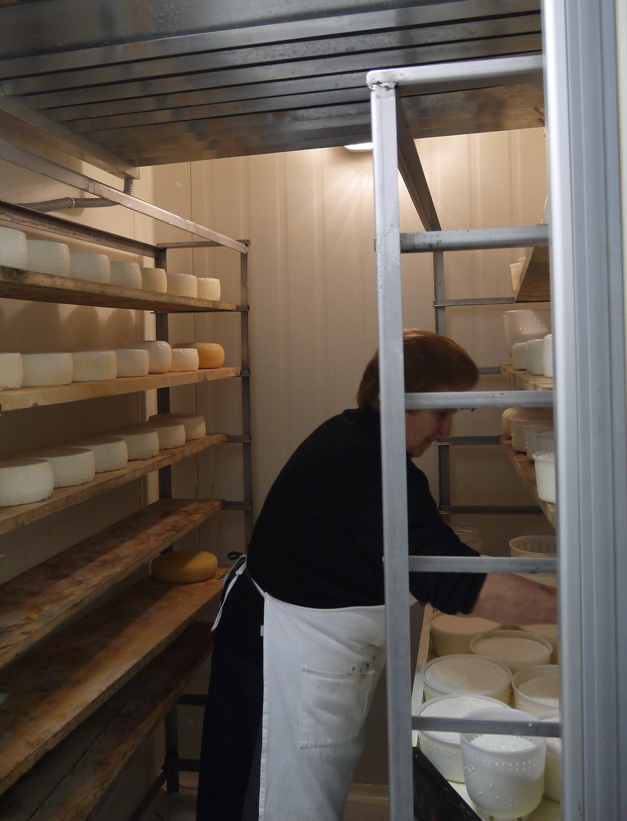
The Pecorino then went into a large refrigerated room to set. After a day, they can be removed from the moulds and salted, to help mature the cheese and give it the characteristic flavour.

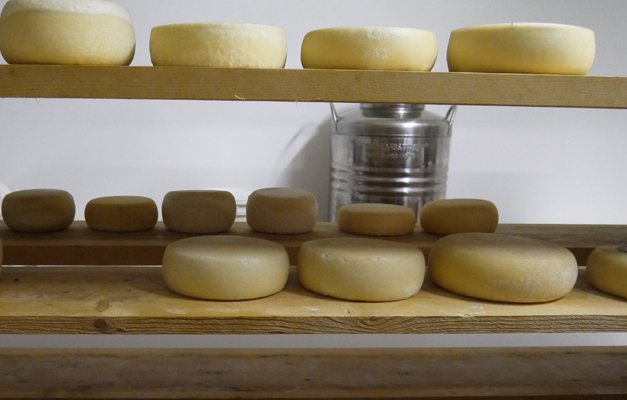
Then the cheese is cured, on long wooden planks depending on the maturity of the cheese required for from 15 days minumum to over 60 days. Finally it is washed and brushed to remove any fats that may have formed during the curing process and labelled – to be enjoyed with honey, pears and ham in traditional Tuscan style

The whey left over from making pecorino is used to make ricotta. Now, I’d seen this done in Sicily using cow’s milk. But, Maria’s method was a little different because she added a whole bucket of fresh milk into the whey before heating the entire mixture up to 85°C, adding a good handful of salt midway.
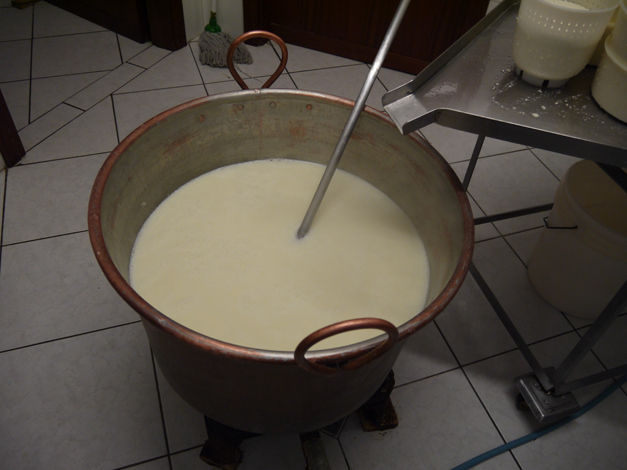
Once the curds are formed, they can be drained and put into ricotta moulds, or as we did, enjoyed warm!


Whether it was sheep’s milk rather than cows milk, the time of year or the addition of the extra milk to the mixture, this ricotta was intensely creamy and considerably richer than the version I ate at Donnafugata earlier in the year.


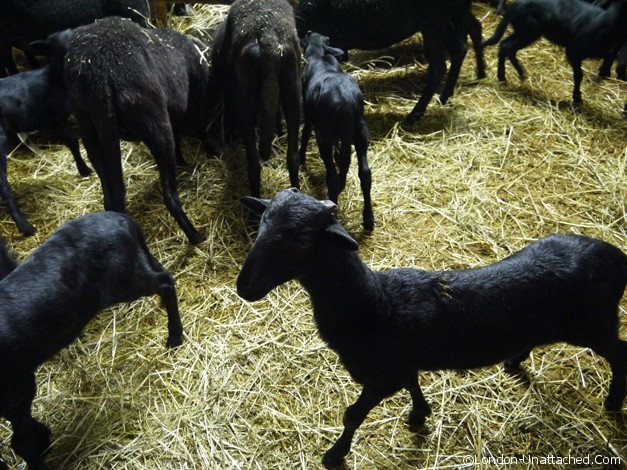
Now, this is very much a family business. While Maria spends her time making cheese from the twice a day milking, her son and grandson look after a small flock of the special black sheep. They are hand milked…and when olives are not being harvested, allowed to graze on the mountainside.

A prize winning flock of sheep, Maria showed us proudly into her son’s house where the fireplace and walls are covered with trophies he has won for his sheep.

And, we interrupted the evening’s milking (and feeding) to talk a little to Graziano and look at the sheep and lambs he keeps.

The entire operation is labour intensive and even now very little is automated, from the cheese making through to milking and tending for the sheep. Maria told us that it was a little easier now, with the cool room allowing her to store milk for up to 24 hours.
She explained that when she was younger and had a family, not only did she manage the cheese making but also had to cook for her family and look after the house. Now, like many artisan producers she wonders who will take over from her. But, at least her grandson Daniele is there and already involved in the family business.
I loved watching this cheese being made, in the most traditional of ways. And, finding another part of Italy making a different type of ricotta as a ‘second’ cheese. Many thanks to Michela for taking us to somewhere we’d never have found by ourselves and to TuscanyNow for the trip.
Thinking of visiting Tuscany yourself? Why not pin this post for later!



Great post! It makes it looks so easy…and makes me very nostalgic too. What do you think of keeping some of those sheep in London?
LOL you might need a big garden!
Great post. Love pecorino, you have really captured the Italian small scale production.
I really enjoyed this particular trip. It was good to see the pecorino being made as well as the ‘second’ cheese.
I bet this was such an interesting process to watch! I am absolutely obsessed with cheese, so I would have really enjoyed this little excursion!
it’s very special cheese – at least here, where we don’t often see raw milk at all…
That is again very interesting! I love cheese very much and if I had the chance I would try making my own. Lovely photos!
Thanks Chris. Well, you know who to ask when you visit Tuscany (not me, Miky!)