
Last Updated on October 21, 2023
Separatists and Secrets – the Mayflower and the roots of American Heritage:
2020 marks the 400th Anniversary of the sailing of the Mayflower with its 102 passengers to a new life in America. We are travelling England exploring the Mayflower heritage in a series of features and this trip takes us to Lincolnshire. The City of Lincoln is an obvious first stop for anyone visiting Lincolnshire. But, despite the stunning Cathedral, the Castle with one of only three original copies of the Magna Carta and a network of medieval buildings, there’s little obviously linking the City with the separatists. Instead, it is simply a great base to explore this part of rural England which was at the heart of the separatist movement and home to many of the Mayflower pilgrims. And, there are plenty of things to do in Lincoln itself.

Visiting Lincoln Castle and the Magna Carta felt like something of a pilgrimage in itself. The original document, one of only three in the country, is carefully protected in a bespoke building. It wasn’t until I left and read through the words of the Magna Carta that I began to appreciate its importance.
The Magna Carta itself is a remarkable document which had a major influence on the American Constitution. In England in the 1600s, there was something of a revival of the Great Charter – the Puritans and Separatists movements both keen to ensure that the power of the Monarchy was managed. Pilgrim settlers to America brought with them copies of Sir Edward Coke’s interpretation of the charter and it was their interpretation of the legal principles laid out in the Magna Carta that formed the foundation of the United States Constitution. The Mayflower Compact – the document produced by the first Mayflower Pilgrims to justify their presence in America includes some of the principles of the Magna Carta.

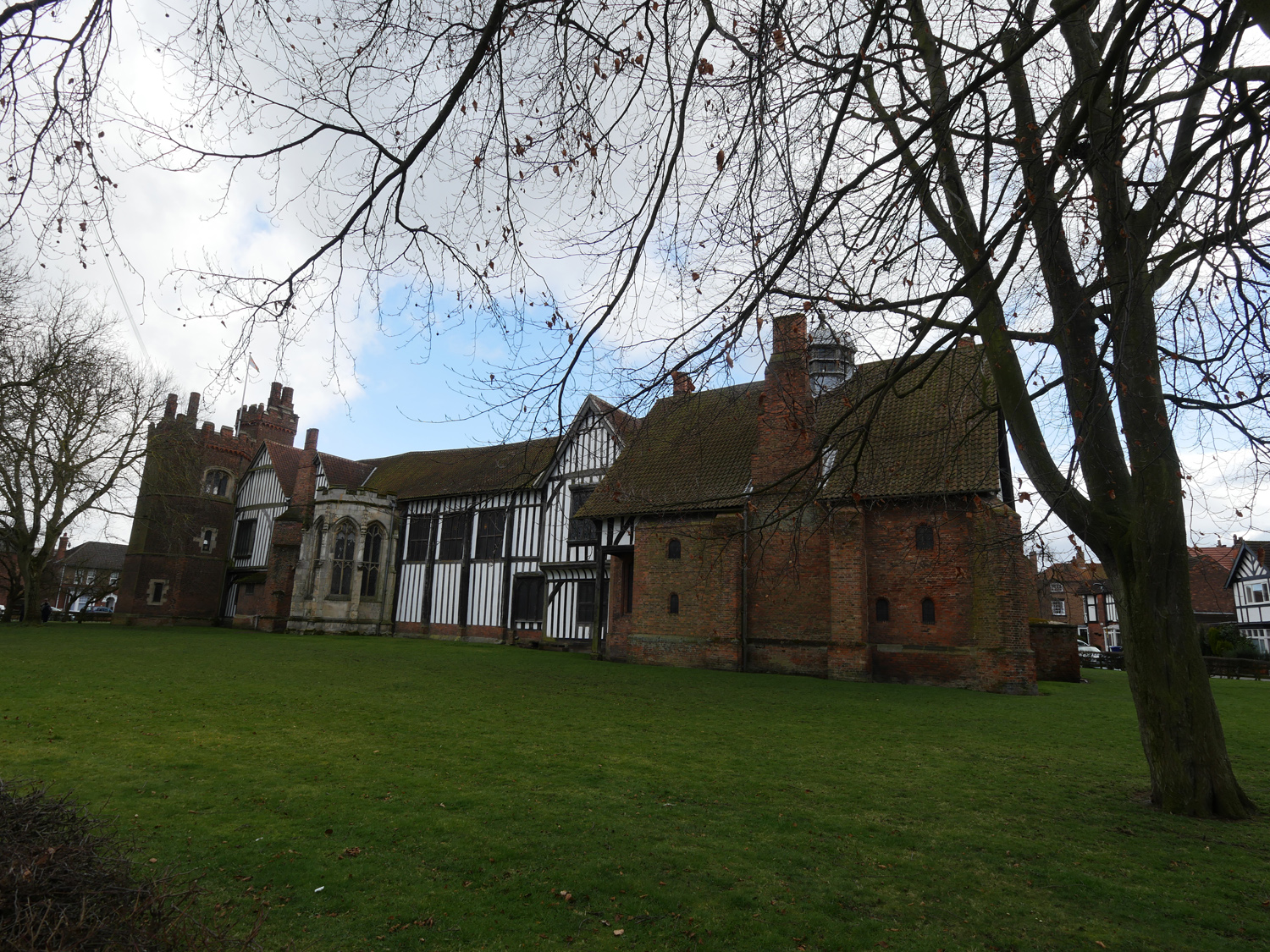
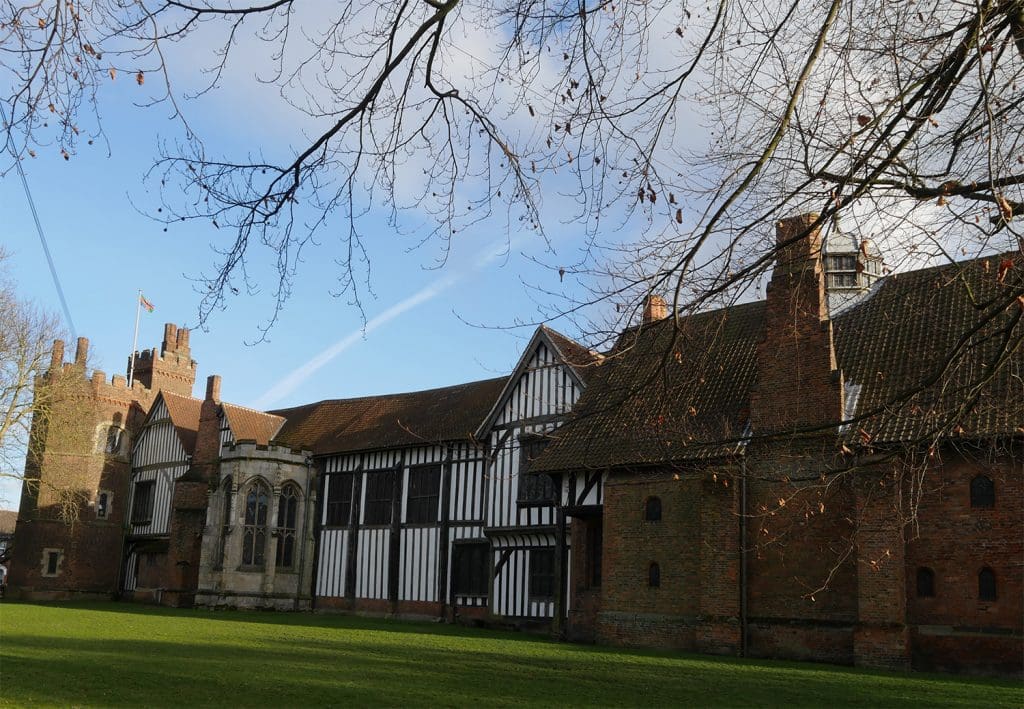
From Lincoln to Gainsborough is a half hour drive. And, it is in this small market town that for me, at least, the story of the Mayflower pilgrims and the separatist movement began to come to life. The medieval manor house, Gainsborough Old Hall and the church at Gainsborough became the base for John Smyth, a preacher from Lincoln who was deposed by the Bishop for his views, which he’d been developing since studying at Cambridge. Many of the Separatist leaders did meet originally as students at Cambridge, at the time a hotbed of radical thinking. William Brewster was at Peterhouse, John Robinson at Corpus Christie and John Smyth at Christs College.

John Smyth moved to Gainsborough in 1602. In 1603 James I succeeded Elizabeth I to the throne of England. He was far less tolerant of the Puritan movement, which aimed to stay within the Church of England and under his rule, John Smyth broke with the Church around 1605, joining the Separatist movement. It’s believed that he was able to preach in his own style at Gainsborough Old Hall under the protection of the new Lord of the Manor, William Hickman. Eventually, he had a congregation of some 70 people from the surrounding area – some travelling for 15 or 20 miles. That congregation split and those on the west of the River Trent met under the care of Richard Clifton at Babworth and later with William Brewster at Scrooby Manor.

The Separatists, however, were in danger as they believed the church did not need the hierarchy of bishops or indeed the King as the head. In the winter of 1607/8, John Smyth and around 40 of his Gainsborough congregation left for Holland, where they joined around 300 other separatist exiles already there.

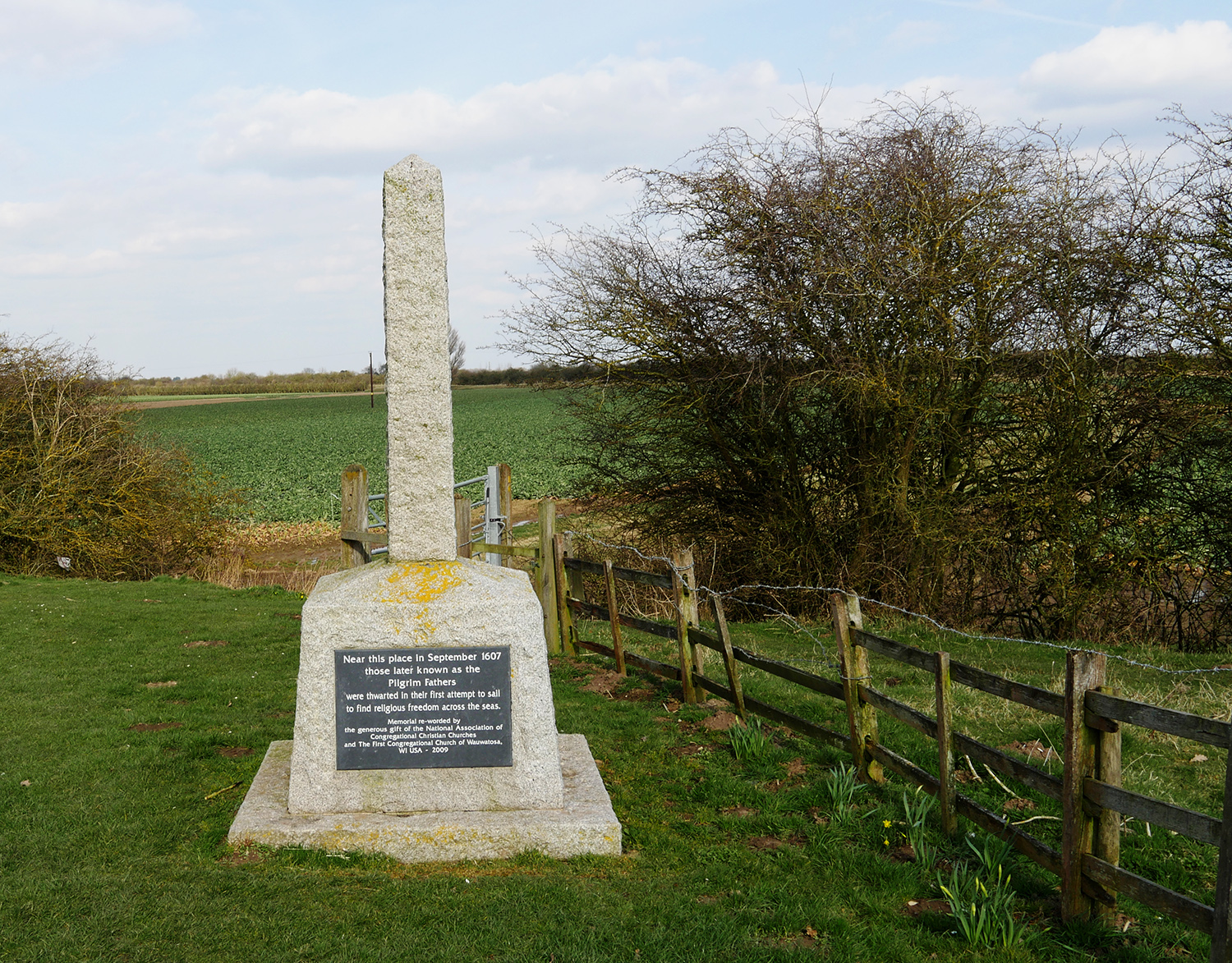
Meanwhile, William Brewster’s congregation determined to escape to Holland too. Their route took them to just outside Boston, to a place called Scotia Creek.
At the time Boston was an important and wealthy town that had already managed to manipulate the political situation to their own advantage. Originally the Medieval Guild of St Mary was somewhere you could pay for ‘purgatory offset’ and something of a centre of Catholicism. But, with the dissolution of the guilds in 1545, the building was turned over to be the administrative base of the new Boston.

With the Bible newly translated into English people challenged not only Catholicism but the new Church of England for maintaining a hierarchy of power between man and God. In Boston, there was already a strong dynamic challenging the established church and it is perhaps for that reason that Scotia Creek, near Boston, was chosen as the departure point for Brewster’s group of some 30 separatists, many of whom went on to become the Mayflower pilgrims.

The Captain of the ship who was to take them to Holland betrayed them and they were taken to Boston and held for a month before being brought before the magistrate to be charged with attempting to leave the country without the consent of the crown. Most of the group was dismissed but the seven ringleaders were sent to the Lincoln Assizes.

A year later they were, however, able to regroup and finally escaped to Amsterdam and then on to Leiden. However, they found the Netherlands to be too liberal, too ‘Dutch’ and heard of a new licence that might enable them to travel to America on a licence. Thus, the Speedwell was purchased in the Netherlands to transport the pilgrims with the Mayflower to the New World.

Boston itself continued to be something of a challenge to the Status Quo. John Cotton, a charismatic preacher based himself in Boston from around 1612. His five to six-hour sermons were the blockbusters of their time, with people travelling over 30 miles to hear him preach. His sermons had no kneeling for communion and no sign of the cross.

As a Puritan, he wanted to do away with the ceremony and vestments associated with the established Church of England. And, he was popular with the key members of the community – teachers, lawyers and civic officers. Increasingly under pressure from the mainstream church, he was the catalyst behind some 10% of Boston’s population leaving between 1630 and 33 as part of the Winthrop Fleet (he himself left in 1632), to settle initially in Salem before moving to Boston.

The first five governors of Massachusetts came originally from Boston Lincolnshire and the first American school, the Latin Free School, was based on Boston Grammar School; this school would eventually evolve into Harvard University.
And the new City they founded was called Boston, in honour of the town they had known, loved and left behind.
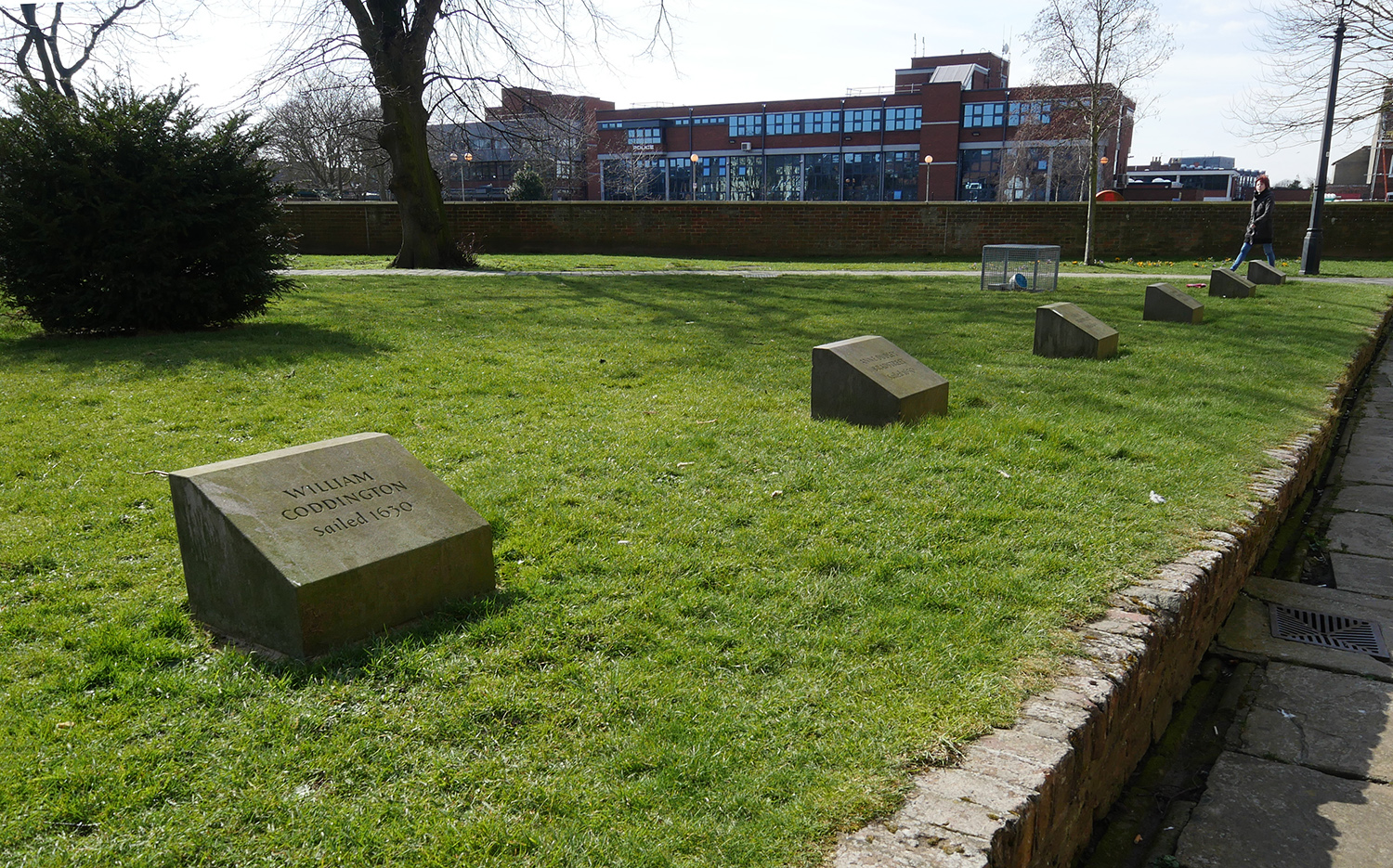
The original town of Boston is still a stunning place full of heritage with the original Medieval town structure of a marketplace with a series of connecting lanes still clearly visible. The Boston Stump, where John Cotton preached is a thriving community church. The displays in the Guildhall guides visitors through the history of the town from when Boston was second only in importance to London, a Hanseatic port with immense wealth and commercial importance, to the Papist Guild offering graces to the Separatist movement.

You can read more about the journey of the Mayflower Pilgrims as they made ready to leave England for their New World here on London-Unattached in a series of features about the Mayflower Heritage.

The Mayflower 400 Partnership, eleven towns in England including Boston and Gainsborough in Lincolnshire, are working together to commemorate the 400-year anniversary of the sailing of the Mayflower in 1620. Each of these towns will be developing their own programmes to celebrate the Mayflower 400 anniversary and Boston will be continuing their activities building up to 2030, the anniversary of the foundation of Boston USA.
If you are planning your own Mayflower trail, why not pin this post for later

I travelled to Lincolnshire to explore more about The Mayflower and the separatists who travelled to the USA in 162o, the Mayflower Pilgrims.
I was a guest of Visit Lincoln, Visit Boston and of the Mayflower400 project
I stayed at The White Hart Hotel, Lincoln – a charming historic hotel in the heart of Lincoln


I actually had no idea about this part of English history, that is fascinating! I have wondered if the English Boston had much to do with the ‘new’ American Boston, and now I know. I can’t imagine what it must have been like to found a new city!
It is amazing how they are connecting the history in the United States with the history in England. I feel like sometimes we forget that the story of the American colonies takes place on both sides of the Atlantic. I love how they are connecting the story to celebrate the 400th anniversary.
We definitely forget here – I don’t remember ever hearing much about the Mayflower here in the UK until now
So cool that you can see one of the original copies of the Magna Carta. This era in American history has always just seemed like the stories of a bunch of old white guys, but documents like that can really help you appreciate how important it was.
There are elements that we haven’t touched on yet either – like the fact that the Mayflower travellers only really survived because of the support of the Native Indians in the US – and that the first thanksgiving dinner was very much thanks for that first year of survival – and had more Indians present than Pilgrims
Fascinating to read about the Mayflower history in England and the Magna Carta influence on the American Constitution. This is certainly a different perspective from what we learned in school. Didn’t know the first five governors of Massachusetts came originally from Boston Lincolnshire and Harvard’s history. Think I must have to take this Mayflower trail and dig deep into history. Cheers.
It’s definitely worth visiting if you are in the UK
We’re afraid to say that we haven’t really explored this part of England, there is a lot of history here.
Your picture of the great hall does give a good idea of how the hall must have originally looked.
We were in Boston and Salem last year and saw a few graves of people who were passengers on the Mayflower. We love the fact that that they found the Netherlands too ‘Dutch’ and too ‘Liberal’, puritanism doesn’t sound like a bundle of laughs.
It was fascinating to read that the castle in Lincoln has one of only 3 copies of the Magna Carta. Even more fascinating to learn that this was the basis for the American constitution. We in Canada adopted so much of the British Commonwealth practices. An interesting path for those who finally made it on the Mayflower.
Interesting to hear the Mayflower history that happened in England. In the US schools, all we get about England is the persecution and that’s why they left. The history that we learn of the Mayflower and the Puritans is all that happened once they landed here. Thanks for sharing this!
I remember reading your earlier post about the Mayflower Pilgrims and their story and this was a good sequel I’d say. Lincoln Castle seems like a great place to visit for someone interested to dive into the history of Magna Carta and American constitution. I can see your ‘pilgrimage’ seems to have quite the effect on you!
I grew up in Norfolk – a nearby county – but even so we hardly ever went to Lincoln or Lincolnshire. It’s rather an unrecognised treasure here in the UK
By heck, a blast from the past all these places. I live in the UK and used to do a lot of motorcycling around the country. This ure did bring back memories. I remember Boston and their horrible football club. But Lincolnshire countryside sure can be pretty on nice days. 🙂
Boston itself is like a lot of East Anglia – truly charming and unspoilt but so much so that the local people just don’t realise!
I love places that are all about the history, and I remember visiting sites in America related to the Mayflower pilgrims, but have not explored the sites here in England! So this is added firmly to my wishlist for a future staycation, thank you!
Isn’t it funny how we explore ‘far and wide’ but forget about things on our doorstep! Every year I vow to do more in the UK!
Quote the history lesson here. Loved learning that Brewster’s group of 30 separatists became the Mayflower pilgrims. Would have loved to hear John Cotton’s sermons too! Sounds like a lot of important decisions were made here that impacted America in the end.
You know we don’t learn much about the Mayflower at school – I think it’s more taught in the US!