

Last Updated on March 20, 2020
Marzamemi – tranquil after the end of the Mattanza:
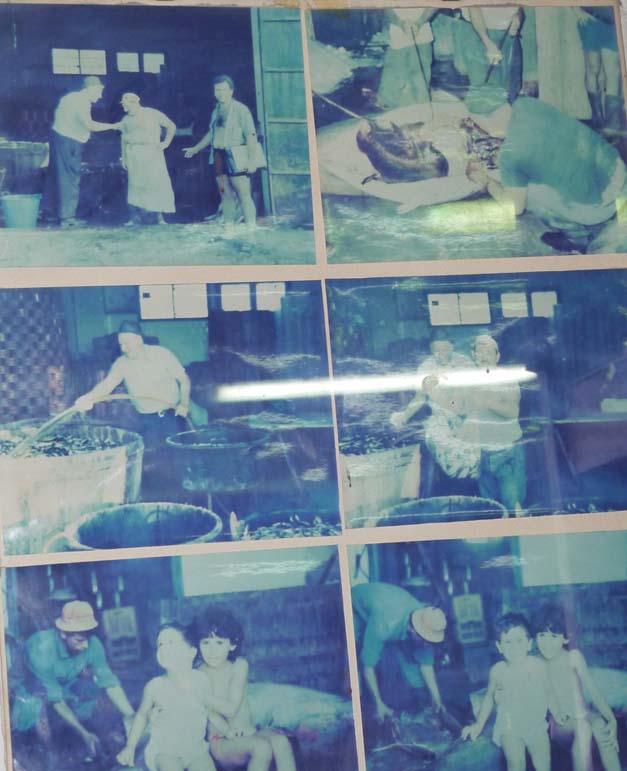
Despite my aspirations as a food and travel writer, I knew nothing about the mattanza and tuna fishing in Sicily until my recent visit. Ostensibly our trip to Marzamemi was for the benefit of the art students in our group who were looking for subject matter to draw. But, for me, Marzamemi was enlightening for another reason. Our first stop, to a large warehouse selling tuna products and other local artisan foods held a clue with the old photos on the wall of children sitting happily on the back of slaughtered tuna
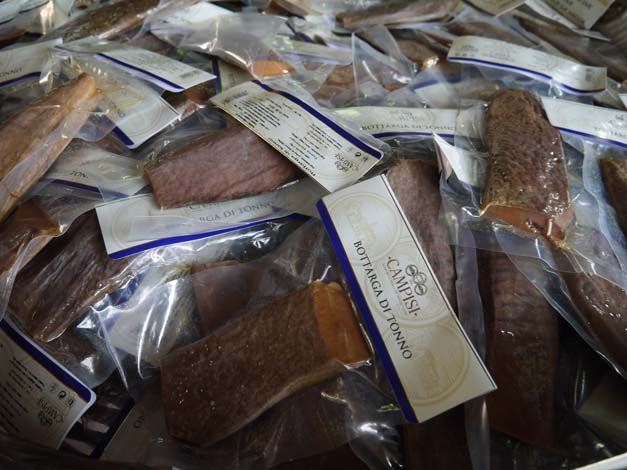
The bluefin tuna is the rarest and most sought after type of tuna due to a combination of water, temperature and salinity that gives the fish a unique flavour. It is most prized in Japan and over 80% of Sicilian bluefin is sold for sushi and sashimi.
The traditional method of catching and slaughtering this fish now seems rather barbaric. For hundreds of years, fishermen in Sicily used dense nets to fish for tuna in a process known as the mattanza. This took place in May and June when the giant fish swam past the coast of Sicily. A series of vast nets were lowered into the water to catch the passing fish in successive nets which were gradually restricted in size and raised toward the surface, where the fish were slaughtered with large spears. One of the interesting things about the mattanza was the team effort of the numerous fishermen involved in each catch. The process was led by the ‘rais’ who directed the work of the men in the other small boats. Because a mattanza is the catch of an entire school of fish, dozens of tuna could be captured. And, for that reason, the term mattanza is now vernacular for ‘massacre’ in the Italian language.
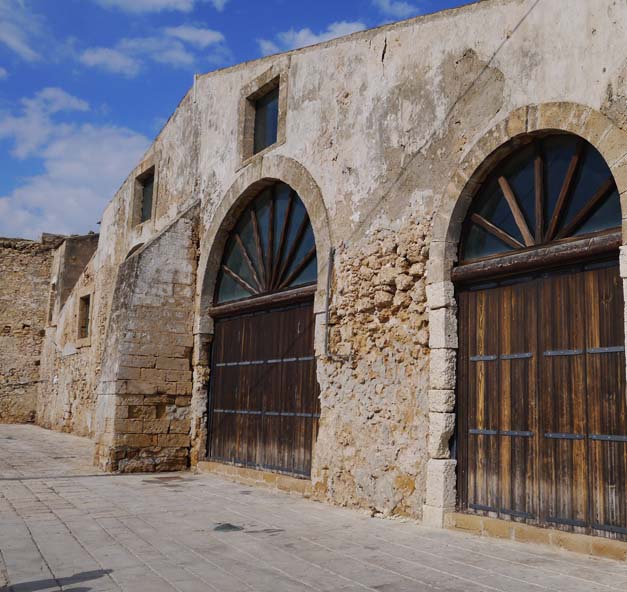
The bluefin tuna is an endangered species and as a result, subject to severe fishing restrictions. The Tonnare in Marzamemi is closed and the village is now more of a tourist destination than a working fishing centre, although since tuna fishing was always seasonal there are still working boats in the harbour. I am no expert on responsibility for sustainable fishing or the depletion of stocks of a particular variety but wonder that this fish is still caught at all if it is an endangered species.
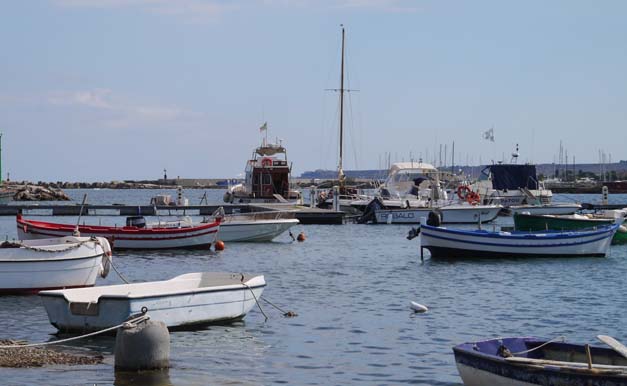

What is left in Marzamemi is a pretty, tranquil village, pristine and charming. But, something of a ghost town.


Since writing this feature, I’ve learnt a little more about Tuna fishing in Sicily from a well-regarded company who help visitors who are interested in Sport Fishing.
Learn more about what they do in this short documentary, originally produced for TV.
Andrea, who stars in the video was, at the time working as a local fisherman and guide. Since then he’s qualified as an official tour Guide (specialized in Sicily) and tells us why this has become his passion.
The Mediterranean sea is an important place for the reproduction process of the Atlantic Bluefin Tuna.
Endangered by overfishing over the last 40 years, in the last decade, thanks to the strict regulation about catching this particular Tuna species, the population of Bluefin managed to recover to a much better point. Now, they are present in good quantity and it is not difficult to see them jumping while sailing around Sicily, and perhaps elsewhere in the Mediterranean. However, the Bluefin Tuna recovery process is not yet complete and this fish may be still at risk because of professional fishing and illegal fishing.
The European regulations allow keeping certain quotes of fish per country, to manage between professional and recreational anglers. Sportfishing for Bluefin Tuna is allowed with specific authorization and keeping a Bluefin involve very strict rules (minimum size of 30kg, very short season, a very small part of the country quote and limit to 1 fish per day).
When sport fishing for Bluefin, it is, however, quite possible to release the fish back to the sea in perfect conditions. In fact, this is the way that scientist goes to study the species, measuring, weighing, tagging the specimens, before letting them go back in the sea.
A sustainable Bluefin Tuna sport fishing:
Sport fishing for Bluefin tuna gives a clear view of the alternative and much more sustainable way of what fishing for these spectacular animals could be in the future. The incomparable experience of fighting with a Bluefin Tuna is of huge interest for anglers worldwide, and it is always possible to release the opponent after the fight (like tropical Marlin and billfish fishing). We believe that this may help to generate a very interesting tourism-related and sustainable economy and provide a key element for the future of the entire species. Just look to the USA for a good example of what sportfishing may represent in a state economy , where recreational fishing is a very big part of the system and manages to support environmental conservation in a decisive way.
If you are interested in sports fishing, then please do contact him to find out more. You can find more information about shore fishing in Sicily and Italy at www.sicilyfishing.com/bluefin-tuna-fishing.html and https://fishingitaly.com/




I so want to go to Sicily! the fresh food and beautiful coast line are stunning
Ancora le nostre acque sono calde e terse | Di pesce mediterraneo molto e tanta tranquillità per voi !
beautifully put – I hope to be back soon – ciao;)