Last Updated on August 20, 2022
Five-star luxury hotel in Saint-Emilion
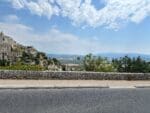
The medieval town of Saint-Emilion, near Bordeaux in southwestern France, is renowned internationally for its superb wines. Its vineyards have been declared a UNESCO World Heritage Site and grow right up into the town itself. Set on a steep hill, the stone buildings with their red-tiled roofs are picture perfect. It is the sort of picturesque and photogenic town you might expect to see in a movie. This is but the backdrop for the magnificent Hôtel de Pavie, the jewel in the crown of Saint-Emilion accommodation. Set at the pinnacle of the town, this five-star hotel has a unique setting and its level of comfort and the beauty of its design may make you reluctant to leave its doors.

The Hôtel de Pavie is owned by the Perse family who also owns Chateau Pavie a few miles away, the location of their vineyard, 1er Grand Cru Classé A. In pre-revolutionary France, the hotel building was a convent where pilgrims were offered accommodation. Its post-revolutionary role was as a post office and later an inn. Next, it became a hotel restaurant then transformed into a tavern and later a post office. Post-WWII it became an inn and dance hall and finally went back to being a hotel restaurant. The Perse family bought it in 2000, completed a restoration and refurbishment and it joined the Relais and Chateaux hotel group in 2003. With its two Michelin star restaurant, La Table de Pavie exudes relaxed luxury and is a peaceful haven offering outstanding hospitality.

Saint-Emilion is an easy two-hour trip on the TGV from Paris so is convenient to fit in if on holiday to the capital. At the tiny station, we encountered a Tuk-Tuk service that whipped us into town in minutes, the winding road passing through vineyards and setting the scene for a magical day ahead. As you walk onto the terrace of Hôtel de Pavie, the view takes one’s breath away. On three sides the large terrace provides a bird’s eye view of the town and vineyards. Once inside, met by warm and friendly staff, chicly dressed in navy, one’s eye is drawn to one fabulous feature after another. Hôtel de Pavie is filled with art – three engaging Bernard Buffet paintings grace the entrance, and every surface is beautifully designed. From glass doors to table tops, and furnishings to objet d’art, every item is unusual and eye-catching.

The hotel has a couple of houses attached to the central building via a glass lift carved into the rock and a garden. It has 17 rooms and five suites designed by architect Alberto Pinto with five new suites recently opened. Scattered about are a number of private terraces amidst the old stone walls with views onto red tiles roofs and the belltower. There is a small fitness suite for anyone who feels the steep streets are not a sufficient workout. Accommodation is also available at Chateau Pavie in the heart of the vineyard. We stayed in the newly opened Suite House, a short walk from the main building, which, as the name suggests, contains a number of suites. This being Saint-Emilion, this is no new build but rather a renovated 16th-century trading house. The acacia suite was magnificent with an expansive floorspace and stunning décor. In keeping with the age of the building, the walls are stone and the original beams are painted cream. These textures contrast wonderfully with the contemporary furniture and dark wooden doors and built-in cabinets. While there were plenty of beautiful objects to admire, the overall look was streamlined and had a minimalist feel, very calming and utterly chic. The lighting designer must have had a ball – I counted no less than 11 unique contemporary wall sconces and floor lamps.

The living area was very large with three areas. Firstly, a seating area with a coffee table, large sofa and armchairs with gorgeous, textured fabrics in tones of stone and burnt orange. Secondly, a contemporary wooden desk for those who may want to put in a bit of work. Thirdly, a beautiful cabinet which housed the minibar fridge and alongside a round wooden table on top of which there was an enormous designer chess set. Along one wall was a dark wooden cabinet on which there was a coffee machine and kettle, a flat-screen TV and a lovely welcome gift of complimentary water, chocolate, mirabelle plums and an egg-shaped dish containing almond macaroons which have a long history in Saint-Emilion. In the 17th century, Ursuline nuns living in the town were in charge of the almond harvest, They used almonds to bake macaroons on vine shoots and these delicious biscuits are part of the culinary heritage of Saint-Emilion.

Through a pair of dark wooden double doors, we found the bedroom. Another sizeable room with a view over the vineyard across the road. Every design feature was noteworthy. The king-sized bed was elegantly dressed in white linen, with huge pillows and a wrap-around headboard. A second TV sat on top of an expansive wooden sideboard that ran the width of the room and contained coffee table books and contemporary ceramics. A large rug in shades of taupe and burnt orange chimed with a sofa and armchair. A trio of original artworks hung on the wall. In the evening the staff discreetly closed the shutters on the windows to ensure a good night’s sleep.

Through another set of wooden doors lay the dressing room, beautifully fitted out with dark wooden shelving, a safe, and plenty of hanging space alongside a full-length mirror. The final room was the bathroom, with a separate toilet area. What a spectacular space. Marble floors, a large egg bath, a double basin island in marble with two large basins and a huge, double-sided round mirror, the feature I loved more than all this was the double rain shower. It is the first time I have encountered this in a hotel and it felt like the epitome of luxury. The robes and towels were super fluffy and the bathroom products by Hôtel de Pavie had a lovely floral scent. The view from the window was over the vineyards of Clos Fourtet.
I visited a few other rooms in the main hotel building and each one is a joy. All uniquely decorated they are appointed with the most gorgeous fabrics and quirky touches. One of the rooms has its own garden in which are enormous white sculptures of a rhinoceros and a bear and cub.

It was tempting to spend all afternoon in our luxurious suite but off we went to explore this lovely town. The tourist office runs tours of the hermitage of Saint-Emilion, catacombs and most fascinating of all, a subterranean church, called the monolithic church which is hewn from a single block of stone. The Hôtel de Pavie is built on top of it. The story goes that in the Middle Ages, the town was on the secondary route for pilgrims going to Santiago de Compostela. In order to attract more pilgrims, and hence income, to the town, the hermitage was opened. Emilion was a monk who fled Brittany to escape persecution, He lived in the area in the 8th century and is believed to have performed miracles and drew around him a community of monks. Dug into the limestone cliff by Benedictine monks between the 11th and the 12th centuries, the monolithic church put Saint-Emilion on the map for travellers and generated income from the sale of the limestone removed from the excavation of the church. The largest monolithic church in Europe, it has the proportions of a cathedral and from all around the town one can see the belltower that is built above it and which soars 53m up into the sky alongside Hôtel de Pavie. Nowadays only 10% of tourists visit Saint-Emilion for the sites and the rest for the wines. I recommend you consider both.

Saint-Emilion is home to some 70 permanent residents but hosts 1 million visitors per year. Being a small town, it is very busy during the day with the restaurants and multiple wine shops full of happy customers enjoying tastings and purchasing a stunning range of available wines. Staying at Hôtel de Pavie gives one the opportunity to experience this special environment in the evenings when the daytrippers have left. Then one can relax on the terrace with an aperitif, enjoying the superb view of and watching as the sun sets behind the Romanesque tower. A two-star Michelin restaurant, La Table de Pavie is on-site with a superb menu by renowned chef, Yannick Alléno.
After an extraordinary dinner which is worth travelling for even if you are not staying in Saint-Emilion itself, I had a deep sleep and woke to feel bereft that I would ever need to leave. Breakfast was served on the terrace and was a peaceful way to ease into the day. A gourmet breakfast was brought to our table on a large tray. This included freshly squeezed juice, a basket of viennoiseries with three types of breads, crispy, buttery croissants and pain au chocolat and, another regional speciality, canelés which are small pastries flavoured with rum and vanilla. There were two kinds of butter – salted and plain with honey. There was rhubarb jam and red berry jam and chocolate spread. A bowl of perfectly scrambled eggs accompanied a platter of charcuterie and another of cheese. There was fruit salad and lovely yoghurt. With a pot of Darjeeling and another of coffee our happiness was replete.

Saint-Emilion has been successfully marketing itself since the Middle Ages, although nowadays the pilgrims are more likely to be devotees of the acclaimed wines of the region. If you have not yet visited this town, put it on your list. Treat yourself to a stay at Hôtel de Pavie which is not only located on top of the town but is top of its class. From the outstanding accommodation, and beautiful common areas including an expansive bar, lounge and terrace, to the wonderful staff, the superb restaurant and the most luxurious surroundings, Hôtel de Pavie is a gem.
5 Place de Clocher, Saint-Emilion 33330 France