Last Updated on October 28, 2023
Understanding Cretan Cuisine
A unique hotel, just a few kilometres from Chania in Crete, Mistral, established for thirty years caters exclusively for solo travellers. It’s a place where you can pick your own pace and your own interests and shape your holiday around that, but still have a home from home to return to in the evening. Family-style meals are served around a long table with wine flowing and plenty of conversation from the guests who come from all walks of life. Those solo traveller friends of mine who have tried are unanimous in their love of the experience and hospitality shown by the family and team that runs the place. People return year after year – sometimes booking two trips! It’s a good place to get an idea of Cretan cuisine – but, by joining the Flavours of Crete activity week, you can learn a lot more about this uniquely healthy way of eating. In my next feature I’ll cover the kind of dishes you can expect to learn about – this article is an overview of the activities that you can join.

The largest island in Greece, Crete is generally warm and sunny by June through to September, but during the shoulder season, while the weather is a few degrees warmer than in the UK, you can need a jacket during the day and a cardigan or sweater in the evenings. So, from Mid-April through to the start of June, the entrepreneurial hoteliers run a series of activity weeks, which are mirrored toward the end of the season, from September through October.

The year starts with Walking Week – guided hikes through Crete. A well-established week, I learnt that the team at Mistral tailor the walks depending on who is there. Next for 2023 is Flavours of Crete, the week that I was invited to join. The promise of trips to local organic farms, apiaries, olive oil mills and more together with cookery classes sounded fabulous. And like every holiday at Mistral, if one of the activities isn’t right for you, no one will pressure you into taking part.

The activity weeks all start on a Tuesday and end on a Tuesday so you will be picked up at Chania airport by the team. It’s entirely possible to book a few days on either side of your activity week (or indeed another full week) and on the Flavours of Crete trip, there were people doing just that. In fact, you could spend three happy weeks of ‘activities’ – starting with walking, then food and drink and then health and well-being (the third trip in the sequence!). Or you could spend some time on the beach and by the pool!

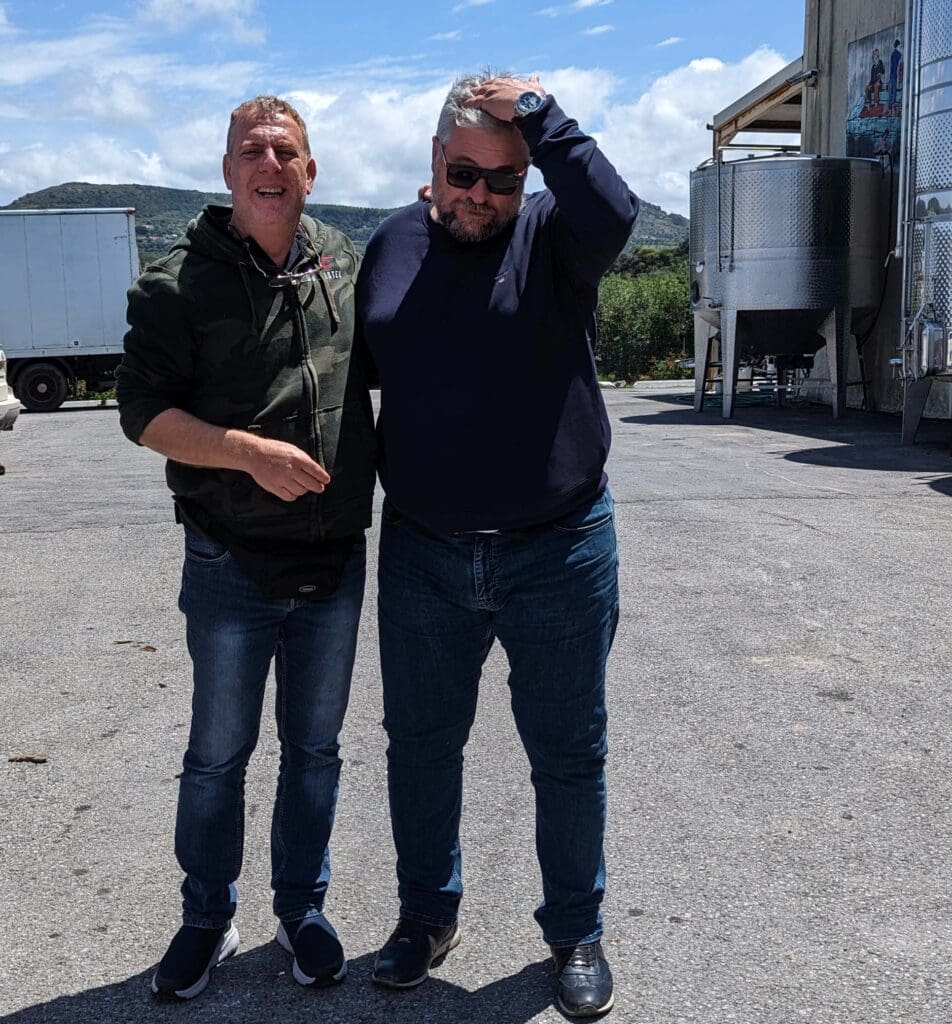
The stand-out memory for me from the Flavours of Crete trip is one of authenticity. It became a running joke that wherever we went, Adonis (who runs the hotel with his wife Aura) was ‘related to’, ‘lived next door to’ or ‘grew up with’ the people we were visiting. At the Aviary, set high in the hills that surround Chania, we learnt that the beekeeper had been Adonis’s neighbour.
The organic farm was just down the road from the hotel – and owned by the uncle of Manos, who drove us on excursions, served drinks and was generally around to help. We learnt that in the winter season, when the hotel is closed, Manos helps on the farm. And at this time of year, it’s where the fruit and vegetables we ate every day come from.

And, of course, our cookery classes were from Mistral’s own chef, Kiki, who has taken over from Adonis’s mother, but still uses many of the original recipes we all enjoy!
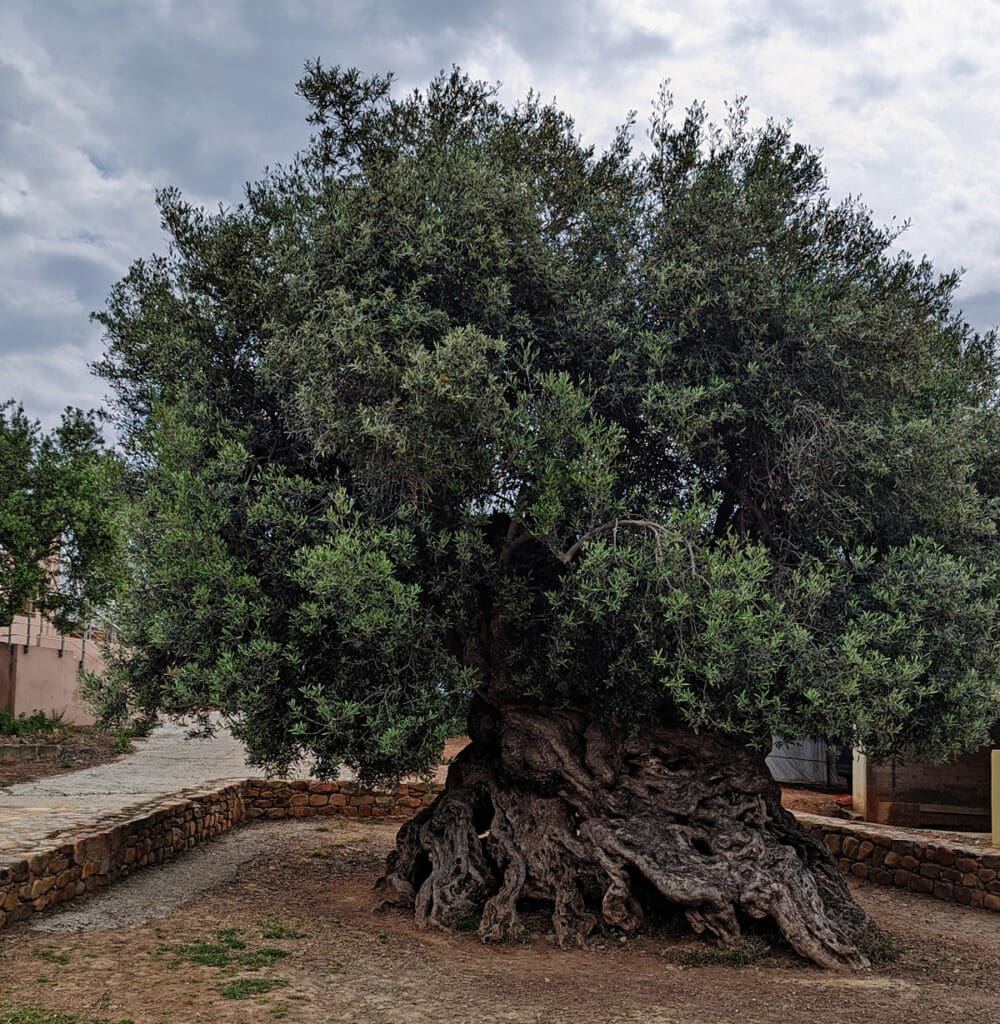
We started the week by learning more about olive oil – what else! In fact, the importance of olive oil in the Cretan diet was reiterated on several occasions. While we all know about the Mediterranean diet, the Cretan version uses over 30kg of olive oil a year – and that’s at least twice as much as mainland Greece and more than 20 times as much as we consume here in the UK on average. First, we visited the ancient olive tree of Vouves. At least 2,000 years old and possibly over 4,000 years old, it still produces olives and is believed to be one of the oldest trees in the world. It’s been a protected natural monument since 1997 and there’s a small museum nearby, the Olive Tree Museum of Vouves, where you can learn about traditional olive cultivation and see some of the tools used for hundreds of years.
From there we went on to Biolea Astrikas Estate. Something of an old hand at visits to olive oil mills, I was genuinely astonished at how much I learnt from our very enthusiastic guide. I have visited a traditional olive oil mill in Tuscany but, in the frenzy of harvest-time oil production found it hard to follow the method. Not so here. The principal difference is that, unlike the modern centrifuge method, Biolea uses an updated version of the old way of producing oil. Once the olives are harvested (using sticks and nets), they are cleaned and any leftover sticks and twigs are removed. Then, they are crushed for 20-3o minutes between three massive granite millstones. The resulting paste is turned gently before being spread on round filters in a press. The filters are stacked up a bit like a burger and then pressed to release the oil. The remaining pressed mixture is pomace which is used as a fertiliser or burnt. And the liquid gold that results is true cold-pressed, extra virgin olive oil.

Our guide was passionate about explaining that when you buy olive oil, you need to be very careful about how it is labelled. To preserve the maximum health benefit from olive oil it needs to be marked as cold pressed – not cold extraction for instance. She also explained that the amount of oil produced from olives depends on the time the olives are harvested and the weather throughout the growing season – anything from a ratio of 6:1 olives to oil down to 4:1 at best.
Once the oil is extracted it’s left to settle in a tank for 6 to 8 weeks before being bottled in dark glass bottles to help preserve all the nutrients.

A tasting will probably convince you to buy (I came home with two bottles!) and whether you visit with the group from Mistral or by yourself, you can book and enjoy what we came to know as a ‘light lunch’ – where you’ll feast on olive oil rich traditional Cretan dishes. We all agreed that the chef preparing lunch at Biolea produced some excellent dishes – including Staka me ayga , a Cretan speciality of eggs in cream

Some of the trips on the Flavours of Crete week overlap with regular excursions that the hotel runs. So, the next day, we headed off to Falassarna Beach and then on to Sfinari to learn about making Kakavia soup at Sunset Restaurant.

There’s more about this in a previous feature about Mistral, but this time I learnt a little more about the family that runs Sunset Restaurant. Everything from fish to fork comes from the family. They grow their own vegetables and the fish is caught by Nikos, one of the sons, who is a spear fisherman.

Eleni, the matriarch, runs the show in the kitchen, cooking old family recipes like the famous Kakavia soup. Her husband, Gianni, runs the wood-fired grill outdoors and does everything from growing vegetables to foraging for seaweed and even the sea salt we ate. Their youngest daughter, Marilena and another son, Tria, manage the restaurant and serve guests.

Your ‘light lunch’ here will include a Cretan version of Greek salad with Mizithra rather than feta and a whole range of special dishes that are in season – perhaps one made with foraged seaweed, cuttlefish stuffed with more Mizithra and then grilled on the barbecue. And of course Kakavia.

We learnt that traditional Cretan food doesn’t use spices other than pepper. Instead, the flavour comes from garden herbs, very fresh vegetables and salt.


It’s impossible for me to visit a local farmer’s market without buying things to bring home. At Kolymbari I ended up with a jar of olive paste, a massive packet of dried oregano, Cretan mountain tea and a pack of walnuts. All for less than 10 euros. If you have space in your suitcase, I’d recommend all of that and more. Cretan herbs seem to be packed with flavour – and the olives are just delicious.

A tour of Pnevmatikaki winery and then a wine tasting with (you’ve guessed) a light lunch followed. We thoroughly enjoyed trying both the wines made with indigenous grapes and those using more common varieties. Pnevmatikaki is a well-regarded winery with two recent Decanter wine bronze medalists – Eklektos Red (2019) and Moscato Spinas. I rather liked the gold medal-winning Mithymnios (Cretan Marouvas) which is made from Romeiko and for me was almost like a fortified wine – a sherry or Madeira. Apparently, it’s a traditional recipe!

Our cookery class with Kiki was preceded by a visit to Manos’s family farm – an organic smallholding with goats and hens and with everything from olive trees and avocados to lettuce, courgettes and tomatoes. An abundance of produce, even in early May, was a good indicator of what makes Cretan food so delicious and healthy. I’m saving the cookery class for later because I’m fully intending to make my own dishes and share one of the recipes from the book we were all given at the end of the course.

Apprehensively on the morning of our visit to the Aviary, I dressed in long trousers and a long-sleeved shirt. Up in the hills above Chania, after donning netted hats to stop the bees from stinging our faces we learnt first-hand about the craft of beekeeping. Andonis the beekeeper told us that bee stings were actually healthy – unless they were somewhere that stopped you breathing (!).
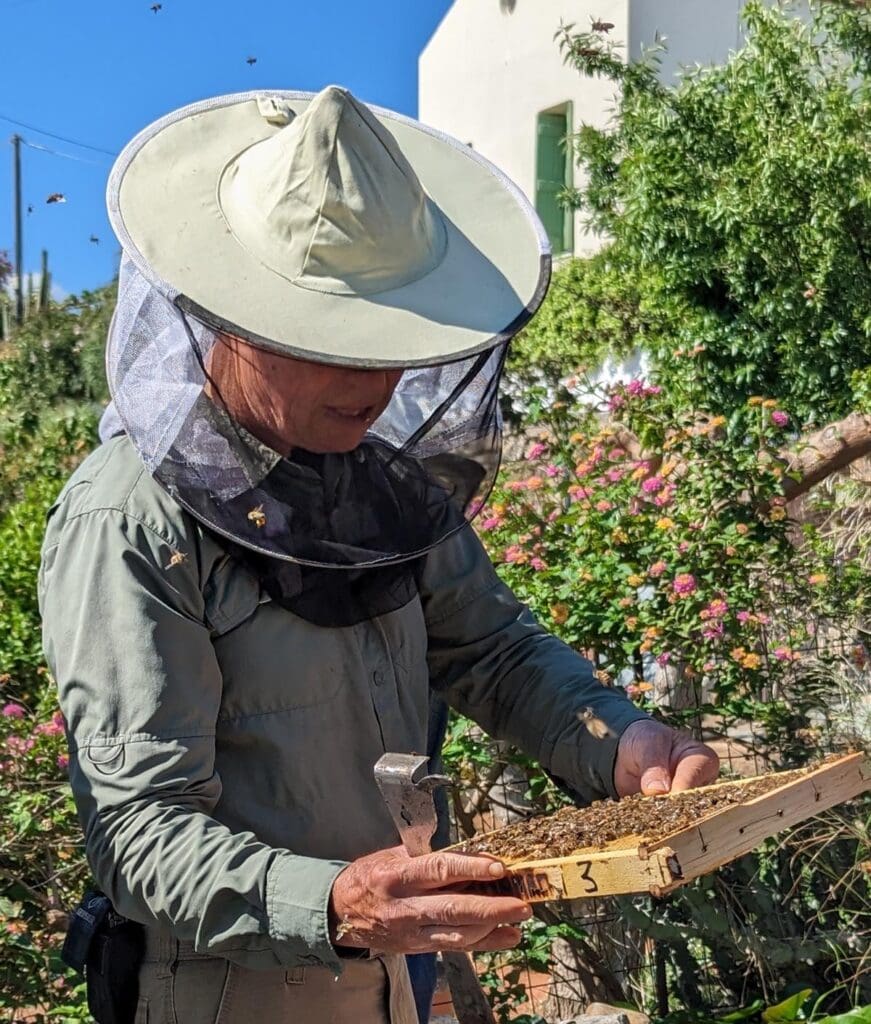
We went on to taste some of the honey that is produced there, with local cheese and walnuts. And, we sipped happily on honey raki with Andonis and his wife sitting on the terrace above the hives. It’s a world apart from London – and perched up in the hills I can’t imagine what life is like living there year round.

The final excursion in the Flavours of Crete week is to the Botanical Park. I had visions of some kind of Cretan version of Kew Gardens – and while there’s a smidgin of truth in that, the Botanical Park is really quite spectacular, with not a greenhouse in sight but with plants from 3 different climate zones. In 2003 this part of Crete was devastated by wildfires. Petros Marinakis who founded the gardens told us that the area was completely destroyed, with around 100,000 olive trees that were over 400 years old wiped out. And, from the ashes of the fires came an idea to regrow the trees and flowers and bring back life to this part of the island.

He and his brothers built the Botanical Park in an area where he knew that plant life would flourish, thanks to the unique microclimate. And, to reflect the rich biodiversity of Crete, they planted, using a permaculture method that is sustainable and allows everything to grow in harmony. There’s no need for pesticides or weedkillers. He showcased how traditional Cretan dishes are made – simple fresh vegetables and a lot of olive oil – and then we went off to explore.

We took the shorter of the two routes around the park, marvelling at the diversity of plant life on the different levels. The full walk is 2.5km and is, in parts, quite steep. But we still saw families with pushchairs and older walkers with sticks to help them along the way.

The entrance and exit from the Botanical Park is via a shop selling local produce and a restaurant where we enjoyed yet another of those ‘light lunches’. In much the same way as at Mistral itself and at the Sunset restaurant in Sfinari, the food served in the restaurant is traditional Cretan fare, made with seasonal fruits and vegetables from their own gardens.

The whole project is financed by the shop and restaurant, so if you’ve enjoyed the park do stop and eat – or buy some of their delicious oils, jams and herbs to take home.
Of course, the Taste of Crete week also includes a Sunday evening trip to Chania and supper by the harbour (that’s one of the excursions which are available throughout the season at Mistral). It’s a jolly affair and one not to miss.

This is the perfect way for anyone who wants to try Mistral for the first time and isn’t quite sure how it will work to dip their toe in the water. The schedule of activities is all optional, but the excursions mean that anyone taking part will always have something to do. There’s something about piling into one of the hotel minibuses and going off for the day that builds camaraderie in the group. Or perhaps that has more to do with the ‘light lunches’ that inevitably involve copious quantities of wine?

Mistral Fact Box.
The Mistral Hotel has 35 rooms with free wi-fi, a spa, two pools and a restaurant serving the finest traditional Cretan cuisine. The hotel also organises a range of excursions, cultural events and themed weeks. Located at Maleme near Chania in western Crete, the cost of themed weeks this year is around 1400 euros for a standard room and 1550 euros for a deluxe room depending on the week (see the Mistral site for more information and firm pricing). That includes hotel transfers on Tuesdays only and a range of excursions and events depending on the theme of the week together with half board and ‘light lunches’ if you are on an excursion
The next scheduled theme week is travel writing which will run from 18th-25th July.
Health and Wellbeing (with Yoga) runs from 3rd to 1oth October 2023
The next Flavours of Crete Week is from 10th to 17th October 2023
Walking Week is from 17th – 23 October 2023
Discounts of 10% are available for stays of 14 nights or more. For more information visit www.singlesincrete.com or email info@singlesincrete.com
Do also check out our review of walking week at Mistral and of a regular stay at the hotel. I will be sharing more about the food at Mistral and a recipe that you can try yourself in my next feature