Last Updated on November 1, 2025
Experience Sicilia DOC – The Heart of Sicilian Wine
My love affair with Sicily started right from my first visit, fifteen years ago. The largest island in the Mediterranean, there’s so much to see and do. To the southeast, the Notto Valley, Catania, and Syracuse, with their stunning architecture and archaeological heritage; in central Sicily, areas of unspoilt countryside; in the Northwest, the gritty, fast-paced Palermo. All have their appeal. And it’s an island with some fabulous wines that need further exploration, so visiting with Sicilia DOC seemed the perfect opportunity to learn more.
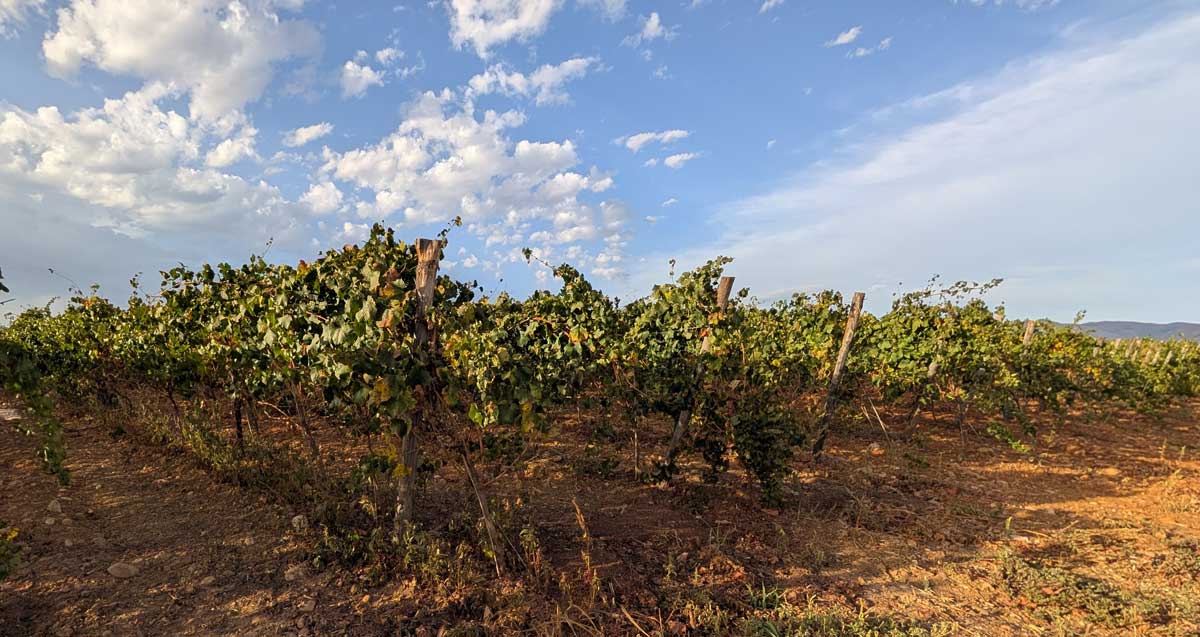
Sicily has been making wine for thousands of years, but only recently has it begun to present a united voice to the world. That voice is Sicilia DOC, a quality designation created in 2011 that represents the entire island of Sicily. In Italy, DOC stands for Denominazione di Origine Controllata. It is more than a technical label. It is a guarantee of authenticity, a safeguard of origin, and a statement of identity.

For Sicily, this means celebrating indigenous grapes such as Nero d’Avola, Grillo, Catarratto, and Frappato, while still embracing international varieties like Syrah and Chardonnay that thrive in the Mediterranean climate. The island’s terroir is famously diverse. Volcanic soils around Mount Etna, combined with constant sunshine and cooling coastal breezes, all contribute to shaping wines that are both bold and balanced. Reds are often rich and fruit-driven, with hints of spice and herbs. Whites are fresh and aromatic, frequently carrying a distinctive mineral edge. Rosato and sparkling wines are also growing in popularity under the DOC.

Sicilia DOC has become a collective effort by hundreds of producers to raise the island’s profile. It offers wine lovers a taste of Sicily’s history, culture, and landscape captured in every glass.
Curious? The best way to find out more is to visit yourself – what better excuse to spend time in a favourite part of Italy?
Table of Contents
The Landscape of Sicilia DOC
Filippo Barolotta, providing an introduction to the wines of Sicily, remarked that Sicily, the largest island in the Mediterranean, is an ‘Island-Continent’. One of Italy’s five autonomous regions, it’s slightly larger than Wales. However, a unique geology and geography, combined with a complex and varied history, create a diverse setting for winemaking.

The Mediterranean climate of Sicily, with hot summers and mild winters, is perfect for winemakers. Several of those we met remarked that the country is ‘naturally organic’. Of course, the weather changes as you move from the milder coastal regions through to central Sicily. That, in turn, influences the grapes grown and the wines produced. Harvest in Sicily starts in July and doesn’t end until November (on Etna). There are significant geological differences too – while the volcanic soils of Etna are an obvious differentiator, there is a range of terroir across the island, making it perfect for cultivating a variety of grapes.
Volcanic Roots and Ancient Traditions
Sicily’s winemaking heritage is inextricably linked to its rich and complex history, shaped by centuries of cultural exchange at the heart of the Mediterranean. The Phoenicians first planted vines on the island, and the Greeks expanded viticulture with new grape varieties and techniques such as trellising, recognising the potential of its fertile volcanic soils and sun-drenched climate. Under Roman rule, Sicilian wines gained renown across the empire, supported by extensive trade networks and infrastructure that facilitated large-scale exports. When the Arabs arrived in the 9th century, they discouraged wine consumption but introduced advanced irrigation and farming methods that continued to benefit vineyards. Later, under Norman and Spanish influence, viticulture flourished again, and by the 18th century, British merchants had established Marsala as Sicily’s most famous export.

By the 20th century, however, the island had become known mainly for bulk production, a reputation that masked its true quality. In recent decades, a transformation has occurred under the Sicilia DOC, as producers have adopted quality-focused practices and rediscovered the value of native grape varieties. Nero d’Avola, Frappato, Grillo and Carricante now highlight the island’s varied terroirs, from Etna’s volcanic slopes to coastal plains, making Sicily one of Italy’s most dynamic wine regions. It truly is a region of viticulture, with nearly 100,000 hectares of vineyards – three times that of New Zealand and larger even than South Africa.
Understanding Sicilia DOC
Unlike many wine designations of origin, the consortium of Sicilia DOC is young, vibrant, and remarkably open in what can become a Sicilia DOC wine. The geography encompasses the entire island. The grapes include everything from Chardonnay to Zibbibo in the whites and from Cabernet Sauvignon through Nero d’Avola to Syrah, etc in the reds.


Within the DOC umbrella, there are also sub-DOCs, with stricter rules, including Etna DOC, Vittoria DOCG, and Pantelleria DOC. However, what makes Sicilia DOC special is that it provides an easy way to know you are picking a good-quality wine from Sicily. And that makes life much easier when you are buying wine from a part of Italy that deserves to be better known worldwide for its wine.
Exploring the Gastronomy and Wine of Sicily With Sicilia DOC
Travelling to Palermo a few days before the wine tasting started was an opportunity to immerse myself in Sicilian culture and food. Some excellent cucina povera dishes originate in Sicily, and in my opinion, are best tasted in their homeland. Many of these dishes have been elevated and now appear on the menus of Italian restaurants worldwide.

Caponata, panelle, arancini and for those with a sweet tooth, cannoli – are all Sicilian dishes that pair brilliantly with Sicilian wines. And of course, pizza (which comes from just across the water in nearby Naples).

However, it was during our visits to three very special vineyards and wineries that I truly began to appreciate how well Sicilian food complements its wines.
Feudo Disisa
In the Monreale district, just outside Palermo, Feudo Disisa belongs to the Di Lorenzo family. As Mario Di Lorenzo told us, the history of the vineyards and winery mirrors the story of Sicily itself. The Monreale district was once predominantly church-owned, and in 1867, Feudo Disisa was purchased by Archpriest Santi Di Lorenzo. It has remained in the family ever since. Mario, the fifth generation to run the estate, explained that it was his grandfather who first made significant investments, planting over 100 hectares of vines around 1825. At that time, the estate was a mix of agriculture, with grain, dairy, and olive oil complementing wine production, much of which was sold in bulk.
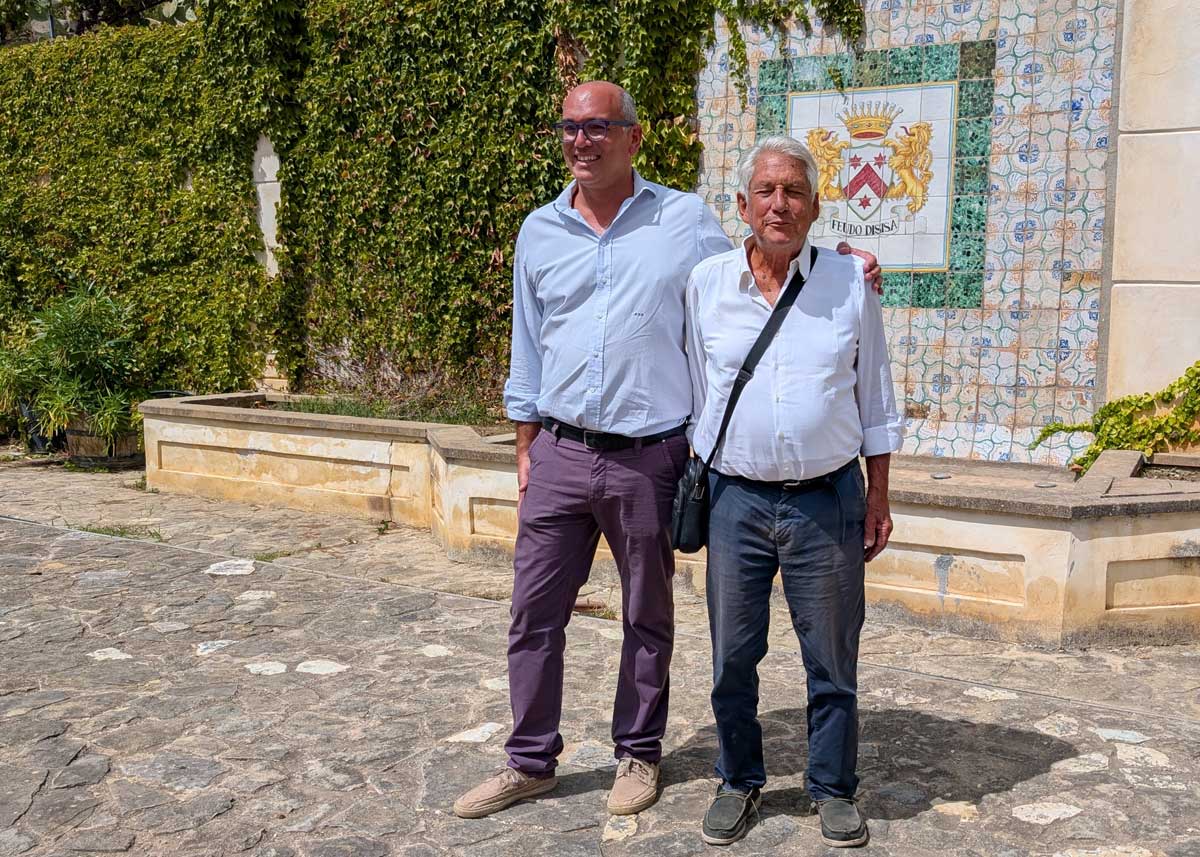
Although the winery closed for a period in the 1970s and grapes were sold to the local cooperative, it was during this time that experiments with international grape varieties began. The estate’s unique microclimate makes it particularly well-suited to Chardonnay and Syrah, alongside indigenous Sicilian grapes. In 2004, the Di Lorenzos began producing wine under their own label.

The sharp contrast between hot days and cool nights allows the hillside vineyard to produce wines with freshness and balanced acidity. During our visit, we sampled several standout bottles, starting with Chara, a crisp white blend of native Catarratto and Insolia grapes. We then moved to a distinctive rosé made from Nero d’Avola, Sicily’s most famous red variety.

The highlight was René, a sparkling white crafted in honour of Mario’s father, Renato. Made in the traditional Méthode Champenoise, it is a zero-dosage wine aged on the lees for 48 months. All carry the Sicilia DOC designation and collectively reflect the growing professionalism and quality of Sicilian winemaking.
Tolo Winery
If Feudo Disisa embodies a historic Sicilian winery embracing contemporary techniques, Tolo, officially Azienda Vitivinicola Tolo, represents a distinctly modern approach. Located in western Sicily near Partinico, the estate spans Bosco Falconeria and Grassuri Airoldi, areas rich with birds of prey that inspired many of the wine labels. Covering 58 hectares, Tolo produces over 400,000 bottles annually.

Everything is organic, though not all is certified, as winemaker Francesco Tola explained, because Sicilian wines do not need pesticides, thanks to the climate and terroir; certification would simply push up the price. His focus is pragmatic: experimentation with indigenous and international grape varieties is balanced with the realities of market demand.

The sparkling wine we sampled was among the best Charmat method wines I have encountered. Unlike Prosecco, which undergoes a second fermentation in a tank, Tolo extends this process to nine months for Domi Sicilia DOC, a blend of 50% Grillo and 50% Catarratto, priced at € 17 ex-cellar.

I was also impressed by Costa Rosa, a 100% Syrah with balanced salinity. My favourite, and Francesco Tola’s as well, was Lavinaro Red, a 40% Nero d’Avola and 60% Syrah blend dedicated to Francesco’s grandfather. It showcased perfectly how combining indigenous and international grapes can create a wine greater than the sum of its parts.
Tonnino Azienda Agricola
Tonnino Winery, established in the 1950s, is currently run by Antonio Tonnino, along with his sister, Francesca, and father, Benedetto. In 2020, they acquired and renovated Baglio Ceuso, a historic Sicilian wine cellar dating back to 1860. Their philosophy seamlessly blends tradition with modern, sustainable practices, producing wines that celebrate the unique terroir of Sicily.

In the heart of Alcamo, western Sicily, Tonnino Winery combines organic methods with precision agriculture. Concrete vats, once popular in mid-20th-century winemaking, have been revived here alongside stainless steel tanks, allowing precise temperature control in the Mediterranean heat.

There is charm and romance in both their wines and their labels. One standout is the Terre di Mariu selection of Grillo and Nero d’Avola, aged in wood and named after Francesca and Antonio’s mother, Maria. The label depicts her with an outstretched arm to her granddaughter, a touching tribute to a child she never met.

Tonnino also produces an exceptional wine, created in collaboration with Giacomo Tachis, to celebrate the restoration of Baglio Ceuso. Ceuso Nero d’Avola 2020 Sicilia DOC is built for ageing and delivers a rounded, full-bodied experience that can rival top French wines.

For me, it recalled an introductory Sicilian wine experience fifteen years ago at Donnafugato, where I first tasted barbequed fennel-laced sausages with fresh, warm ricotta and a good glass of Sicilian red. Here too, we feasted on sausages and warm ricotta – and some excellent wines!

A Taste of Sicily’s Future
After that all-too-brief immersion in the vineyards around Palermo, we had the chance to delve deeper with a celebratory evening that brought together 26 winemakers from across the island, all part of Sicilia DOC. Faced with more than 50 wines to taste, you begin to appreciate the variety that comes from this island-continent.

What stood out was not only the quality of the wines but also the energy of the people behind them. There was a palpable sense of youth, vibrancy and enthusiasm. The winemakers of Sicilia DOC are open to new ideas, eager to experiment with techniques and blends, and unafraid to integrate the best of international winemaking into their own traditions.

The result is a collection of wines that are remarkably consistent in quality, yet wonderfully diverse in style. Some stood out as particularly memorable, but together they painted a picture of a region that is confident, forward-looking and ready to take its place on the global stage. For visitors and wine lovers alike, Sicily offers not just sunshine and scenery but a story of heritage meeting innovation, told through every glass.