Last Updated on October 28, 2023
Sleep in Castles and indulge in a Bohemian Love Affair
Table of Contents
Introduction to Central Bohemia
Forget the Loire Valley and head for Central Bohemia to experience some of Europe’s finest castles and chateaux. A part of the world where tourism really hasn’t overwhelmed the original charm, you may already have heard of or even visited Kutná Hora, just 70 minutes from Prague, a UNESCO World Heritage Site. There you can immerse yourself in the historical centre, and visit the ossuary, the hrádek, the Italian Court, the Royal Mint and more. But, there are plenty more places to visit in Central Bohemia – mostly around an hour from Prague by car or train. Travelling around the verdant, unspoilt countryside, whether by car, train or bike, you might wonder at the wealth of fairytale buildings you’ll find scattered across this part of the Czech Republic. It’s a real-life Disney set, with an entrancing heritage

In the heart of Europe, this region has a rich and diverse history marked by cultural, political and social developments that have had a wide-ranging impact not only on Bohemia but the whole of Europe. By the 9th century, under the Great Moravian Empire, the Přemyslid dynasty emerged as the ruling family of Bohemia, establishing a centralized monarchy that laid the foundation for the region’s future identity. By the 14th century, Bohemia had grown in importance through the reign of the cosmopolitan Charles IV, who had been raised in Luxembourg and spoke French. His reign, the Golden Age, saw Prague become a major European cultural and economic centre with Charles University playing a pivotal role in spreading knowledge and culture. The Hussite Wars of the 15th century were followed by the turmoil of Protestant reform in the 16th Century. The Battle of White Mountain in 1620 saw the defeat of Bohemian forces and the beginning of the Habsburg rule, which lasted until 1918 and the formation of Czechoslovakia in the aftermath of World War I.

The castles and chateaux of Central Bohemia were in part erected to defend territory and in part to function as showcases for the ruling nobility of the time. Glorious, decadent constructions that have often passed from the owners to the state and then back again, many of these are buildings that until relatively recently had fallen into disrepair. Visitors to Central Bohemia are privileged to be able to visit and sometimes stay in these magnificent buildings.
Chateau Dobříš
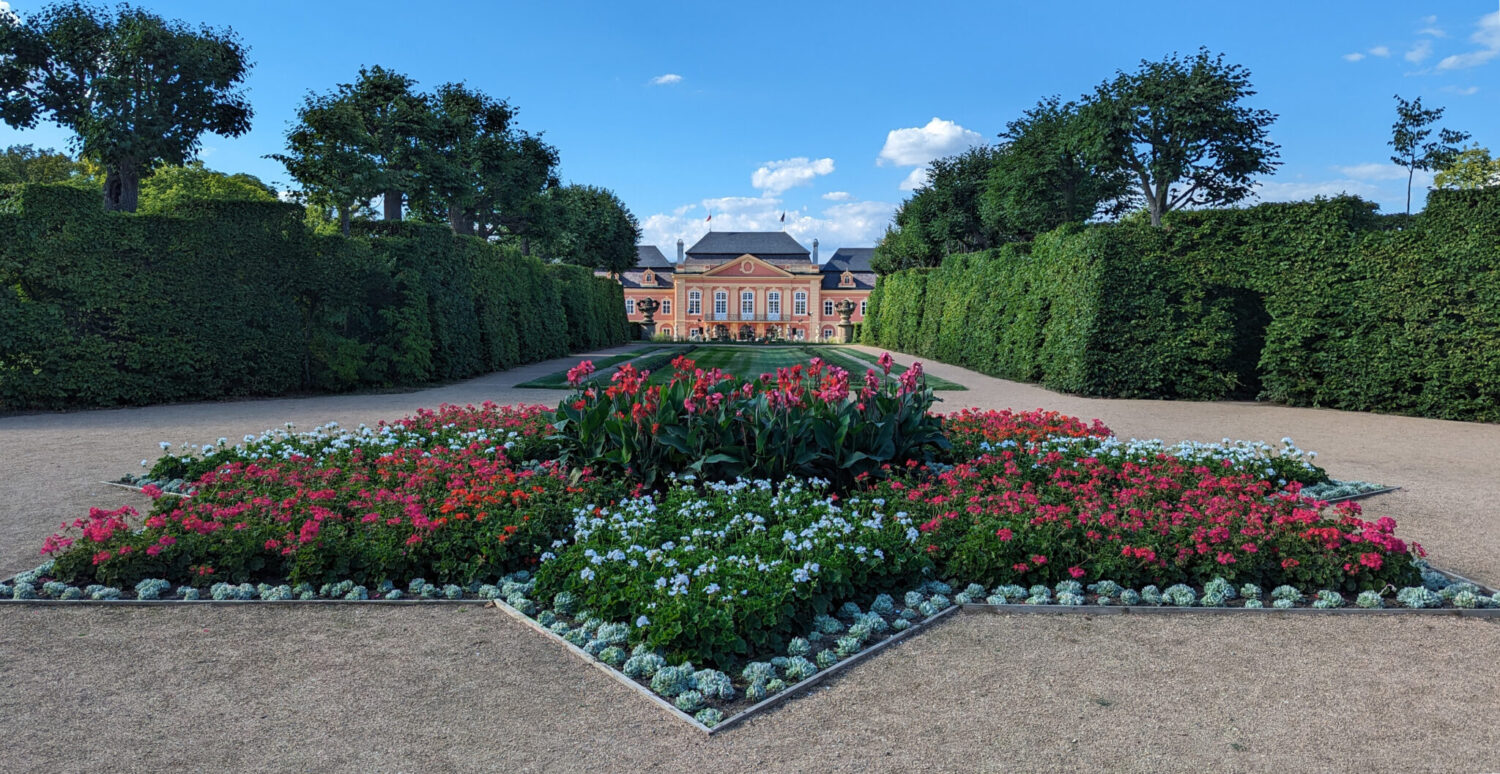
Chateau Dobříš is just 50km from Prague, a fairy-tale chateau that dates from between 1745 and 1765 when it was rebuilt by Jindřich Pavel Mansfeld following a fire that devastated the original building. A stunning building with an amazing mirrored hall, it’s also worth spending some time visiting the French Garden and English Park – and taking a look at the astonishing Orangery with its painted facade

Like many of the chateaux and castles we visited, Chateau Dobříš was requisitioned from the Colloredo-Mannsfeld family who owned and lived there until 1942 when it was requisitioned by the German Empire.

After the Second World War, it was confiscated by the Czechoslovakian state and used as a ‘Writer’s Home’ – with an eminent list of Czech, European and Latin American writers who stayed for weeks or months. That includes Pablo Neruda, Jean-Paul Sartre, Jorge Amado, Nicolás Guillén and more. In 1998, the castle returned to the hands of the Colloredo-Mannsfeld family and then underwent extensive renovations. On July 13, 2006, the new Hotel**** Dobříš Castle was opened here.
Český Šternberk and Chateau Jemniště

A true ‘escape to the castle’ property, complete with hunting trophies, artwork by Filip Sternberg who seemed to be more fascinated by horses than people, and a whole series of family portraits, it would be easy to spend hours exploring the different rooms.

There’s a chandelier made of Czech crystal in the hall which is over 150kg while the floor is decorated with the eight-pointed star that is the symbol of the Sternberks. And there’s a detailed family tree where you can really begin to get an understanding of the Sternberk family history and the significance of the castle itself.

After the Second World War, Český Šternberk was taken over by the Communists, who allowed Jiri Sternberg and his family to live in two rooms of the castle on condition that Jiri gave tours of the castle. It wasn’t until 1992, that the current owner, Zdenek Sternberg, got the property back in restitution.

Sister Chateau, Jemniště dates back to 1381, although the old building was a fortress, replaced in 1724 by the current chateau. That was bought in 1868 by Count Zdeněk Sternberg (1913-1900), owner of the nearby manor of Český Šternberk.

Today, although the Sternberg family lives in part of the property, much of it, including the stunning gardens, is open to the public. We loved picnicking in the grounds (you can pre-order your picnic from the on-site cafe) before wandering around and wondering just what it would be like to live here.

In fact, there also are three self-catering apartments where you can stay if you want a fully immersive castle experience.
Hotel Panství Dlouhá Lhota
While we didn’t sleep at Jemniště, we did find our own chateaux to stay in for a couple of nights. Firstly, the Wellness Hotel Panství Dlouhá Lhota, originally a 14th-century manor house, now has a small but well-equipped spa with three different sauna options, a pool with a resistance current, a rooftop whirlpool and more.

There’s also an excellent restaurant, Konírna restaurant, where you can try all sorts of Czech specialities including Kulajda soup made with potatoes, mushrooms, dill and egg.

It wasn’t my order, but I did manage to try a mouthful and it’s now firmly on my wish list.
My massive and luxurious room came with a freestanding tub in addition to the full and very well-equipped en-suite bathroom. Yes I did fill the tub and light the candles. No there isn’t a photo!

Hotel-Restaurant Chateau Kotěra
Our second night was spent at Hotel-Restaurant Chateau Kotěra. Constructed by Jan Kotěra in the neoclassical style for a wealthy businessman and aristocrat, Mandelik, who wanted a showcase country chateau, the building dates to between 1911 and 1913.

The Jewish origin of the Mandelík family meant this building was expropriated in 1939 and housed German estate administration and SS troops until the spring of 1945. Then the building was used by the Red Army before being converted into an elementary school. In 1992 it was returned to the Mandelík family but fell into disrepair until 2004, when it was converted into a hotel.

Although most of the original furniture was lost during the Second World War and the communist era, the hotel has refurbished it with a collection of designer furniture from the same era so that visitors can enjoy an authentic experience. There are pieces by Jan Kotěra or his student Josef Gočár and other important architects and artists active at the beginning of the 20th century – Adolf Loos, Pavel Janák, Marcel Kamerer, Otto Prutscher, Koloman Moser, Joseph Maria Olbrich, Dušan Jurkovič, Vlastislav Hofman and others.

We were particularly impressed with the restaurant, where we enjoyed dishes that were a good fusion of traditional Czech cuisine and contemporary European sitting outside on the pretty terrace.

Brandýs nad Labem
Our final castle visit was something quite different – an escape room experience at Brandýs nad Labem castle, which dates back to before 1602 when Emperor Rudolf II had the city elevated to a royal chamber city and commissioned his chamber architect Giovanni Maria Filippi to rebuild the castle and the terraced garden.

The treasures in the castle at the time attracted many thieves including a fraudulent alchemist who tried to steal the treasure chest filled with the gold of Rudolf II. Although he was caught and put into prison, he managed to hide the treasure. He was never released and the treasure has never been found. Needless to say, fortune hunters playing this particular escape game are tasked with finding the treasure, all the while avoiding the ghost of the alchemist.
Introduction to Bohemian Culture and Heritage
If, even with escape games, castles are not your thing, Central Bohemia has a wealth of other things to do. Some of the crafts – the production of crystal for example – do perhaps owe something to the nobility who lived in the stunning countryside. And, as early as the 19th century, the Czech National Revival aimed to promote the language and heritage. The Velvet Revolution in 1989 brought an end to communism and a return to democracy while the 1990s saw the peaceful split of Czechoslovakia into the Czech Republic and Slovakia in 1993. The establishment of the Czech Republic saw Bohemia become an integral part of the country.

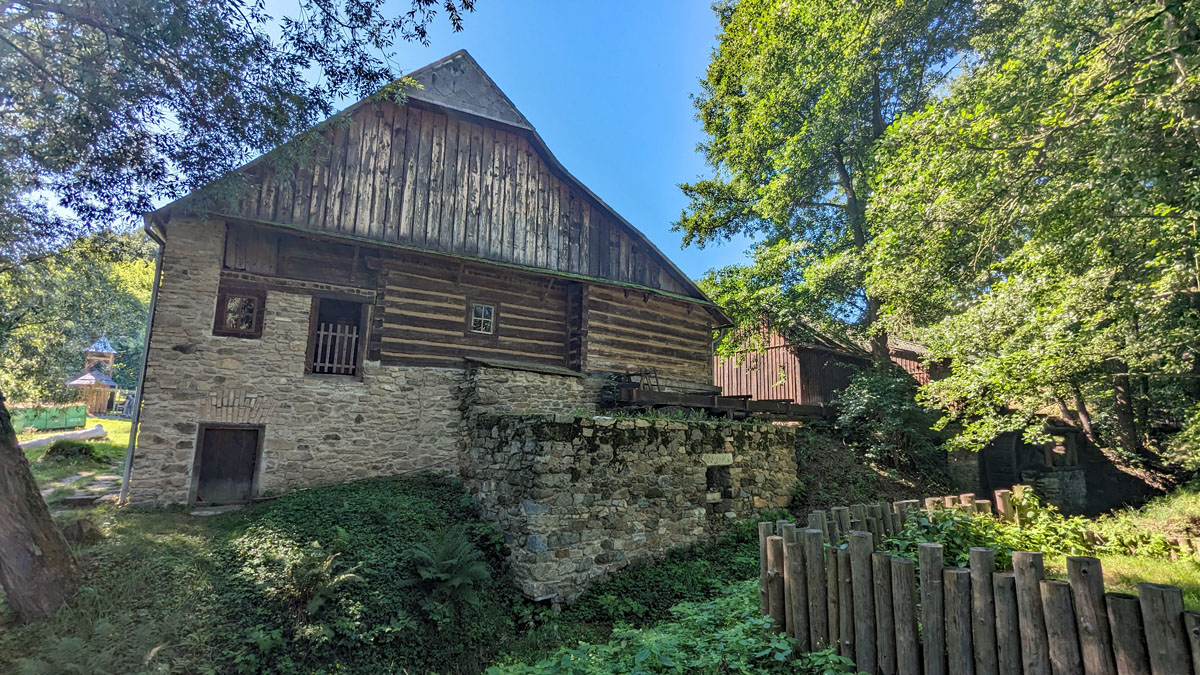
Pride in the heritage of the country is evident in places like Skanzen Vysoky Chlumec, an open-air museum in the form of a small village. Each of the houses, originally derelict buildings, was carefully transported to the site and rebuilt creating a fascinating folk museum.

They showcase what village life would have been like from the mid-17th century to the beginning of the 20th century. There’s a water mill and a sawmill, a well and a collection of furnished houses that you can explore with a guide.

Similarly, Botanicus Historical Craft Village in Ostra is a living museum where you can try your hand at anything from archery to making soap, panning for gold and making your own coins.

Great for all ages, it’s the kind of place where you can spend a whole day exploring and, if you so choose, literally getting your hand dirty – though you may find gold!


There are cafes and restaurants on-site and pretty grassy spaces where you could picnic if you prefer.
Rückl Crystal
Perhaps my own favourite ‘craft’ experience was at the glassworks of Rückl Crystal. Rückl follows a long tradition of Bohemian Crystal dating back to the 13th century. Founded in 1846, it was a family-owned business until nationalised during the communist era. After the Velvet Revolution, it was bought back by Jiří Rückl and supported by Martin Wichterle a Czech entrepreneur and the grandson of the inventor of contact lenses.

Thanks to Jiří Rückl’s vision and Wichterle’s investment, Rückl Glass is now a thriving business with contemporary-style fine glass – so stunning that they even gifted one of their stunning vases to Queen Elizabeth II.

Visitors can take a guided tour of the glassworks and see the hand-blown glass being created. And, they can make their own engraved glass too.

Afterwards, do eat at Zastávka Nižbor, a short walk from the glassworks – they have their own smokery and make the most delicious traditional sausages, crisps and apple dumplings!

The restaurant is in an old railway carriage on the side of the still-working railway line and station and, if you fancy glamping, there are a few self-catering apartments in historic railway carriages there too.

Koněprusy Caves
If you’ve got a feel for Bohemian traditions, then it’s worth taking a trip to the Koněprusy Caves, the largest in the Czech republic, where you’ll find stunning rock formations – stalactites and stalagmites, stone roses and more.
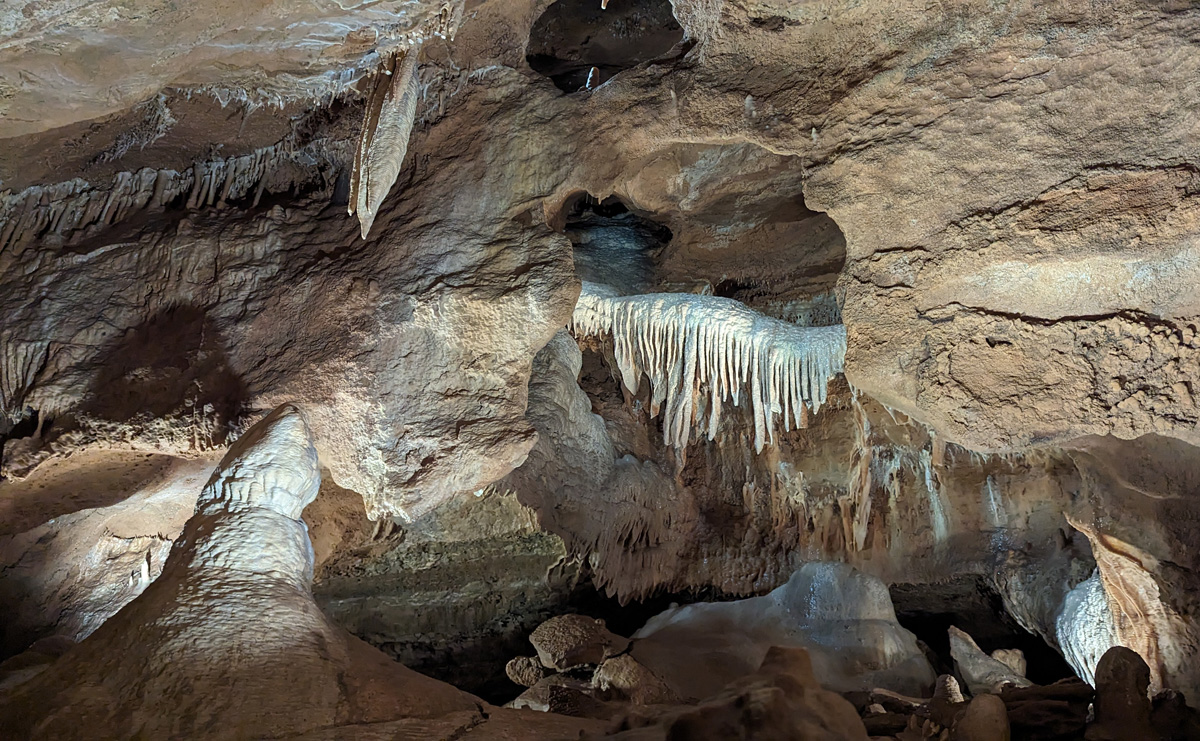
The caves were well-known as early as the 15th century and, as every visit to the Czech Republic should include a legend, here you can learn about how they were used by forgers who took over the caves to make fake silver coins. They used copper and silver amalgam to make fake silver. All thought to be a folk story, the legend tells of a young shepherd who saw smoke rising from a hole and climbed down to discover the forgers. When he escaped back home, the villagers wanted to take the money so went in search of the caves but couldn’t find them. However, recently archaeologists have found some of the fake coins together with tools mimicking the Bohemian lion stamped on coins in those days…
Winery Klučov
Finally, no trip to a country that produces some excellent wine would be complete without a visit to a vineyard. Central Bohemia is the second-largest wine region in Czechia and for most of our trip, we were able to enjoy regional wine.
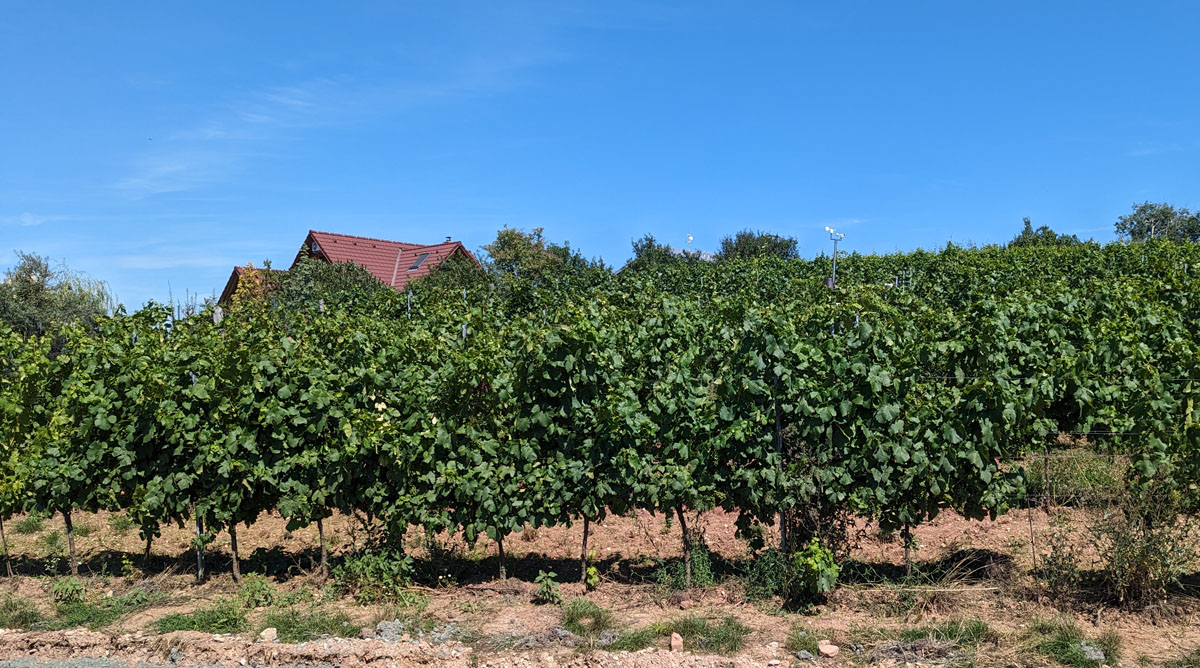
Like many of the other destinations in Bohemia, Winery Klučov is easy to reach by public transport. It’s somewhere you can tour the cellars and taste the wine. Or if you want a really immersive winery experience, you can stay there in self-catering accommodation.

Although the winery is relatively young, founded in 2017, it’s on the site of vineyards planted at the time of Charles IV. Apart from the wine, we particularly like the labels which have all been designed by a famous Czech illustrator.

More about Central Bohemia
This is a part of the world that has chosen to preserve not just the castles and chateaux but to ensure that all aspects of cultural heritage are respected. Through living businesses like the glassworks at Ruckl and through careful reconstruction like those at Skanzen Vysoky Chlumec and Botanicus Historical Craft Village. That, in itself, makes for a fascinating place to visit for, in the words of Machiavelli
“Whoever wishes to foresee the future must consult the past; for human events ever resemble those of preceding times. This arises from the fact that they are produced by men who ever have been, and ever shall be, animated by the same passions, and thus they necessarily have the same results.”
You can find more about Central Bohemia on their website. Like the rest of the Czech Republic, the region is well served by a rail network that is low-cost, fast and clean. So, for example, you can travel to Český Šternberk by train in just over 2 hours for between £4 and £9. Prague to Nižbor takes just over an hour and will cost between £2 and £6.
Central Bohemia also has some excellent cycle routes and many of the countryside restaurants and bars are set up to accommodate cyclists. We enjoyed a great lunch at one of the popular restaurants, Hajenka Kersko, serving a wide range of customers including cyclists, bikers and motorists and were impressed by the quality of food and value of the meal (around £80 for four people).

Travelling across Central Bohemia by river is also possible, with the largest Czech river, the Elbe, crossing Central Bohemia. In addition to providing a good cycle path, it’s possible to hire a boat or join a cruise boat to travel along the Elbe. You’ll find various options for canoeing, kayaking and other activities on the rivers in the region.

Hotels in the region will generally cost less than £100 a night for an ensuite room. Our chateau hotels were each around £80 to £100 a night for room and breakfast.
If you prefer to use Prague as your base, please check our feature on Hotel Almanac x Alcron, a stunning 5-star hotel in the heart of the New Town.
London Unattached was a guest of Visit Central Bohemia for this trip. Check their website for more information. For the Czech Republic in general see the Czech Tourist Board website