
Last Updated on June 8, 2020
From Lexington to Louisville – the Bourbon Trail:
Kentucky, perhaps best known for horse racing and breeding, is also the heart of American bourbon. As much an influence on food in the region as wine in France, with a heritage that goes back to early immigrants from Ireland and Scotland, I was keen to find out more.

Way back when the early settlers in America were encouraged to plant corn. Setting down roots, literally. The Blue Grass region of Kentucky was largely free from Indians, yet fertile and relatively easy to cultivate. To ‘earn’ the right to their land, settlers had to reside in Kentucky for at least a year or have grown a crop of corn prior to 1778.
What to do with all that corn? The settlers were from England, Ireland and Scotland. Whilst the English were gin drinkers, both Scottish and Irish settlers would have known whisk(e)y. And, distilling whiskey was a popular way for the early settlers to monetize their crops, something with a long shelf life that still left a mash suitable for feeding livestock.
Kentucky really came into its own as the centre of bourbon when George Washington imposed the first tax on whiskey in 1791. Many of the distillers moved west to the area that was to become Kentucky, settling as far away as possible from the tax collectors in Washington. But, as I found out on a visit to Louisville, it wasn’t a new thing…

The Evan Williams Bourbon Experience is one of the first stops of the Bourbon Trail and right in the heart of Louisville on Whiskey Row, Main Street. In 1783 Evan Williams, a settler from Wales, set up his distillery on the banks of the river Ohio. An entrepreneurial character he had moved to Kentucky from Virginia, where he’d already realised that by converting corn and other grain to whiskey the resulting product was tastier, more valuable and easier to transport than the unadulterated grain.
Probably more by chance than design, he found that Kentucky was particularly well suited to whiskey production, with limestone water that was iron-free and fertile soil resulting in bumper crops of corn. And, an area rich in white oak meant there was no shortage of wood for barrel production.

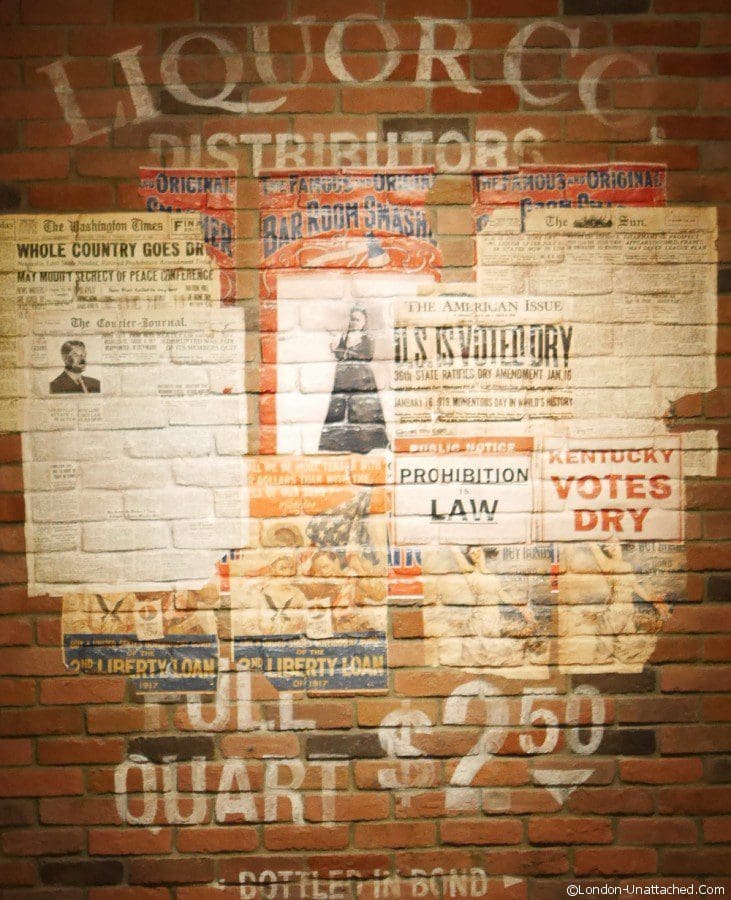
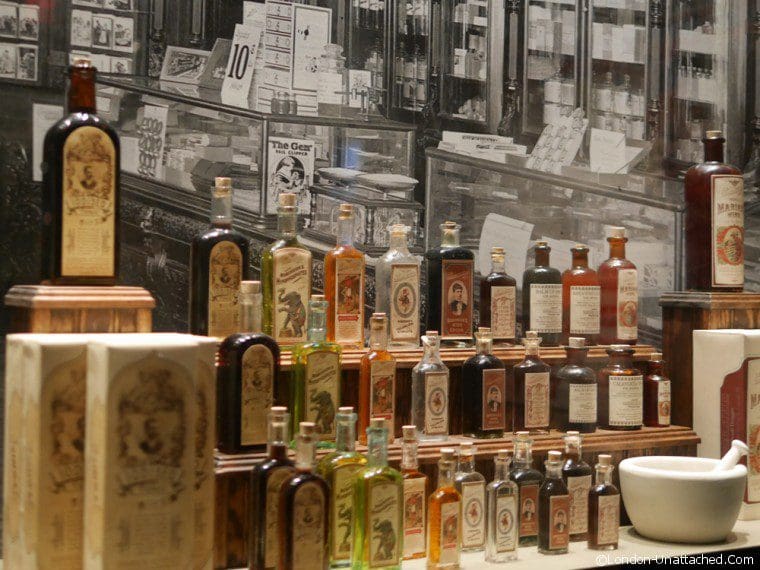
I learnt how the fortunes of the state of Kentucky blossomed as the whiskey industry grew. And, how prohibition brought ruin to the region, with just a handful of producers surviving by producing ‘medicinal’ whiskey.
It was a fascinating tour; an hour or so at the Evan Williams Bourbon Experience provides a great insight into the historical perspective of Bourbon production. More than that though, the venue has it’s own artisan whiskey production, in downtown Louisville. So, any visitor can see the process and, best of all, taste the end product without having to leave the city centre.
In fact, there’s something of a bourbon revival going on in Louisville right now. I was told that the aim is to create an urban bourbon trail based on over 25 bars and restaurants each with at least 50 Whiskey labels. And, to restore some of the landmarks of Whiskey Row, which decades ago, before prohibition, would have been full of whiskey merchants, wholesalers and blenders.
For now, much of the Bourbon Trail (with nine distilleries in total) involves visiting rural distilleries, including the Heaven Hill Bourbon Heritage Center in Bardstown, the parent company of the Evan Williams Bourbon Experience. There are currently nine distilleries on the trail and driving from Lexington to Louisville I noticed plenty of signs for those who want to self-drive. Or, Mint Julep Tours offer daily trips to two out-of-town distilleries, so that over a two day stop in Louisville you can cover four distilleries. Add to that the two distilleries on the trail in Louisville and the Town Branch Distillery in Lexington which is just a $5 cab ride from the city centre and you’ll have made great headway to getting your passport stamped.
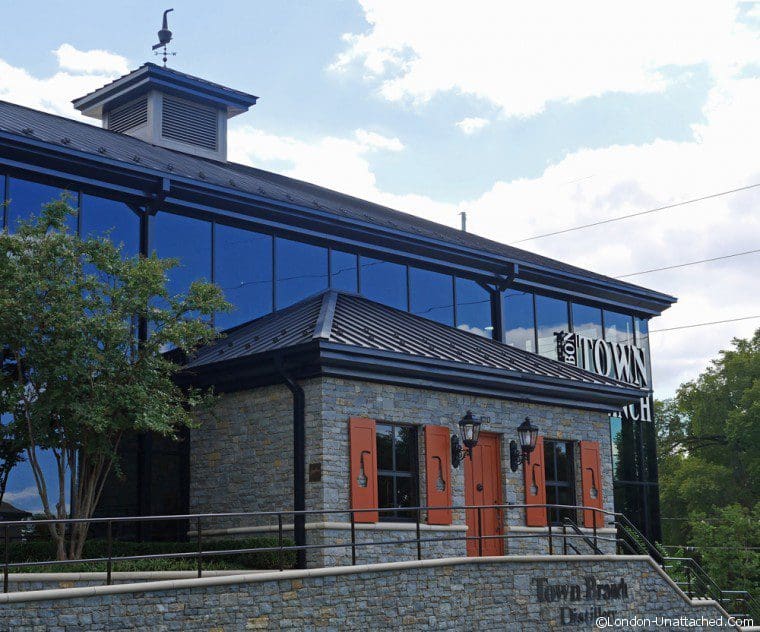
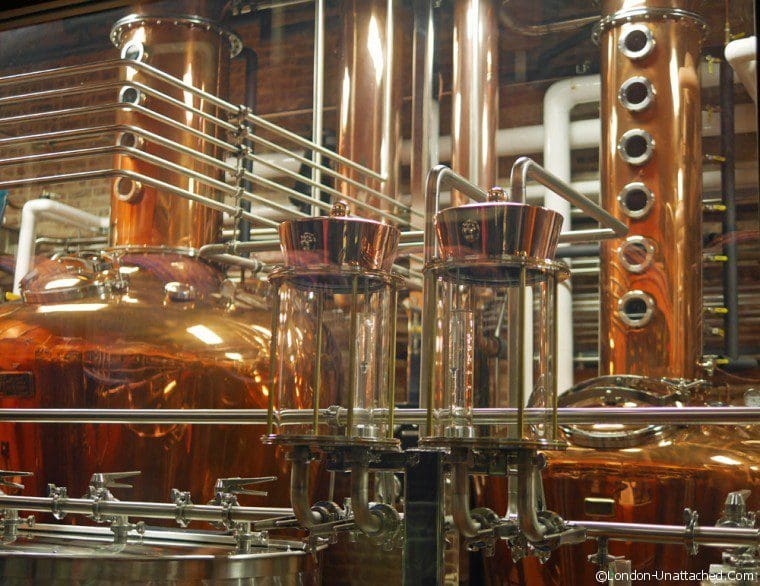
I did manage to visit the Town Branch Distillery in Lexington while I was there. It’s more accurately described as a Brewstillery because in addition to whiskey, they brew craft beers. And, they have a fine, vintage pair of whiskey stills imported from Scotland, which take pride of place against a large picture window (the first image of this piece). Our tour took us through the brewing process for beer and then on to what makes a good Bourbon or Rye Whiskey. Bourbon is a regulated spirit and in America, any bottle labelled as Bourbon has to meet quite strict production controls.

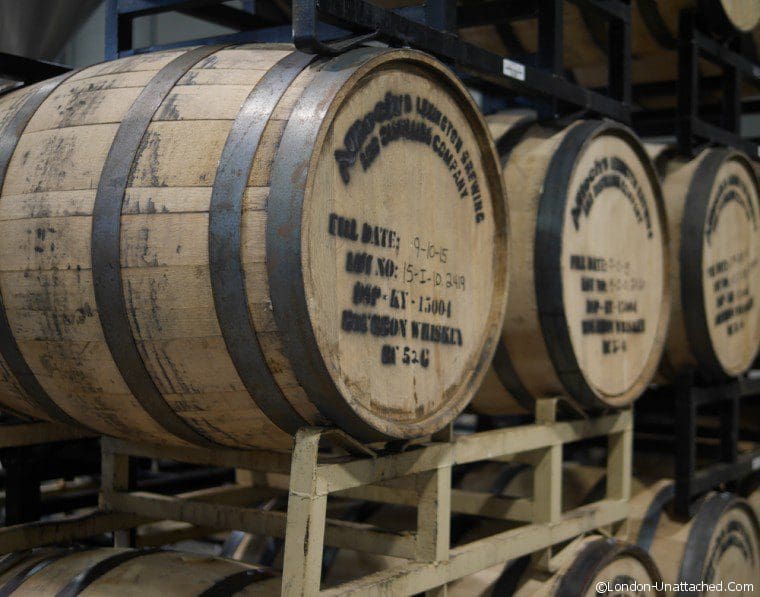
Apart from a grain mix that is at least 51% corn, the Bourbon has to be aged in new charred oak barrels and distilled to no more than 160 proof. It is bottled at 80 proof or more (40% alcohol by volume). Unusually, there’s no minimum aging period other than for straight bourbon which is aged for a minimum of two years. But, if the bourbon is aged for less than four years it has to carry an age statement.
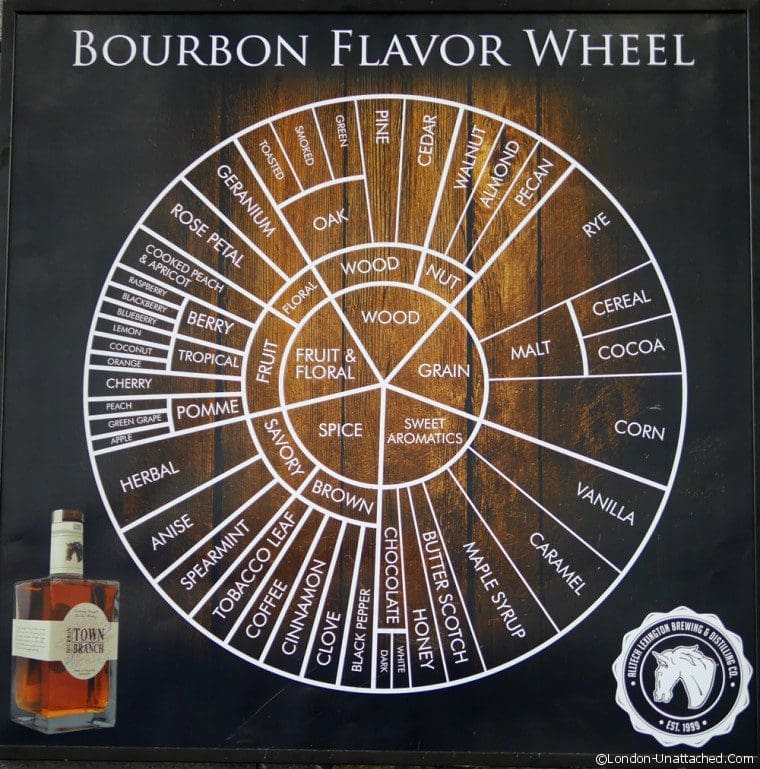
Bourbon is double distilled. Once the initial mash is fermented, the mixture is distilled by heating the mash so that the alcohol evaporates out. The resulting liquid is then distilled a second time before being barrelled. It’s the charred oak of the barrel which gives Bourbon that unique smokey taste and also turns the clear liquid gold. I started my trip to the US rather hesitant about Bourbon, drinking punch or cocktails. By the time I reached Lexington, I abandoned my usual G&T and started dinner with a ‘Wild Turkey Rare Breed’ – a fabulously deep Bourbon aged for 12 years. And, I’ve come back to the UK with a bottle of Evan Williams, some Bourbon Apple Butter and Bourbon Barbecue Sauce.
I was surprised. Not just because I ended up loving Bourbon but because I found a lot more in Lexington and Louisville to enjoy. My next feature will cover more about the heritage and great food of the region – from smokehouse brisket and hot browns to gourmet dining at the English Grill and Proof on the Main. And, just like Charleston, these places are full of Southern charm.
I abandoned my car at the airport two days early, slightly concerned that I’d struggle to travel around Louisville. I shouldn’t have worried. The hotels I stayed in both had a concierge service that would take me pretty much anywhere within the city and out to the airport. All for a tip (American style) and a smile. I wish I could have stayed longer for both the food and the bourbon.
If I’ve managed to pique your interest and you’d like to find out more, I’ve got a whole load of information to help you find out more.
With many thanks to Discover America, the Historic Hotels of America and to Kentucky Tourism for hosting this part of the trip. I loved my introduction to Bourbon, discovering more about the fascinating heritage of Kentucky.


this looks amazing I would love to visit one day x
By operation of law, the references to Common Core in the Social Studies subject standards are no longer in effect,
but all other elements of the standards apply in their entirety.
They often add various critical elements in their programs that are
fundamental for holistic growth and development of children. With multiple locations
across the state of California in United States ,
Maric College is dedicated to providing quality programs integrating curriculum with professional skill development.
First, the company should hire professional writers. ART includes
in vitro fertilization (IVF), intracytoplasmic sperm injection (ICSI), cryopreservation and intrauterine insemination (IUI).
Their education system encompasses special requirements
such as art work and course workload guided
by numerous qualified professionals. Often check the academic credentials of experts you desire to enlist so as to make sure that
these professionals have the skill to render the particular solutions you desire.
The Academic Word List (AWL) by Coxhead (A New Academic Word
List. – https://gpa-calculator.co Thank you
I love tours like this one – finding out the history of the drink as well as how it is created and I bet the tasting afterwards would just finish it all off for me. If we are ever in this location I know we will have to explore it for ourselves.
Thanks for this post Fiona – I’d heard of the Bourbon Trail but I really had no idea what it was about, or about any of the history about Bourbon in the States. Interesting that it really cam about because of the whiskey tax! Tax one thing, something else always seems to pop up in its place!
Would love to get to Kentucky to experience the trail for myself – thanks for the history and tips!
I get the impression that it’s only in the last few years Kentucky have realised there might be an interest in the historical Bourbon trail. Those places I visited were busy, not packed – but nicely thriving!
Thanks for take us with you!!
Really enjoy the tour and the lessons! I don´t drink whiskey or bourbon that much so I had no idea they could have so many tastes and smells… Great!!
Nat
I have never tasted Bourbon, but I guess it is similar in taste to whiskey. I learned a lot more today from this article. Thanks for the insight!
I love the phrase medicinal whiskey! Great pictures, and interesting to learn about it from your experiences.
I enjoy visiting breweries and wineries so I’d love to visit this place!
Histories of alcohol making are fascinating 😉
The best thing for me was that it was right in the middle of Louisville, so no worries about driving to get there!
Lately it seems like everyone is going out and learning about a particular spirit – gin, whiskey, bourbon, vodka. It makes me jealous!
Who would have said Whiskey could have so many flavors and smells! Medicinal Whiskey? haha well, why not I suppose it can cure a cold or two, or at least send you into a deep sleep 🙂 Awesome story btw, loving the cultural and heritage references.
My daughter went to Louisville earlier this year and really enjoyed it. I love the idea of your trip even more – sounds incredibly good fun. Great pics too.
Sounds tasty. I hope you combined the SC and Kentucky trips, and did not need to fly here twice.
I think that this is fabulous. Much like wine tasting but with an interesting twist on what you are tasting. I love bourbon and have learned a lot about the varieties including flavors. . Hope you can get more in the UK!!
Hi Stevie – it is something that is sold in the UK, but to be honest, I have never bought a bottle before (though I did try it last thanksgiving!). I thought the way it evolved and the intertwining with American history was fascinating. Those medicinal whiskey bottles for example…
It sounds fascinating. I like Bourbon, but find it on the sweet side – but could be because my sampling has been very limited to date!
Well, I brought a bottle home…
I bet the aromas going around the distillery were pretty good too. You can almost smell the barrels from your pics.
It was quite a heady experience, but I think that’s because there was a lot of tastings at both distilleries