

Last Updated on March 2, 2025
Here’s how to spend an art-full weekend in Norway’s capital
After over a decade in development, MUNCH, Oslo’s new, super-smart gallery devoted to Norway’s most famous artist opened its doors in late October to an eager public.
It’s the latest addition to Oslo’s rich, and still developing, cultural landscape, one which certainly deserves more attention than it gets. So, to encourage and hopefully inspire, here’s what you might see and do on an art-full weekend in Norway’s capital. 
The word iconic is much over-used. But Edvard Munch’s world-famous Scream – a ghostly and skull-like face, mouth agape in an anguished ‘O’, hands tight over the ears – really does deserve that status. One of the most recognisable images in popular culture, it’s seen everywhere from T-shirts to horror film masks.
But for those who know and love his work, there’s so much more to Munch than the Scream. Active for more than 60 years, his constant experimentation within painting, graphics, drawing, sculpture, and photography (he was a big fan of the selfie) has given him a unique position in the history of art. 
There’s an awful lot of Scandi-gloom with Munch to be sure, but there’s no denying the boldness and the raw emotion in his work, and his importance as a modern master.
MUNCH
Such a great talent deserves a worthy monument and MUNCH succeeds brilliantly. One of the largest galleries in the world devoted to a single artist, MUNCH is a 13-storey leaning tower of art power. The gallery features more than 220 works from its collection of nearly 27,000 pieces. 
But perhaps more interesting are Munch’s other works and the whole spectrum are on display from lithographs and woodcuts, to a gallery of his largest and most ambitious paintings. 
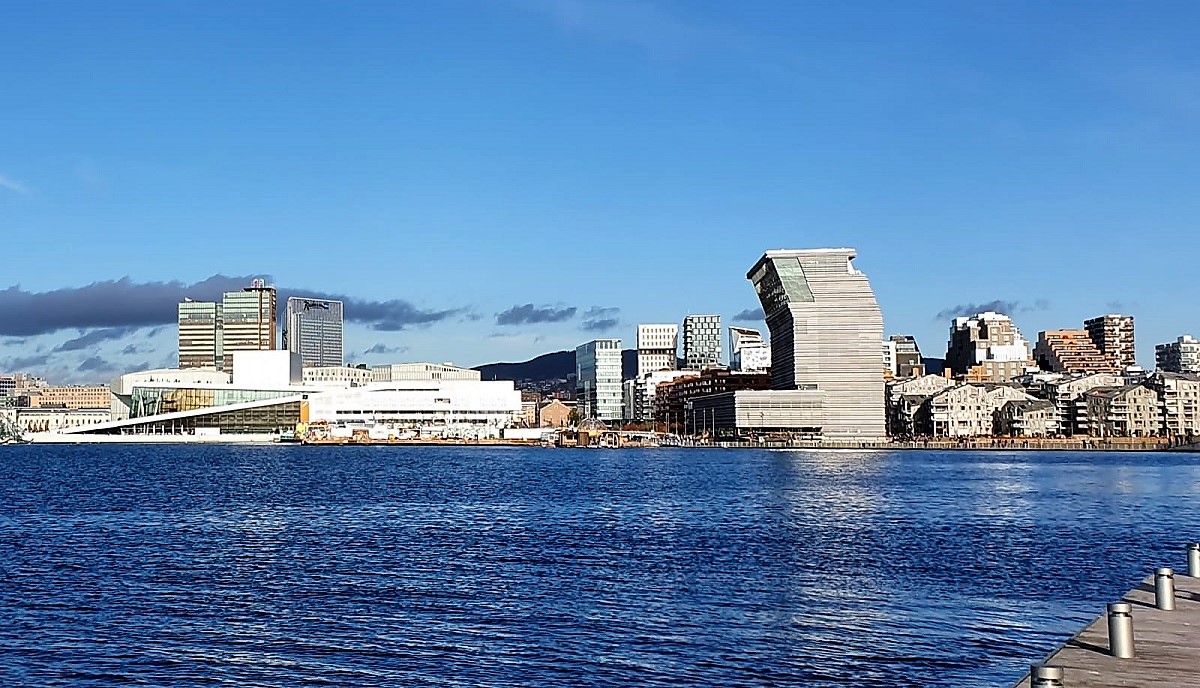 MUNCH is situated on the waterfront just adjacent to Oslo’s impressively futuristic Opera House and Deichman Library, away from the city’s traditional centre but close to the Barcode Project – a series of striking, high-rise offices amid the Bjorvika development of apartments, shops and restaurants.
This area buzzes on a fine autumn weekend with Osloites out for a stroll, having a coffee – or going for a pier-side sauna followed by a heart-stopping plunge into the fjord (recommended!). 
WALK
Sauna survivors can then enjoy a walk along Oslo’s new harbour trail, a string of paths and parks not only tying together the old and new parts of the city, but also Munch and his lesser-known contemporary, Gustav Vigeland.
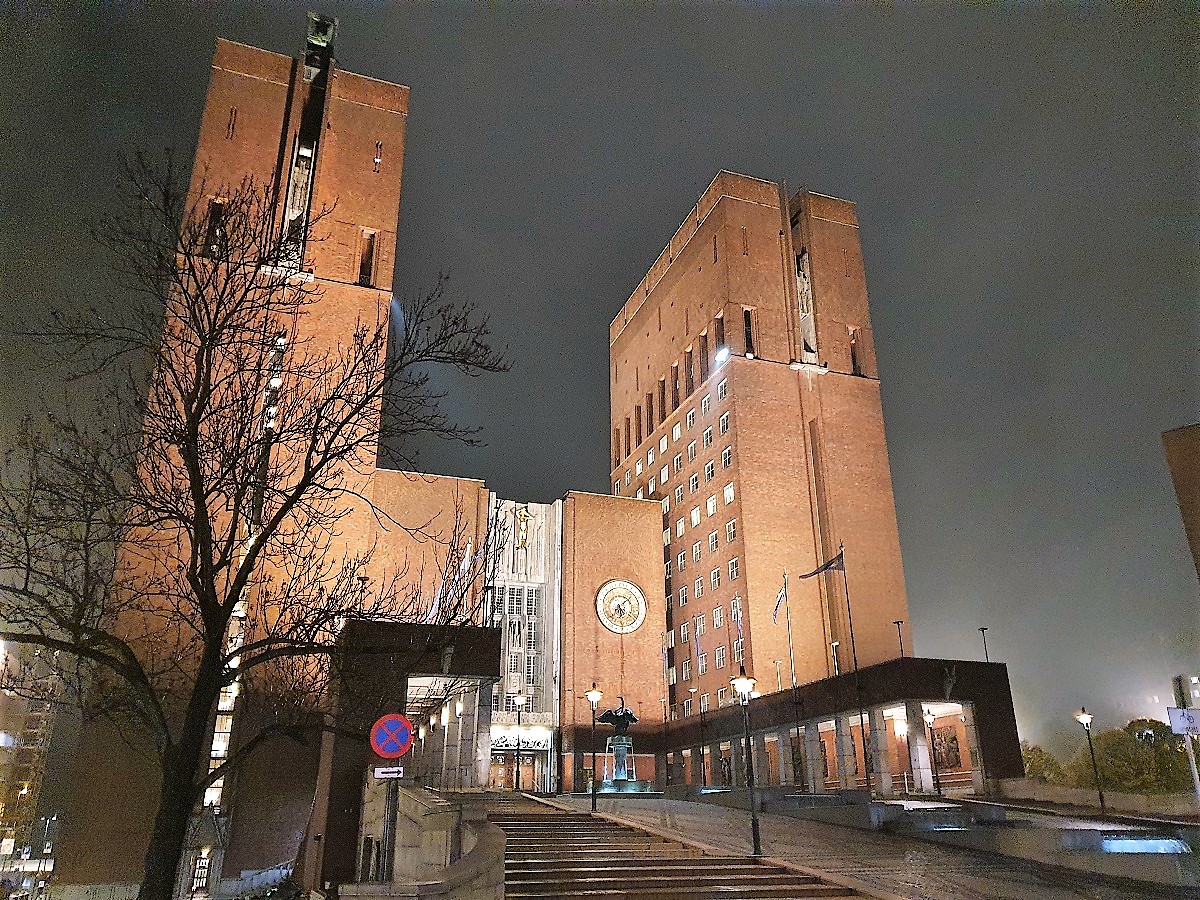
The walk takes you to Pipervika, the ferry harbour between the fortress and Aker Brygge. Going past the impressive Oslo City Hall with its two towers (the venue for the annual Nobel Peace Prize ceremony), you then see the building which will be Norway’s new National Museum, the largest art museum in the Nordic region, when it opens in 2022. 
 Munch fans should put the date in the diary, as the museum boasts its own small collection of his paintings, including the first version of the Scream, Madonna and the very moving Death in the Sickroom plus other major Norwegian artists.
Just beyond is Aker Brygge, another area of brownfield development, a good place to stop at one of the many restaurants and watch the world go by, coffee in hand.
Now head away from the water towards Frogner, a leafy, Mayfair-like area west of Oslo city centre where you’ll find high-end shopping, smart restaurants and many beautiful, late 19th century houses – this is where Ibsen’s Hedda Gabler would have lived.
VIGELAND
Frogner Park, the largest green space in central Oslo, is a popular Sunday destination, best known for the Vigeland installation, established in the 1940s. This impressive 80-acre area features 212 sympathetically and naturalistically realised bronze and granite sculptures, all by Gustav Vigeland, representing the cycle of human life and all its emotions. 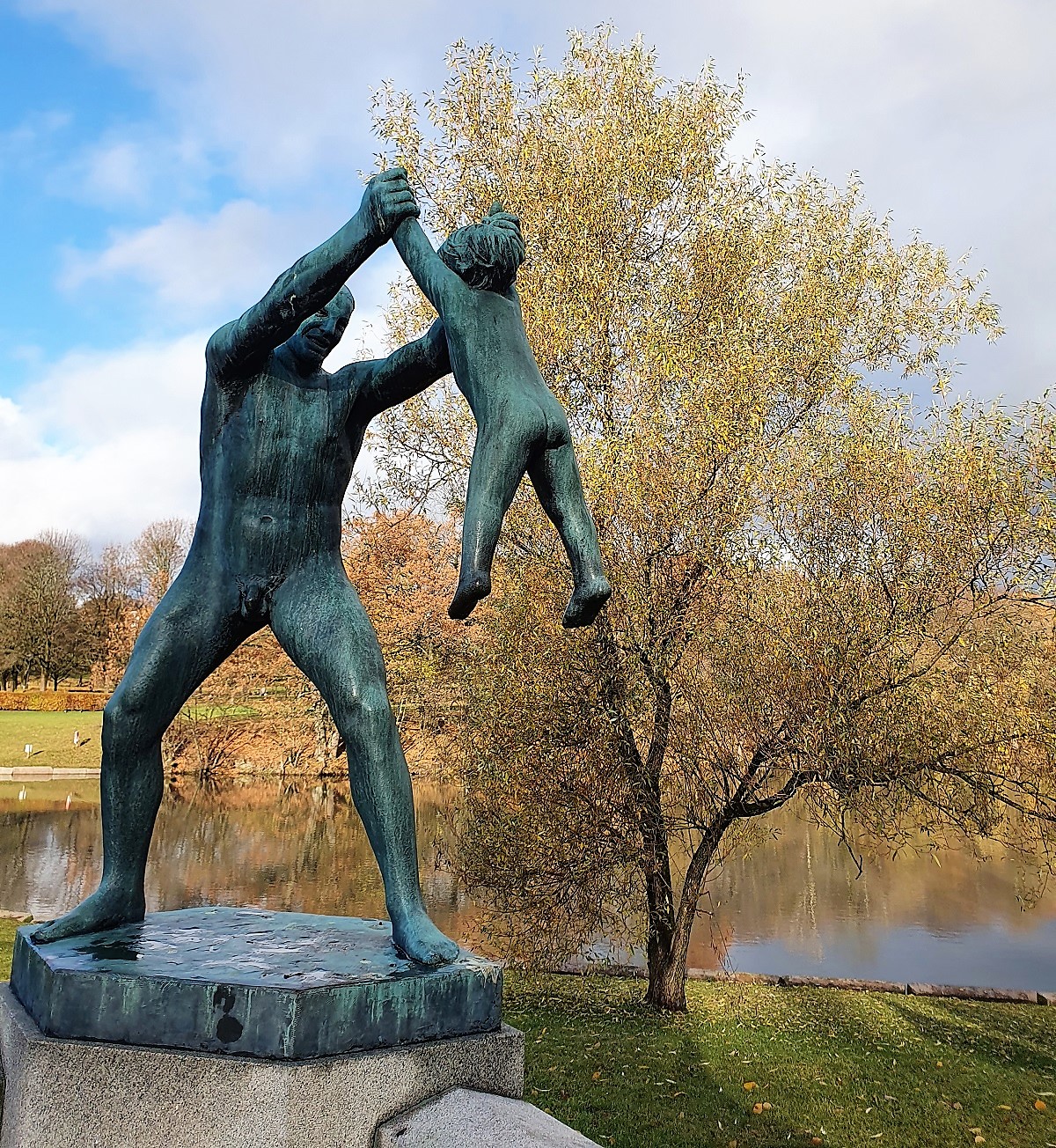 At the heart of the display is The Monolith around which 36 figure groups represent a ‘’circle of life” theme. Beginning in 1929 it took three masons 14 years to complete the 121 human figures on the nearly 50ft high column.
Munch and Vigeland were contemporaries, moved in the same circles and influenced by the same art movements. For a period they even worked in adjoining rooms so it’s no surprise to find they had much in common with regard to their choice of subject matter – for example, Munch’s massive painting The Human Mountain and Vigeland’s The Monolith. 
Back to the Scream – did you know that the character in the picture isn’t screaming? It’s actually blocking out a scream, what Munch called the ‘’great and infinite scream through nature’’ which he felt when out one evening. 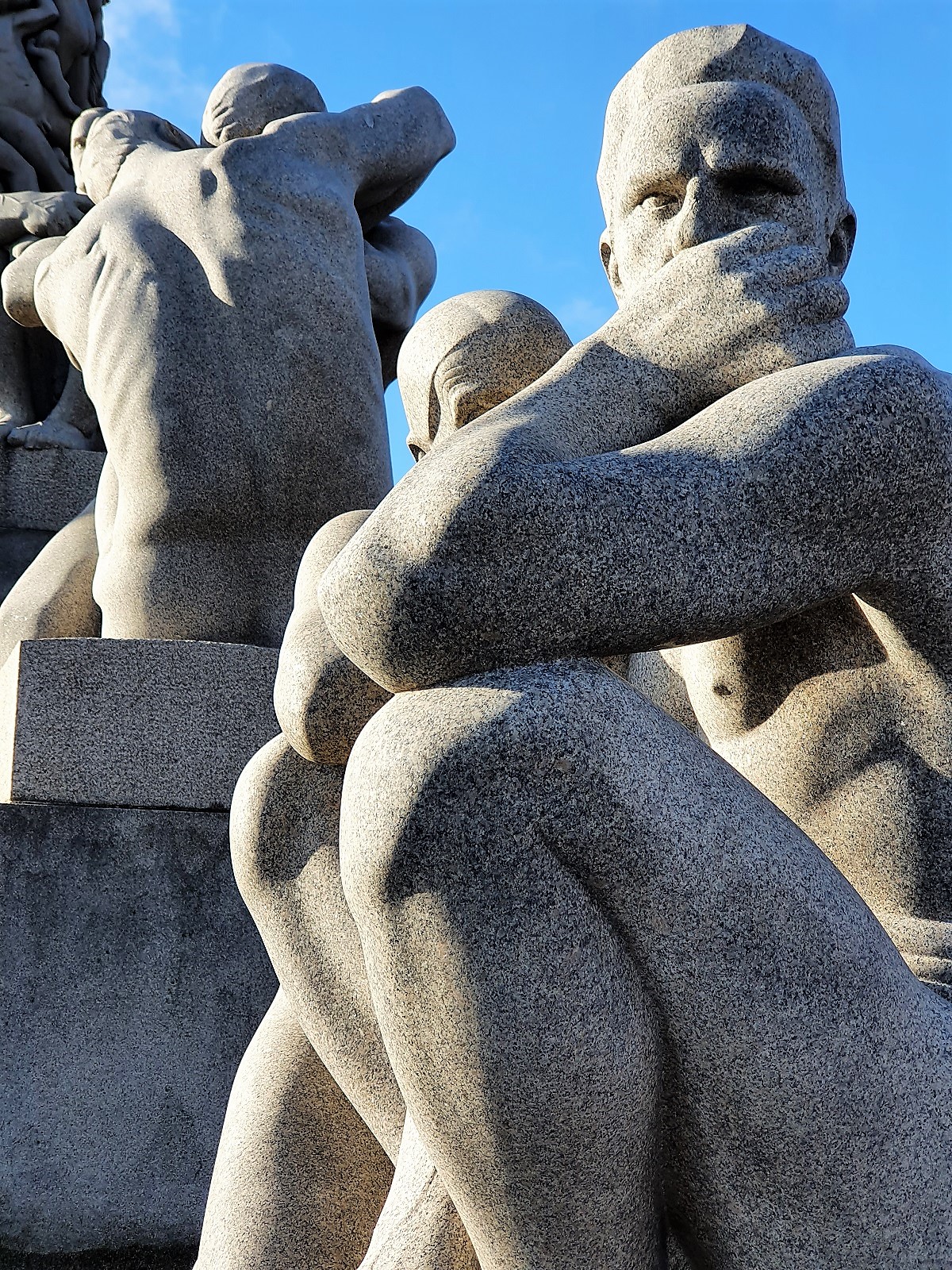 Or it could be the sound of a thousand tourists seeing how much a small glass of wine costs.
Yes, Oslo is expensive, wincingly so when it comes to eating out. But with the exchange relatively favourable (about 12 kr. to the pound so 160 kr. tickets to MUNCH are less than £14), now could be a good time to think about a winter city break.
OTHER OSLO ATTRACTIONS
And in addition to the galleries already mentioned, there are lots of other great things to see.
Norway’s Resistance Museum covers the Nazi occupation during World War II. Here, fans of the 1960s film will find the real story of the Heroes of Telemark and much else.
A ferry ride away over on Bygdoy, the Kon-Tiki Museum shows objects from famed explorer Thor Heyerdahl’s expeditions, the original Kon-Tiki balsawood raft used to cross the Pacific Ocean and the papyrus boat Ra II which crossed the Atlantic.
Alongside it is the Polar Exploration Museum featuring the vessel Fram which was used by Roald Amundsen when he beat Captain Scott to the South Pole in 1910-12. 
You can’t think about Norway without thinking of Vikings and the Viking Ship Museum has three well-preserved examples, the best in the world. The museum is sadly closed currently for rebuilding. It will be reborn as the Museum of the Viking Age and from the plans, it looks like it’s going to be a real must-see.
And as it won’t open until 2025/2026 it will give you a chance to save up!


