Last Updated on November 4, 2025
A Day with Giants: Visiting Pinnawala Elephant Orphanage
Few sights in Sri Lanka are as captivating as a herd of elephants making their slow, majestic way to water. As I travelled around the island, I spent time in Rambukkana, just a short journey from the renowned Pinnawala Elephant Orphanage, where Sri Lanka’s deep reverence for elephants is beautifully on display. Watching these gentle giants wade and splash in the river, framed by jungle-clad hills and the shimmer of the afternoon sun, offered an unforgettable glimpse into the island’s enduring connection with its wildlife.

Founded in 1975, Pinnawala Elephant Orphanage now shelters the world’s largest captive herd of Asian elephants, some seventy to ninety strong, spanning several generations. On arrival, the sense of scale is immediate: this isn’t just a refuge for the orphaned and injured, but a living tableau of how humans and elephants can co-exist, however uneasily, in a country where the boundaries between the wild and the everyday are never far apart.

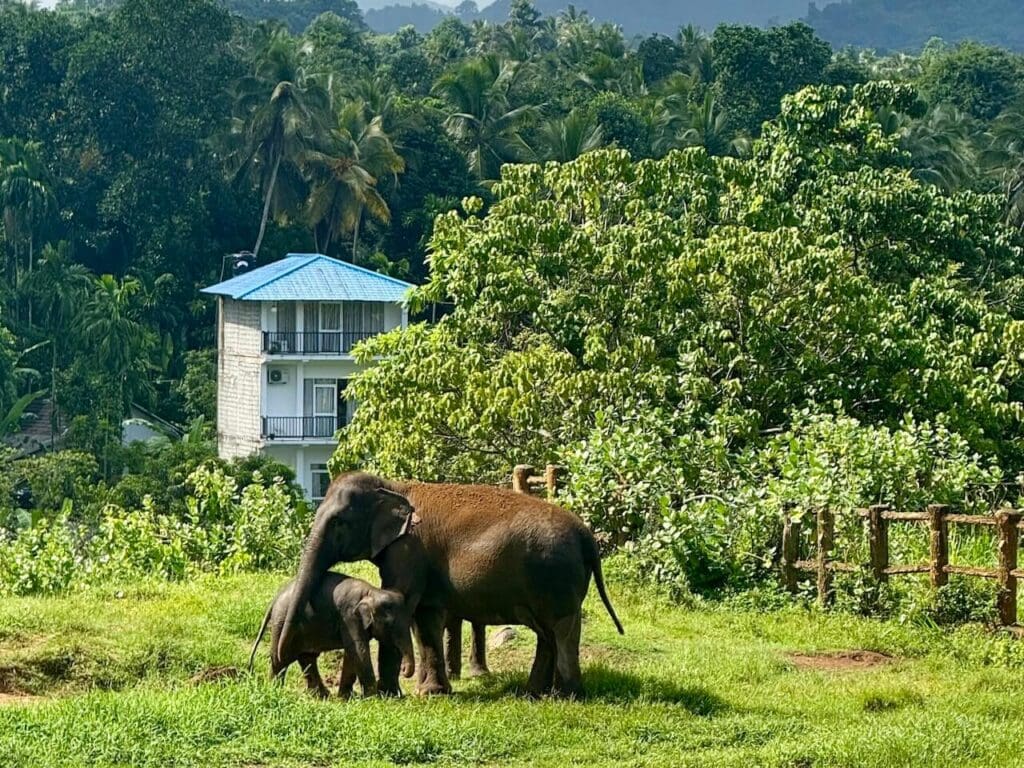
Elephants occupy a uniquely powerful place in Sri Lanka, straddling culture, ecology, and economy in equal measure. Revered in Buddhism as symbols of wisdom and peace, they remain central to temple rituals and grand festivals like Kandy’s Esala Perahera, where a richly adorned elephant bears the Buddha’s sacred tooth relic. Historically tied to royalty and prestige, their image still threads through art, architecture, and national identity. Beyond symbolism, elephants play a vital ecological role as seed dispersers and habitat shapers, while also drawing thousands of visitors to the island’s parks and reserves each year. Yet this deep connection is shadowed by conflict – habitat loss, poaching, and captivity issues place growing pressure on both elephants and communities, making their protection as much a cultural duty as an environmental necessity.

At its heart, Pinnawala exists to offer sanctuary to elephants that would struggle to survive alone, orphans of human-elephant conflict, natural disasters, or injury. For many, release back into the wild is impossible, so the orphanage becomes a permanent home where they receive food, veterinary care, and the chance to live within a herd. For visitors, the daily rhythms are what bring the place to life: the sight of keepers bottle-feeding calves, the spectacle of the entire herd lumbering down to the Maha Oya River twice a day for their communal bath, and carefully managed opportunities to help with feeding. These routines are both essential for the elephants’ well-being and a major draw for the thousands who come to witness them each year.

The day of my visit was a national holiday, and the orphanage was heaving with visitors from all over Sri Lanka. Despite the crowds, everything was well organised, and we were first led to the feeding area, where bags of fruit can be purchased and the elephants eat straight from your hand.
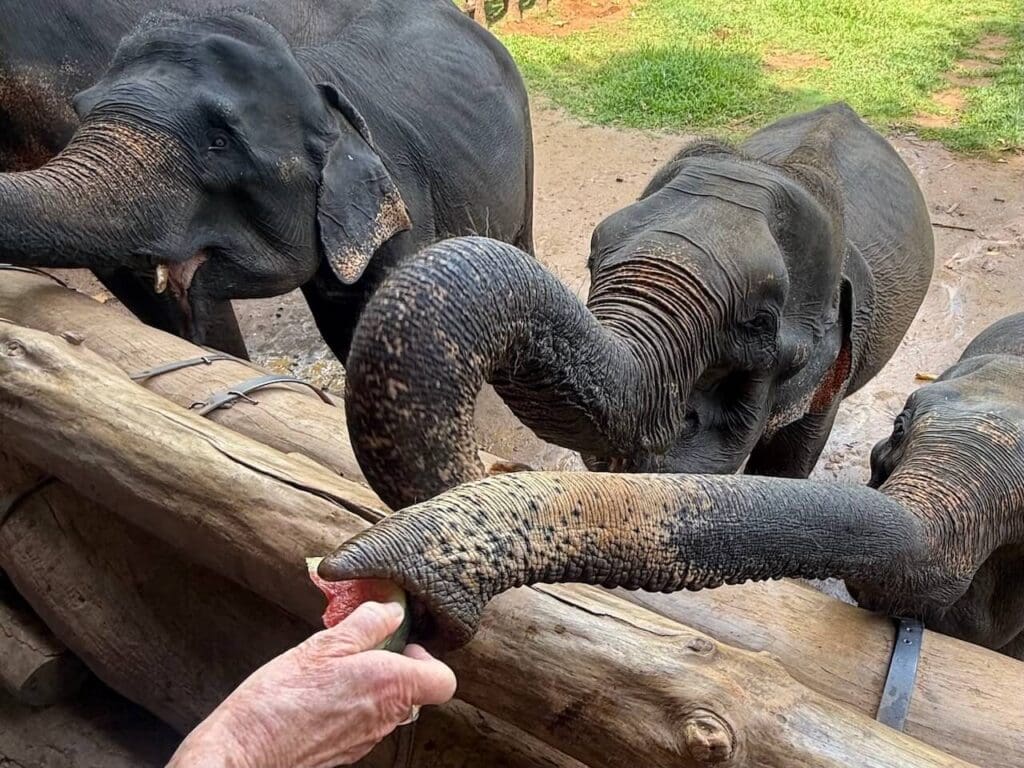
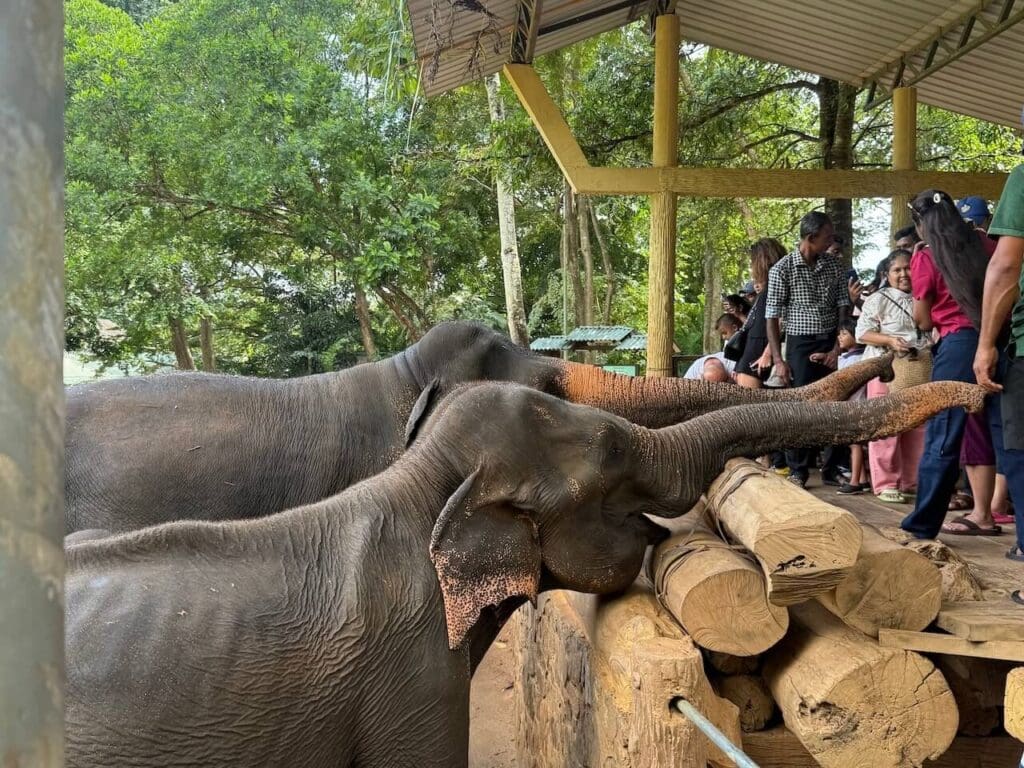
Children and adults alike pressed forward, hands outstretched, thrilled by the closeness of these enormous animals. Groups of elephants were brought in turn, the calves jostling to reach the front, gently nudged along by their elders, creating a lively, almost theatrical scene of curiosity and camaraderie.
Next, we were led across the road to where the elephants were being taken for one of their twice-daily baths, the undeniable highlight of the visit. The setting was spectacular: the Maha Oya River, a broad, fast-flowing ribbon of water, its surface broken by smooth rocks that create natural bathing pools. One bank is fringed with palms and tangled greenery that melt into dense tropical forest, while the other is lined with cafés and shaded terraces where visitors gather to watch the scene unfold.
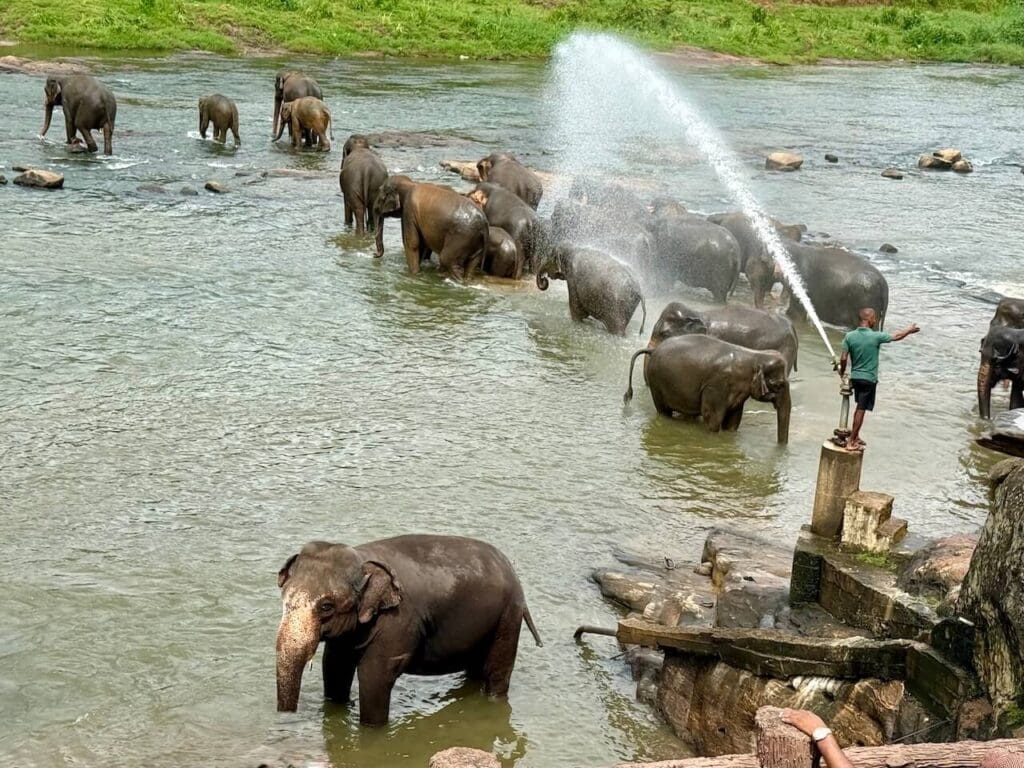
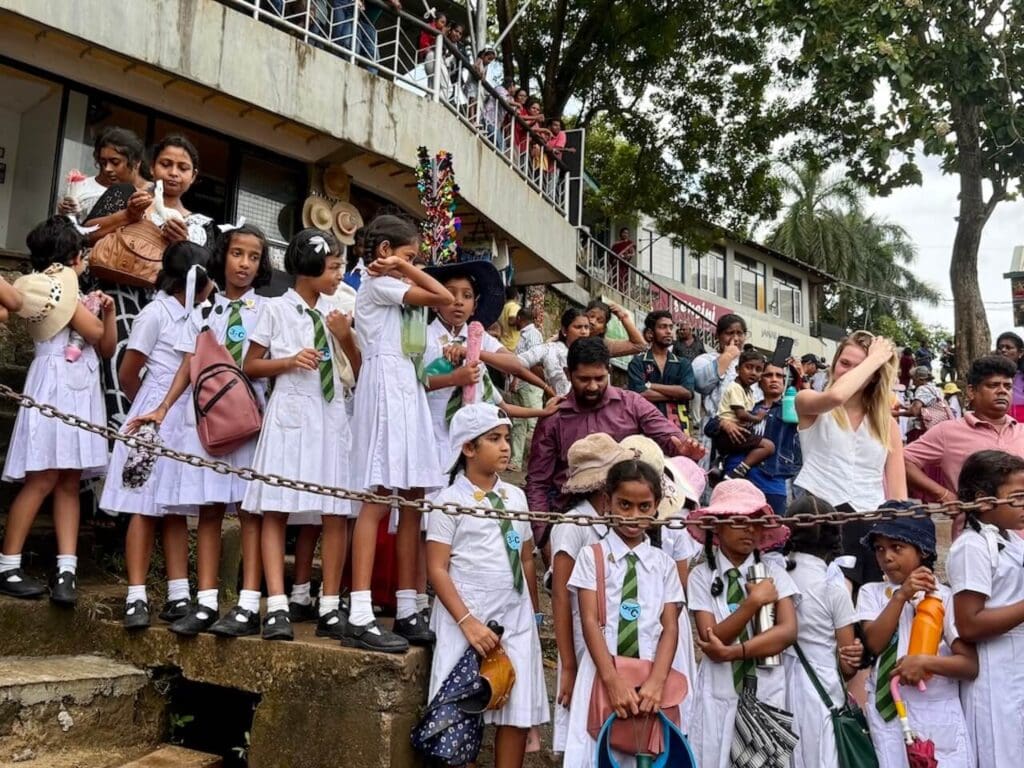
As the herd descended into the river, the sight was unforgettable, the vast grey forms wading and splashing against the glinting current, framed by jungle hills and the soft haze of the Sri Lankan sun. The elephants clustered in groups, some playfully wallowing while a carer hosed them down, sending glittering arcs into the air. Large groups of schoolchildren, all dressed in the cutest array of hats, looked on, their delight infectious. Slightly less savoury, however, was the option offered to visitors (at an extra fee) to enter the water with the elephants for photographs, a conspicuous money-making opportunity amid the otherwise heartwarming spectacle.
While Pinnawala undeniably plays an important role in elephant conservation and draws countless visitors, it has not escaped criticism. Concerns have been raised over the use of chains on aggressive adult males, particularly during musth, as well as broader questions about animal management and the treatment of relocated elephants. The orphanage maintains that such measures are necessary for safety and veterinary care, but they say ongoing efforts aim to reduce these restraints wherever possible, reflecting the delicate balance between visitor experience, animal welfare, and practical management.

Despite the criticisms, our visit to Pinnawala was a memorable and rewarding day. What struck me most was seeing the elephants up close, moving freely in groups, cared for by attentive keepers, and treated with respect and compassion, against such a beautiful landscape . Between the feeding, the playful river bath, and the chance to observe these magnificent animals in a safe environment, it felt like a rare glimpse into a world where conservation, culture, and human curiosity meet – an experience I won’t soon forget.
Pinnawala Elephant Orphanage is open daily, with activities such as elephant bathing and bottle-feeding scheduled between 8:00 AM and 5:00 PM.
Visiting tickets cost approximately LKR 3,500–4,000 for foreign adults, LKR 1,750–2,000 for foreign children, and LKR 1,100 for local adults, with reduced prices for local children.
Rates may change – please confirm on the website before visiting for the latest pricing.
Pinnawala Elephant Orphanage
B199 Rambukkana Road, Pinnawala, Sri Lanka