

Last Updated on February 7, 2024
Heritage Sites of Sri Lanka – Sigiriya:
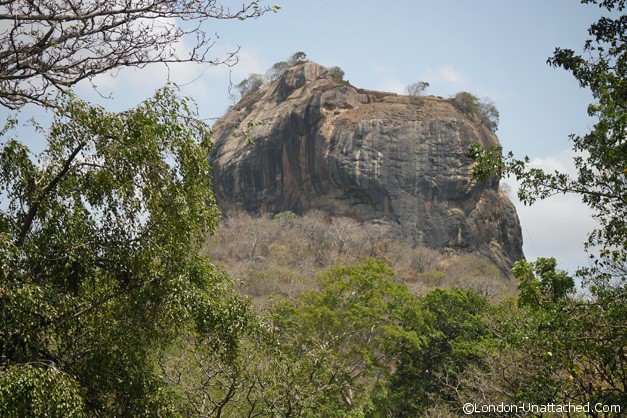
A winding spiral metal staircase built into the sheer rock-face is not, for me, a place to try a race to the bottom. And, at 11am, the sun was already burning,the temperature, even at altitude, in the high 80s. Nevertheless, behind me the guide was fretting.
Hurry, hurry ma’am. Bees are coming…
I moved over to let him and his Japanese client pass. Despite the heat and cloudless blue sky she was wearing what to all intents and purposes looked like a blue raincoat with a hood pulled tightly around her head, beads of sweat glistening on her forehead. Seeming to me to be far more appropriately dressed, the Sri Lankan guide wore cotton trousers and a short sleeved shirt. The pair of them scooted off down the steps leaving me gingerly picking my way down.
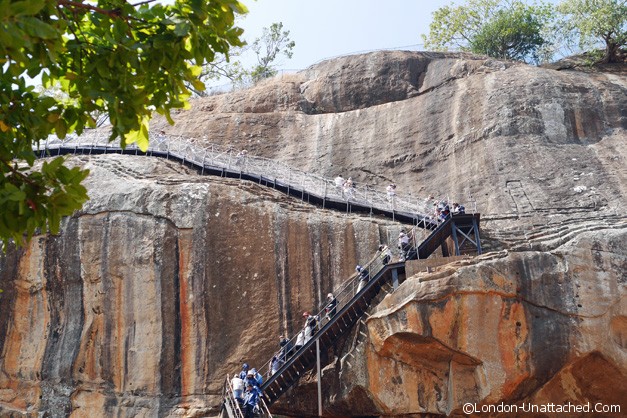
At the bottom I asked what the rush was. The rock is sometimes invaded by swarms of hornets, though I’d seen none, not even a bee. Wearing protective clothing is one option to avoid getting stung, I suspect another might be to avoid panicking.
Unesco listed Sigiriya is a breathtaking rock fortress built for a 5th century King. Exactly why the fortress citadel was built is disputed. The King, Kashyapa I of Anuradhapura, overthrew his father and usurped his brother to gain accession to the throne. So this may simply have been an attempt to protect himself – the rock fortress certainly had the advantage both of a perfect view of any approaching danger and the natural protection of the steep rockface. Kashyapa I also had a reputation as the ‘playboy’ king and the citadel is home to frescos of beautiful semi naked women. Originally there were over 500 women although only 19 remain today.
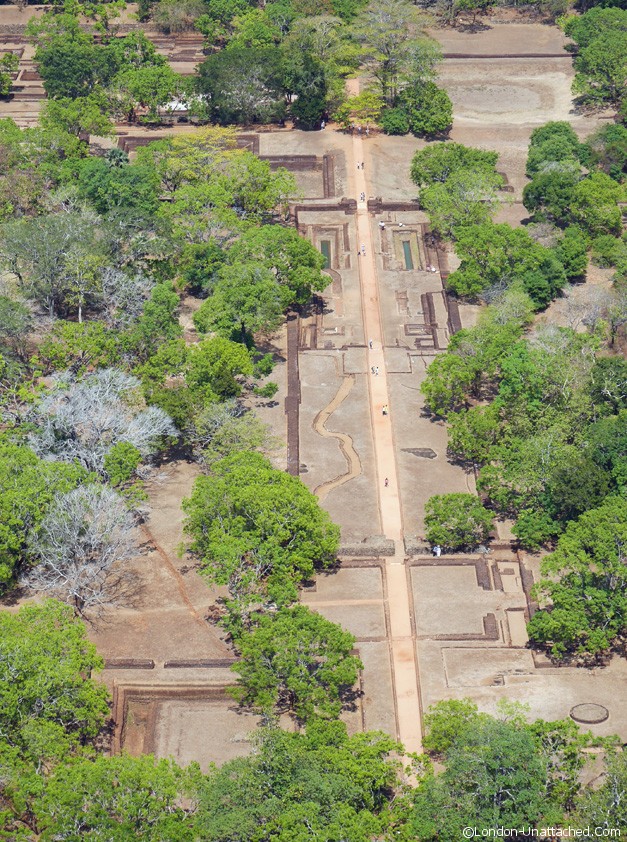
At the base of the rock are ancient formal gardens, which, when we visited were almost entirely dry. But, the water gardens are a series of lakes and fountains which during the rainy season come to life, working though an ancient underground irrigation system, a sophisticated hydrolics system which still works today during the wet season.

Start the climb up to the Palace and Fortress on the top of the rock and one of the first things you’ll find is the series of frescos painted onto the rock. Stunning images of women painted onto wet plaster. This method of fresco painting is unforgiving – in places you can see a woman with three breasts, one half covered, another with an extra arm. Without removing the entire plaster to the area and starting again, the solution was to camouflage the errors with layers of painted clothing.
The mirrored wall, a massive smooth, white plastered surface, was created so that the King could see himself as he walked past. Over the centuries visitors have engraved their own messages – poems and love notes on the rock so that, although it is now protected from further damage, the mirror effect is all but vanished.
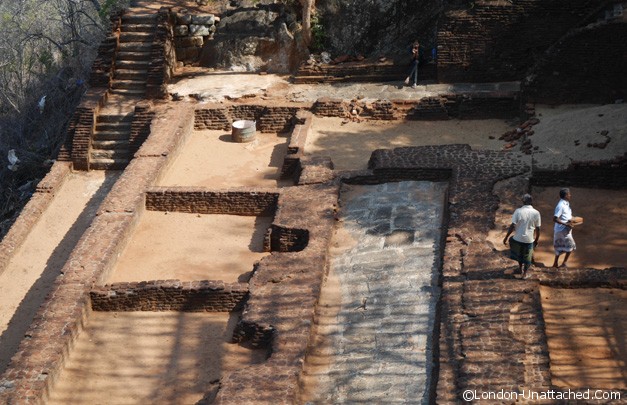
At the very top of the rock is the palace, a complex where you can clearly see the remains of rooms with stone thrones, staircases and water reservoirs, still being restored and renovated. The 360 degree view, six hundred feet from the base of the rock, is astonishing.

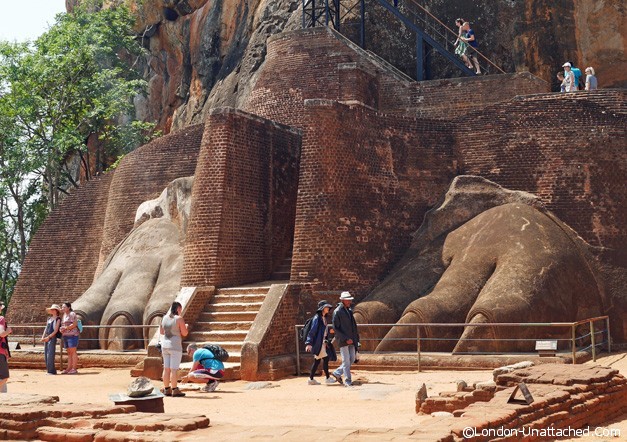
Travel back down and you’ll find yourself in the lion’s claws. A massive stone lion used to guard the original staircase. Now only the feet and claws remain – but that’s enough of a reminder of the splendour that must have been Sigiriya when first constructed.
It’s worth paying a visit to the museum on the site, where you can discover more about the history of Sigiriya. Arrive early in the day to avoid both queues and climbing to the top in burning heat. And, allow yourself enough time to relax at the top of the rock and take in the stunning views.
I was a guest of Cinnamon Lodge Habarana, the perfect resort hotel to explore both wildlife and heritage sites of North Central Sri Lanka. For more about my stay please read my introduction to Sri Lanka,


Those UNESCO sites make a nice bucket list!
Well I’m glad you didn’t get stung! And thanks for sharing, I’d never heard of Sigiriya.
I also have never been to Sri Lanka. Sigiriya looks like a type of Unesco site we should all visit. I can’t even imagine how gigantic that lion protecting those staircases was. It must’ve been a very imposing site.
This looks like somewhere I need to add to my list. Although the bees will be an issue – my husband is allergic.
I’ve heard fabulous things about Sri Lanka, I definitely want to go!
Would love to visit this place. I’ve only been to Colombo. Seeing this pics, it looks amazing!
Thank you for a well written explanation of Sigiriya. It seems like such a magical place. I think the best thing you did was let the guide and his client pass. No need to rush on this type of journey.
Everyone is raving about Sri Lanka. Was there any hangovers from the recent civil war?
Some of the people I met were sad, others were concerned that the government at the time wasn’t co-operating with the international war crimes tribunals. But, I know there’s been a change in government since then.
I found more sadness about the Tsunami, which devastated the south coast of Sri Lanka
What an experience! I might be among those panicking on the stairs. I spent 3 weeks in Sri Lanka as a kid and I’m eager to return one day, and to spend more time exploring the culture and places like this. UNESCO sites are such a useful way to locate culturally significant spots. So, DID THE BEES COME??
No sign of the bees…although one of the tour guides said they WERE around! There are plenty of fabulous places that don’t involve those stairs!
Looks like a great place for taking pictures! The architecture and wall paintings are very interesting.
It was indeed great for pictures. I’m not that good at this kind of photography and I actually struggled to show the immensity of the place.
What an incredible experience. Great write up.
Wow, I had never even heard of Sigiriya — looks amazing! That staircase looked a bit scary though. I love UNESCO sites.
I was really suprised at how much there was to see on Sri Lanka. And, I know there’s plenty more – I didn’t visit Kandy or see the turtles for instance and with more time I would have tried to see more of the wildlife.
Wow I can only imagine that is such a breath taking place to be! I would adore going their myself I think (bar perhaps the heat) it sounds such a fantastically historical place to explore. x
It is hot, but you get used to it fairly quickly. And, there are some wonderful heritage sites AND great wildlife to see
Oh wow, what a super adventure! Beautifully written too – I was transported there. Your opening lines brought back that cold palm sweat feeling I experienced while climbing up Dumbarton Rock (outside Glasgow) many, many years ago!